

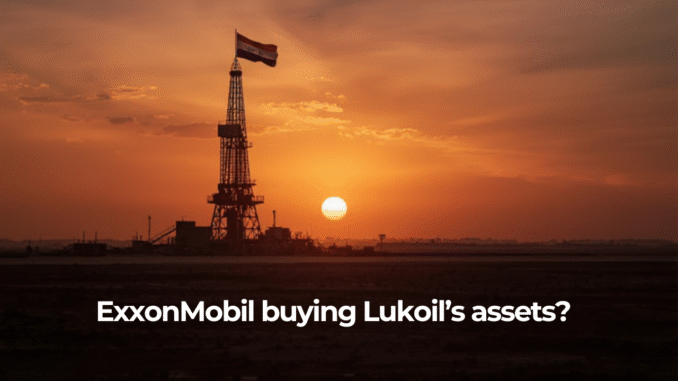
In a significant development for the global energy sector, U.S. oil giant ExxonMobil has expressed interest in acquiring Russian firm Lukoil’s majority stake in one of Iraq’s premier oilfields. This move comes amid escalating U.S. sanctions on Russian entities, which have forced Lukoil to declare force majeure and seek an exit from its Iraqi operations. The potential acquisition underscores shifting geopolitics in the oil industry, where Western majors are poised to capitalize on assets vacated by sanctioned players. Let’s delve into the details of this prospective deal, Lukoil’s holdings in Iraq, the reserves and production potential, and what it could mean for investors.
The Potential Move by ExxonMobilExxonMobil has approached Iraq’s Oil Ministry to discuss purchasing Lukoil’s 75% stake in the West Qurna-2 oilfield, according to multiple sources.
This interest aligns with broader U.S. efforts to encourage American companies to step in where Russian firms are compelled to withdraw due to sanctions related to the ongoing conflict in Ukraine. Lukoil, one of Russia’s largest oil producers, has been hit hard by these measures, leading to operational disruptions and a decision to sell its international assets.
Iraq’s government is actively inviting U.S. firms to bid, with ExxonMobil emerging as a frontrunner, potentially signaling a return to Iraqi operations after exiting other fields in recent years.
ExxonMobil’s strategy appears focused on securing low-cost, high-volume assets to bolster its upstream portfolio. The company has a history in Iraq, having previously led development at the neighboring West Qurna-1 field before divesting its stake in 2023. Re-entering via West Qurna-2 could provide Exxon with operational synergies in the region, especially as it eyes expansion in the Middle East amid volatile global oil markets.
Lukoil’s Key Oilfields in Iraq
Lukoil has been a major player in Iraq’s oil sector since the early 2010s, operating under service contracts that allow foreign firms to develop fields in exchange for fees per barrel produced. Its primary asset is the West Qurna-2 oilfield, located in southern Iraq’s Basra province, where Lukoil holds a 75% operating stake, with the remaining 25% owned by Iraq’s state-run North Oil Company.
Beyond West Qurna-2, Lukoil is involved in Block 10, which includes the Eridu oilfield. Discovered in 2017, Eridu is still in the early development phase but holds substantial promise.
While the current buzz centers on West Qurna-2, any deal could potentially encompass elements of Lukoil’s broader Iraqi portfolio, though details remain speculative.
Reserves, Production Volumes, and Potential OutputWest Qurna-2 is a giant among oilfields, with initial recoverable reserves estimated at around 14 billion barrels of oil.
The field primarily produces crude oil, with limited associated gas output, aligning with Iraq’s focus on liquid hydrocarbons. Current production stands at approximately 480,000 barrels per day (bpd), representing about 9% of Iraq’s total national oil output.
This volume has been stable in recent years, but Lukoil had ambitious plans to double capacity to 800,000 bpd through enhanced drilling and infrastructure upgrades.
The Eridu field in Block 10 adds another layer, with estimated reserves of 12.9 billion barrels.
However, production there is nascent, with pilot output expected to ramp up gradually. Combined, these assets could contribute significantly to global supply if fully developed, potentially yielding over 1 million bpd at peak, assuming investments materialize.
Gas reserves in these fields are secondary, with West Qurna-2 producing associated gas that is often flared or reinjected due to Iraq’s infrastructure challenges. Iraq’s overall natural gas production was around 372 billion cubic feet in 2023, but specific figures for Lukoil’s fields are not prominently reported, indicating oil as the dominant resource.
Investment Requirements for ExxonMobil
To acquire and ramp up production at West Qurna-2, ExxonMobil would likely face a multifaceted investment landscape. The acquisition cost for Lukoil’s stake isn’t publicly disclosed, but similar deals in Iraq have ranged from hundreds of millions to billions of dollars, potentially discounted due to sanctions pressure on Lukoil.
Beyond the purchase, expanding output to 800,000 bpd or beyond could require substantial capital expenditure—estimates for comparable Iraqi field developments suggest $5-10 billion over several years for drilling new wells, building processing facilities, and enhancing water injection systems to maintain reservoir pressure.ExxonMobil’s recent re-entry into Iraq via a preliminary agreement for the Majnoon field indicates a willingness to invest, with that deal potentially involving billions in upstream development.
For West Qurna-2, the focus would be on picking up where Lukoil left off, addressing any operational disruptions from sanctions. This could mean short-term investments of $1-2 billion to stabilize and optimize current output, scaling up for expansion.
Implications for Investors
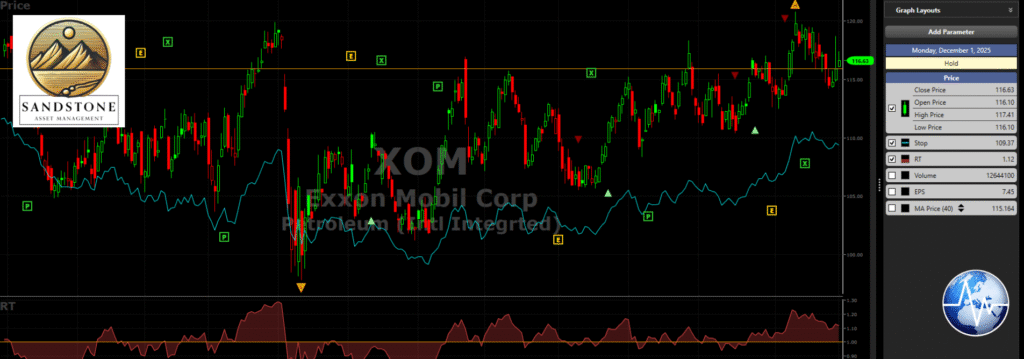
For ExxonMobil investors, this potential acquisition represents a double-edged sword. On the positive side, it would add proven reserves of billions of barrels to the company’s portfolio, enhancing long-term production growth and revenue potential in a region with some of the world’s lowest extraction costs (around $2-5 per barrel in Iraq).
Amid fluctuating oil prices, securing such assets could provide a hedge against volatility, boosting Exxon’s upstream earnings and supporting dividend payouts, which have been a hallmark of the stock.However, risks abound: Iraq’s geopolitical instability, security concerns in Basra, and regulatory hurdles could delay returns. Sanctions dynamics add complexity, as any deal would need U.S. government approval, potentially favoring American buyers but limiting competition.
Broader market implications include a shift in global energy alliances, with U.S. majors like Exxon and Chevron vying for Russian-vacated assets, which could strengthen Western influence in OPEC+ dynamics.
From Lukoil’s perspective, the forced sale could pressure its stock, already battered by sanctions, but provide liquidity for domestic focus. A Look at ExxonMobil’s Past EarningsExxonMobil’s financial health positions it well for such investments. In the third quarter of 2025, the company reported earnings of $7.5 billion, or $1.76 per share, with cash flow from operations at $14.8 billion—driven by strong production in the Permian Basin and Guyana.
Year-to-date through Q3 2025, earnings totaled around $22.3 billion, down slightly from 2024 due to lower refining margins but buoyed by upstream performance.
For full-year 2024, Exxon posted earnings of approximately $36 billion, including a Q4 figure of $7.6 billion, reflecting resilience amid energy transitions.
These robust cash flows—totaling over $50 billion annually—afford Exxon the firepower for acquisitions like West Qurna-2 without straining its balance sheet, appealing to investors seeking growth in traditional oil plays.
The Bottom Line
ExxonMobil’s interest in Lukoil’s Iraqi assets highlights the ripple effects of U.S. sanctions on global energy markets. If consummated, the deal could reshape production landscapes in the Middle East while offering Exxon investors exposure to high-potential reserves—albeit with inherent risks. As negotiations unfold, the energy world watches closely for the next chapter in this geopolitical chess game.
Got Questions on investing in oil and gas?

If you would like to advertise on Energy News Beat, we offer ad programs starting at $500 per month, and we use a program that gets around ad blockers. When you go to Energynewsbeat.co on your phone, or even on Brave, our ads are still seen. The traffic ranges from 50K to 210K daily visitors, and 5 to 7K or more pull the RSS feeds daily.
https://energynewsbeat.co/request-media-kit/





Be the first to comment