


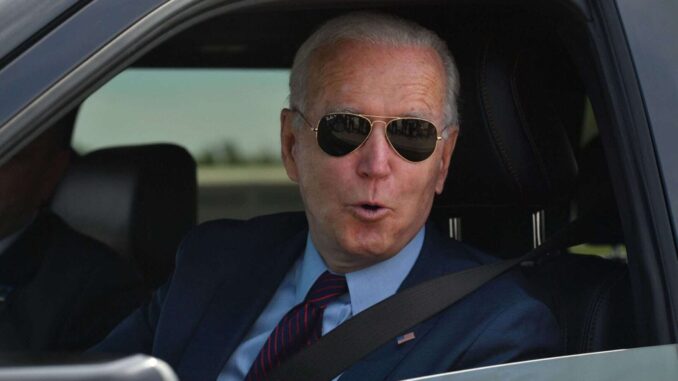
This was a fun podcast with Tammy Nemeth, Irina Slav, David Blackmon, and Stu Turley! We had way too much fun and had some great comments from the live audience.
We also had some great insights from Dr. Graham Conway, Principal Engineer in the Automotive Division at Southwest Research Institute. A shout-out to Rodney, who found out who he was. I have included the full TED Talk clip below, along with the key bullet points.
— STUART TURLEY – Energy Podcast Host (@STUARTTURLEY16) December 8, 2025
Key Points for the Energy Realities Podcast this morning:
The main topics discussed in this transcript are:
1. The impact of Trump’s policies on the electric vehicle (EV) industry in the United States. The transcript discusses how Trump’s actions, such as rescinding California’s EV mandate and the CAFE standards, have negatively impacted the growth of the EV market in the US.
2. The challenges and limitations of EVs, including their high costs, limited range, battery fires, and lack of consumer demand. We provide detailed analysis on why EVs are not a viable or sustainable solution compared to traditional internal combustion engine vehicles.
3. The impact of government subsidies and incentives on the EV market. We discuss how the removal of subsidies, such as the $7,500 tax credit, has led to a significant drop in EV sales in the US.
4. The geopolitical and economic implications of the transition to EVs, including the impact on manufacturing, infrastructure, and energy security. We touch on how this transition is affecting countries like Canada and the European Union.
5. The broader context of the “green energy transition” agenda, criticizing it as an ideological and unsustainable approach that is harming economies and energy security.
Key Chapters:
00:00 Introduction – Irina Slav
03:18 David Blackmon’s view on how the Trump Administration’s impact on EVs
09:55 Dr. Tammy Nemeth covers Norway and the UK’s impact.
18:40 Dr. Graham Conway on his TED Talk and how EVs are not as environmentally friendly as advertised.
24:44 Irina Slav is pointing out that the EU wants smaller EVs and shorter ranges.
30:44 Dr. Tammy Nemeth Zelensky, Starmer, and Macron meeting to figure out the next action items.
32:48 Dr. Tammy Nemeth brings up that EU and Canada allowed deindustrialization to become a service economy, and may have caused harm to long-term manufacturing capabilities.
Dr. Graham Conway’s TED Talk was outstanding; here is the TikTok video. I will be reaching out to him to get him on the podcast.
Here are Dr. Conway’s key points outlined for you.
· The average age of a vehicle before it gets scrapped is around 180,000 miles.
· A conventional vehicle produces about 30 tons of CO2 over its lifetime.
· An electric vehicle produces less CO2 than a conventional vehicle, as some of the electricity comes from renewable sources and the electric motor is more efficient.
· However, a large amount of CO2 is produced in manufacturing a vehicle, even before it is driven.
· The conventional vehicle comes to the showroom having generated about 6 tons of CO2.
· The electric vehicle comes to the showroom having generated about 12 tons of CO2 due to the battery manufacturing process.
· You would have to drive the electric vehicle around 80-90,000 miles before offsetting that initial CO2 penalty.
· The conventional vehicle has a 400 mile range, while the example electric vehicle has only a 125 mile range.
· To match the 400 mile range, the electric vehicle would need a larger battery, which increases its CO2 footprint over its lifetime compared to the conventional vehicle.
The Narrative Is Changing Along with the Trading Blocs
We are seeing some huge changes rolling out around the world, and the trading bloc alignment that I have been talking about is tied to Net Zero, Energy, and Fiscal policies.
Thank you again to the great listeners on the live podcast for your questions and for helping with this discussion about how the world is changing.
Want to get your story in front of our massive audience? Get a media Kit Here. Please help us help you grow your business in Energy. Our Ads also get through the ad blockers.

https://energynewsbeat.co/request-media-kit/
We have specials going on, so ask Stu for details.
Irina Slav, Energy Realities Co-Host [00:00:14] Hello and welcome to the Energy Reality Podcast, where today we are addressing a very important question, namely, did Trump just kill Joe Biden’s EV dreams? It’s going to be a very short podcast because the answer to this question is yes, he did. But he did more than that. And we’re here to discuss this with Tammy Neiman, who just disappeared, so I’ll present her later. David Blackman in Texas. How are you today, David?
David Blackmon, Energy Realities Co-Host [00:00:46] Oh, I’m just so happy I can hardly stand it. It’s just a beautiful day in Texas and a beautiful day in America.
Irina Slav, Energy Realities Co-Host [00:00:53] This is great. Are you in Christmas mood already?
David Blackmon, Energy Realities Co-Host [00:00:56] I am. We got all our decorations up yesterday. I’m about to upload a fake background photo reflecting that. It won’t really be my living room, but but we got it all done. It only took about three hours and you know, and then I had to go take a nap. So it was all great.
Irina Slav, Energy Realities Co-Host [00:01:14] It it could be exhausting. Oh he’s Tammy. Hello Tommy. How are you today?
Tammy Nemeth, Energy Realities Co-Host [00:01:20] Hi, hi everybody. I’m doing well, thank you. It’s a rainy day in Britain. We’re we’re still waiting for school.
Stu Turley, Energy Realities Co-Host [00:01:27] Amazing. It’s not so it’s raining and cloudy and foggy and nasty in Britain.
Tammy Nemeth, Energy Realities Co-Host [00:01:34] Yeah, pretty much. But that’s okay because Ed Miliband today is going to be fast tracking a bunch of solar installations across the country. So hey. Yay. Great.
Stu Turley, Energy Realities Co-Host [00:01:51] Tammy, is this before or after he flies to Brazil twice to attend the same meeting? I’m just checking.
Tammy Nemeth, Energy Realities Co-Host [00:01:58] I know. I know.
Irina Slav, Energy Realities Co-Host [00:01:59] But we all gotta do our part. Yeah, yeah. Sacrifices need to be made. I mean it’s a very long flight from the UK to Brazil. Yeah, for sure. Show some consideration. And we’ve got Stu. Where are you today, Stu?
Stu Turley, Energy Realities Co-Host [00:02:17] I’m in Texas. You gotta love a good Texas place. I can throw a rock and hit the Stargate data center. That is a big cotton picking data center, even by my standards.
Irina Slav, Energy Realities Co-Host [00:02:30] Wow. But is your electricity supply stable?
Stu Turley, Energy Realities Co-Host [00:02:36] Yeah. For the moment. For the moment. But the the cool thing about that data center is they’ve got behind the meter power going in. So it is all natural gas behind the power meter. So it is not going to be affecting the the thing. The the funny thing is Abilene, Texas is growing like I haven’t seen in thirty years. It’s pretty crazy. So it’s amazing what a gig ginormous, gigantic data center does to an economy.
David Blackmon, Energy Realities Co-Host [00:03:07] Yeah, it’s the next boom town.
Irina Slav, Energy Realities Co-Host [00:03:09] That’s interesting. So about Eevees. What’s happening with EVs in America, David?
David Blackmon, Energy Realities Co-Host [00:03:18] Oh, it’s just so glorious. I where do I begin? You know, you could see all this coming as soon as Trump won the election. You knew he was going to move in this direction. He he killed California’s EV mandate, Gavin Newsom’s pet project in June by rescinding their exemption under the Clean Air Act. And so Newsom’s EV dreams went up in smoke. And then last week the president moved to destroy Joe Biden’s EV dreams by rescinding the cafe standards Biden had sought to implement during his administration in 2022. He raised the average fleet auto mileage to 49.4 miles per 49 miles per gallon, which was impossible to achieve without converting most of the fleet to electric vehicles. And then they raised it last year to 50.4 miles per gallon, which was even more impossible to achieve. And so the the whole impetus behind that was to force car makers to invest billions of dollars in new plant and equipment to make electric vehicles and introduce all these new electric models, which aren’t selling, which nobody wants to buy. Well, not nobody, but only a small segment of society, less than 20% of Americans really want to buy an electric vehicle. And the reasons are obvious. They they have the same limitations in technology and concerns to consumers that they had 130 years ago when they were first introduced. Okay, limited mileage range on a charge, battery fires. I mean, we just had two two townhomes go up in flames in where was that, Stu? Was it in I Iowa? Yeah, right. Somewhere in the Midwest. You know, major fire. These this this couple had parked two electric vehicles in their garage and were charging one overnight and it just erupted in flames, burned the damn house down and their neighbor’s townhouse with it. You know, and so I mean, consumers can’t afford the the cost of insurance, not just for their cars, but for their homes. If you park an EV in your garage, you’re gonna pay higher homeowner insurance now. Because of these you know, spontaneous combustion fires. So anyway, y we repealed the seventy five hundred dollar per unit. Subsidy under the IRA and the one big beautiful bill act that went into effect at the end of September and in October and November, sales of electric vehicles completely cratered in the United States, which was the most predictable outcome on the face of the earth. Because without that $7,500 per unit subsidy, they are simply not competitive in the market. And that’s the case with all of these fake solutions that have been offered in this fake energy transition. None of them can be sustained without constantly increasing, not just sustaining government subsidies, but the subsidies have to continuously increase. To keep competitive in the marketplace with traditional forms of energy. And electric vehicles are the least sustainable among all of them. And so, you know, what we’re seeing now is Ford is about to cancel the production of the F-150 Lightning. They’ve already severely cut back on on their factories making those cars. Stallantis canceled plans to introduce a full-size pickup in September because they decided it just wasn’t marketable. The Cybertruck introduced by Elon Musk, the weird-looking DeLorean mock contraption that Tesla rolled out. You know, that we had fairly strong sales is again was entirely predictable, and then it crashed. Nobody wants to buy those damn things either because they’re stupid looking and they’re too costly. And all the other limiters that are endemic in electric vehicles. So I I suspect within the next couple of years, almost every pure play electric vehicle company in America is going to be bankrupt, except for Tesla, because Tesla’s just got such a head start on everyone in that that part of the market. And that Ford and General Motors are going to dramatically cut back as well. And you know, that’s the right thing because they’re not competitive in the market, they’re not a real solution, they’re not sustainable. And it all, it’s just all a big scam. And it’s time to to admit that and go back to making cars people want to buy.
Irina Slav, Energy Realities Co-Host [00:08:26] Thank you. The the great thing is that Trump kind of acted preemptively by removing the subsidies because everyone could have guessed what would happen. As you said, because we saw it in Germany. Germany tried to phase out subsidies for electric vehicles a couple of years ago. Was it last year? Anyway, but it tried and sales immediately plummeted.
David Blackmon, Energy Realities Co-Host [00:08:50] Of course.
Irina Slav, Energy Realities Co-Host [00:08:51] So they said, oh, okay, we’ll bring back the subsidies. So unlike the US, where you have Trump, we will have to wait for the governments to, you know, to go bankrupt to stop subsidizing EVs. And even in Europe, with all these subsidies for EVs and all the other incentives, even in Europe, car makers are finding it hard to, you know, to sell their EVs. So they’re asking for a reconsideration of the ban, the 2035 ban on internal combustion engines. But of course, the UK is more fascinating because on the one hand, I understand the Chancellor wants to tax EVs per mile or something, but she was also did they approve it, Tammy, this package of was it two billion pounds or one billion something pounds to subsidize more EV sales?
Tammy Nemeth, Energy Realities Co-Host [00:09:55] I’m not sure. It’s there was so much in that budget. I haven’t finished really unlocking it. I mean, it’s insane. But with respect to the, they have the mandate, right? So a certain percentage of new vehicles must be electric that must be sold in the UK. And if the manufacturers don’t meet those targets, they have to pay a fine. And it’s significant, right? And so they were like, oh, how are we going to do this? So then the government had different subsidies. And they were, they were trying to do kind of like what Norway did, where they made it really expensive to have an internal combustion engine vehicle. So they were offering these inducements, like you didn’t have to pay this kind of road tax, or you didn’t have to have an MOT, which is like you have to get it checked out by the government every year. You get a three-year limit where you don’t have to go in. You were exempt from the different ultra low emission zone charges. You are exempt from all these different things, right? So it was like, oh, well, I get a subsidy, I get discounts on all these different things. You wouldn’t need to pay road tax or whatever it was for until you sold the vehicle down the road. So you were able to kick that, kick that can down the roads, so to speak. But in this budget, they realized, oh crap, if we have all these EVs getting all these exemptions, who’s gonna pay to upkeep the roads because the EVs wear the roads down quicker. And right now the the fuel, there’s a fuel tax, and that fuel tax goes towards road maintenance, like it does in North America and and the European Union. And so if the EVs aren’t paying buying gas and the gas has the road tax and they don’t have to pay this other road tax, they’re like, well, how are we gonna get money to maintain the roads? So then they came up with this brilliant plan to charge by the mile. And so then they were they’ll they’re gonna require the EV owners to take their car in to the garage to have the odometer certified of how many miles they’ve driven in a year, and then they will be taxed accordingly. And then they’ve added this thing where, well, you can just wait three years and then pay the full cost in three years instead of taking your car in once a year because they have this exemption from going in to the garage for certification. So they just made it really complicated, and then it was like, Well, if I’m driving abroad, I too have to you know, it doesn’t you’d still end up having to pay this per mile thing because it’s not like you’re saying, Well, I drove 2,000 miles in the EU, I shouldn’t have to pay. This tax because I was in the EU or whatever, but it’s just it’s a flat for however much you drive your car. So that’s the craziness that the UK is doing. And and the thing is people, you can get in, it’s like a bait and switch, right? So they they they persuade people to buy the EVs saying that you’ll it’ll be this much less operating a vehicle than an internal combustion engine vehicle and you’ll get all these discounts, et cetera, et cetera. But what happens when all the ice vehicles are off the road? You still have to make up for these different costs, road maintenance and all that. So that now they’re they’re starting to roll in these costs, which add on to the price of EVs. But what what I think is so interesting in the context of North America, so we have America doing its thing, which is having a ripple effect in Canada because Canada has given a lot of money to whether it’s battery manufacturers or the big like Stillantis and Ford and GM or whoever and Volkswagen and these different groups were getting government subsidies in order to produce EVs. And they were being they were using the inflation reduction act as leverage in Canada to say look, you know, the IRA is giving us all this money to retool our factories. What are you going to do for us today? So then American Canada had to increase how much money it would offer to sweeten the pot, sweeten the deal And so now the companies are like, well, where’s the market for this? Who’s gonna buy these? Because the whole point was that they would make them in Canada and sell them in both the US and Canada. But with the tariff situation and Americans don’t want to buy them, Canada’s still it’s suspended its EV mandate, but by like a year. So they’re trying to wait and see what’s gonna happen in the United States. But it’s it’s like nobody in Canada wants to buy these unless they get lots of subsidies or they live in the green belt of Vancouver or Toronto or something. But the most for the most part, most Canadians don’t want to buy these vehicles because they’re unreliable for all the reasons David laid out. And then we have the EU, which is doing its own thing and and they have the subsidies, but that but now they have this threat of China EVs coming in. And if you lose your manufacturing, then how is that gonna be helpful for your economy if you’re just importing? Right? So lots of different moving parts there. So Trump has thrown the big old monkey wrench into this nice little plan they had organized, supposedly for the world.
Stu Turley, Energy Realities Co-Host [00:15:29] Wow.
Tammy Nemeth, Energy Realities Co-Host [00:15:29] This is
Irina Slav, Energy Realities Co-Host [00:15:30] This is so ridiculous because the the EU is a complete disaster. And it’s trying to make an even greater disaster of itself, even though it is already a complete disaster. As you said, if you lose your manufacturers, what do you do? But no, they’ve got the carbon border adjustment mechanism coming into effect from January, which is going to help absolutely every industry that uses imported goods, including, I assume, the car making industry. I mean, the Indians are saying that they will have to look for new markets for their steel. Did you know that two thirds of Indian steel for export ends up in the EU? Because I didn’t. But apparently it does.
Stu Turley, Energy Realities Co-Host [00:16:21] Well
Irina Slav, Energy Realities Co-Host [00:16:22] And it is the second biggest steel producer in the world after China. So that’s going to go very well for European industries.
Speaker 5 [00:16:31] Oh.
Irina Slav, Energy Realities Co-Host [00:16:32] Steve, when are you buying a Ford F one fifty twice?
Stu Turley, Energy Realities Co-Host [00:16:37] I’m I’m looking at getting a three fifty just because I can. But let me start with I had a I had a two fifty and I had a hundred and ninety or no, excuse me, two hundred and sixty thousand miles on it before a rat got into the engine. Otherwise, I’d still be driving it. But let’s start with Rodney. I I think a Democrat got in my my truck, but let’s just leave that that alone. Rodney McGuinness. If we succeed at waking the majority of society that the science was grossly wrong on greenhouse gasses and they convert to climate realist, I wonder what percentage of people would still want an EV. Rodney, outstanding. I love your camera. Rock on.
Tammy Nemeth, Energy Realities Co-Host [00:17:18] Well, there’s there will always be that five percent or something.
Stu Turley, Energy Realities Co-Host [00:17:22] Yeah, okay.
Tammy Nemeth, Energy Realities Co-Host [00:17:23] Yes, I think.
Irina Slav, Energy Realities Co-Host [00:17:24] Claro. Psychopaths are a constant percentage in society.
Stu Turley, Energy Realities Co-Host [00:17:31] Let me add this for my aging in-laws. They love their Tesla, and I believe there is going to be a market. They’re going to be able to keep their driver’s license longer because of the self-driving features that are solely in a Tesla are phenomenal because this is me riding with my father-in-law. I don’t want to be in the car with that man because he can’t drive. But behind a Tesla, I’ll ride in that bad dog. But let’s take a look at what Rodney was talking about, and that’s CO2. I found this guy on TikTok. I don’t know who he is. I want to give him a shout out, but because it was copied copy copy, he brings up some very valuable points. I’m only going to show part of this, but I’m going to share this the video for you all to put into your substacks and all of the bullet points. I’m going to just show a little bit of the clip, and then I’m going to go through the bullet points that this guy brings out. He gives a TED talk in San Antonio, Texas. Here we go.
Dr. Graham Conway, Principal Engineer in the Automotive Division at Southwest Research Institute. [00:18:40] The showroom having generated about 12 tons of CO2. And you can see you’d have to drive it around 80 or 90,000 miles before you offset that CO2 penalty. But it is better in the end. So the electric vehicle still looks good here as well, right? Well, this is where it gets interesting. You see, the conventional vehicle has a 400 mile range, while the electric vehicle in this example has a 125 mile range. Now 125 miles might be enough for some of you, but most of us want more. We’d like to be able to drive great distances across the states. Or if you’re here in Texas, you might just want to get to the next city. And now you start to see the problem. Over its expected lifetime, it has emitted more CO2 than the conventional vehicle. It has contributed more to climate change than the conventional vehicle, and that is the crux of the problem. It has produced more CO2, but we’ve measured none. So society is happy to continue to call these zero emissions, but that is dangerous and unproductive.
Stu Turley, Energy Realities Co-Host [00:20:16] So this cat is very cool. I gotta find out who he is and invite him on a podcast because I thought it was pretty pretty neat. So I want to give him a shout out to Mr. I don’t know who you are, but his key bullet points that I was typing up this morning. The average age of a vehicle before gets scrapped in the U.S. Is around 180,000. A conventional vehicle produces about 30 tons of CO2 over its lifetime, which is one COP30 trip for Ed Miliband. But when you take a look at electric vehicle produces less CO2 than a conventional, some of the electricity from renewable sources and the electric motor is efficient. And so let me come down here to the last part. You’d have to drive the electric vehicle around 80 to 90,000 before offsetting the initial CO2 penalty. The conventional vehicle has a 400-mile range while the example electric vehicle only has 125. To match the 400-mile range, the electric vehicle, we need a larger battery which increases its CO2 footprint over the lifetime compared to the conventional battery. And nobody’s talking about what David brought up earlier is the increased homeowner insurance in EVs in the United States is doubling. And then you have what is the reclamation for that battery at the end of life of that thing? And nobody’s talking about a a four-year life cycle on these bigger batteries is about thirty thousand dollars to replace these bad dogs. So we are now at a point where the in Oklahoma State, the math don’t math up because I I’m my head just exploded.
David Blackmon, Energy Realities Co-Host [00:22:11] I want to emphasize one other point about that, which is a four hundred-mile range battery weighs a hell of a lot more than a hundred and twenty-five-mile range battery. It adds thousands of pounds to the weight of the vehicle, which in turn increases the damage the car is going to do over its lifetime to roads and other infrastructure. And the cost of rebuilding and and reinforcing the infrastructure is trillions of dollars to the society in the United States. It’s just gonna add trillions of dollars to the cost of maintaining and repairing roads in our country. So that’s another severe cost of these things that no one wants to talk about and account for.
Stu Turley, Energy Realities Co-Host [00:22:56] Can I add one point to your can I add one point, David?
David Blackmon, Energy Realities Co-Host [00:22:59] Yeah.
Stu Turley, Energy Realities Co-Host [00:23:01] California has actually been using a lot of coal for are you are you ready? Cement. They’re still using a lot of coal. So if we’re rebuilding all the roads and everything else, these EVs are going to demand a lot of infrastructure and a lot more coal is going to be used. This is a LinkedIn user. I’m not sure who this is.
Speaker 5 [00:23:22] I think it’s Rabbit.
Stu Turley, Energy Realities Co-Host [00:23:24] Travis Lynn. Okay, cool. Tammy, sadly, North American E V manufacturers owe their gratitude sarcastic to their industrial house of cards to simply four years of Biden build back better builders. I’m so glad.
Speaker 7 [00:23:42] Bunch of beer crazies.
Tammy Nemeth, Energy Realities Co-Host [00:23:44] Zero. Yeah, and they went to Canada, I swear.
Speaker 7 [00:23:48] They went to Canada in the UK.
Tammy Nemeth, Energy Realities Co-Host [00:23:52] They’re following Tammy around. You know what’s funny is that, you know, last week when all the auto manufacturers were gathered around Trump for, you know, making their announcements or whatever, and the head of Stellantis said, Well, we’re actually gonna give consumers what they want, and they’re reintroducing the Dodge Ram Hemi V8 engine.
Speaker 5 [00:24:13] Right.
Tammy Nemeth, Energy Realities Co-Host [00:24:14] Yay. Yay. Because all the guys are like, yeah, we want this kind of truck. And and and they’re gonna bring in the I think there was comments that they’re gonna bring in the Toyota Hylix, which which is the the bare bones one that doesn’t have a whole lot of electronics in it and stuff, but you can get this half ton for like twenty thousand dollars is like a really
Stu Turley, Energy Realities Co-Host [00:24:36] That’s fairly deal. Yeah. It’s it’s eight thousand dollars outside the United States. So
Irina Slav, Energy Realities Co-Host [00:24:43] Yeah.
Stu Turley, Energy Realities Co-Host [00:24:44] Yeah.
Irina Slav, Energy Realities Co-Host [00:24:44] You know, so but we have a bigger problem in Europe because you can’t put a battery with a 400 mile range in a small car, and the European Union is very big on small EVs because they are cheaper, but you’d never guess what’s happening in that same European Union. The BBC called it car spreading, which basically means that people tend to buy increasingly bigger cars. So on one hand, it’s great news for those bigger batteries because if it the if the car is bigger, you can fit bigger battery into it. And can I just say that I I’ve seen an electric BMW, a huge monstrous BMW, an electric car. It’s it’s disgusting, it’s really big, it looks extremely heavy, and it looks like a more dangerous car than an internal combustion version of that same sort of BMW or whatever, really, because they’re heavier, they would do more damage not just to the road but to pedestrians if they so the EU wants to put us all in small cars. I already have a small car and I love it, but it wants to put everyone in small electric cars, which you can’t fit with a huge battery. It just won’t work. And Europeans are buying bigger cars. Disgust.
Speaker 5 [00:26:21] Yeah.
Stu Turley, Energy Realities Co-Host [00:26:22] Especially the especially the Ukraine Ukrainian folks. I just saw one of the Trump boys interviewed and he said that he went to Monaco and there were a lot of Burgardis and a lot of big cars with Ukrainian license plates that were
Irina Slav, Energy Realities Co-Host [00:26:39] That’s where your money is going.
Stu Turley, Energy Realities Co-Host [00:26:42] Yeah.
David Blackmon, Energy Realities Co-Host [00:26:44] Yeah. New York Times dollars of all the newspapers on earth, you wouldn’t expect to have this investigative report. The New York Times yesterday published an incredible investigative report about the corruption in the Zelensky government in Ukraine and all that money laundering they’ve been doing with America’s and the and NATO’s money. That’s very yeah, extraordinary. Anyway, that’s a diversion. Sorry.
Stu Turley, Energy Realities Co-Host [00:27:13] Well no, it’s Means it’s finally coming out.
Irina Slav, Energy Realities Co-Host [00:27:17] I
Tammy Nemeth, Energy Realities Co-Host [00:27:18] I’m
Irina Slav, Energy Realities Co-Host [00:27:19] We decided to put it out.
Tammy Nemeth, Energy Realities Co-Host [00:27:21] Yeah. Like I don’t know, the New York Times investigative reporting seems to be hit and miss.
Speaker 5 [00:27:29] Yes, it does.
Tammy Nemeth, Energy Realities Co-Host [00:27:31] Because they did this Yeah, they they did a big one AI and David Sachs in the White House, which was just full of garbage. And they they claimed he had this secret meeting, blah blah blah. And he’s like, I looked on my counter, I didn’t even I didn’t even have a dinner. What is he talking about? So it it’s like, I don’t know. If if is it true? Maybe they’ve l really lost their credibility, so it’s hard to say it, but
Irina Slav, Energy Realities Co-Host [00:27:58] Yeah. Right. I I think they’re right what they’re told to write. I mean, for years they’ve been pumping up this saintly image of Zelensky and all the people around him, but now things are falling apart and the truth is coming out. So
David Blackmon, Energy Realities Co-Host [00:28:13] Yeah, so they’ve got to do an inoculation piece like that one to to prove that they reported all of it, right? This is the game they and the Washington Post and other big newspapers play all the time.
Stu Turley, Energy Realities Co-Host [00:28:25] We we are about to see an end of the war, and I just saw President Putin interviewed, and he said he has been in contact with American companies that want to do business in Russia. I believe our trading blocks are going to realign, and our trading blocks are going to include Russia, India, and all these other areas, and the world is gonna change. I think it’s gonna be great. When you look at Russia, they’re over 300 million pounds of gold. China has bought more gold than has been in the history. The United States has been bringing in more gold. You look at the gold standard and you look at the world according to finances, the world is changing, and the UK and the EU are left behind.
Irina Slav, Energy Realities Co-Host [00:29:18] Well that’s a problem. Yeah. Yeah. Sorry, Tommy, could you just Stu, could you show us the the last comment because it’s it’s pertinent, it’s the same thing. The truth is coming out for EVs as for the the Ukrainian regime. It’s the same thing. You can’t hide the facts forever, much as you’d like to.
Stu Turley, Energy Realities Co-Host [00:29:44] Exactly. No, and and w we would not see an end of the war until Zelensky was out of office, and the EU and the UK are standing behind Zelensky because they need the monetary subsidies of w the war machine to keep themselves in power.
Irina Slav, Energy Realities Co-Host [00:30:06] Yeah, well I think they’re getting a piece of the cash too, to be honest. At this point I think they are getting a cut.
David Blackmon, Energy Realities Co-Host [00:30:14] That’s right. She’s coming to the dark side here. It’s not just stupidity. It’s a conspiracy now, right?
Irina Slav, Energy Realities Co-Host [00:30:21] No, it’s not a conspiracy. They have material interest. The biggest interest is staying in power. But given the amount of money that’s been swirling that way, anything is possible. I mean, but I expect even the Ukrainian government can’t absorb all these billions. I don’t know. Sorry, Tam, I keep interrupting you. That’s okay.
Tammy Nemeth, Energy Realities Co-Host [00:30:44] Yeah. I was just gonna say that Zelensky’s having a big huddle with in London today with Starmer and Macron trying to figure out what the next thing is. Probably where can I hide my money? Please don’t arrest me. I don’t know. So yeah, it’ll be interesting to see how how that pans out. But I wanted to add here about the the small vehicles. So, like there’s the small EVs, the Volkswagen up or something. And then I think Renault has a little one. But what they’re really pushing are the Chinese models in the European Union, saying, Okay, these are the nice small ones, you know, you have a decent battery size and so on and so forth. And but then it’s like, oh, wait a second, the the auto manufacturers are saying, but we need if you bring in all these Chinese vehicles, we’ll have you won’t be able to build build any, you know, this will be bad, we’ll lose workers. But then we want to have this shift to defense so that these auto manufacturers will retool and make defense armaments. And it’s like, okay, but if if the war in Ukraine ends, now that’s oh my god.
Speaker 7 [00:31:55] Now what do we do?
Irina Slav, Energy Realities Co-Host [00:31:56] Now what do we do? So they really, really, really need this war, but it’s not going to happen because you need two sides to have a war. You know, one side doesn’t care about you.
Stu Turley, Energy Realities Co-Host [00:32:08] Tammy, let me and Tammy and and Irina, I really want to ask this one because I noticed that there is a couple stories out there about the United States. President Trump is expecting that NATO pick up more of their responsibilities for their own defense, and the US is reducing the amount of military. We’re reducing our involvement in the Europe European Union. And I I think that that’s a great thing. So the deindustrialization of net zero has taken its toll on the manufacturing ability of the EU to be able to defend themselves.
Tammy Nemeth, Energy Realities Co-Host [00:32:48] Absolutely. Absolutely. And so you have to ask yourself why? Why did they allow that to happen in the in the European Union and in Canada? And it was that whole kind of idea that they’re going we’re going to switch over to be a service economy. Well, I remembered they were talking about that when NAFTA was signed, when they were doing all the sort of expansion of globalization and the UK and Canada and European Union were going to be this the service economy. I’m like, well, if you’re a service economy, where are you getting your stuff? Who’s producing your stuff? And if you’re reliant on right, if you’re reliant on some other region or country to produce the things you need in order to defend yourself, it was like this really bizarre idea that there was never ever going to be war again, and that there was no need to have your own pharmaceuticals. There was no need to have your own stockpiles of of critical minerals and resources. It was like we’re all gonna share and sing kumbaya and everything will be great. And it it’s like total disconnect from human nature, like as if somehow we’ve we’ve gone beyond our our human nature, which wasn’t the case at all. And so i is it a case of too too rosy a view of humanity, or was it something incompetence? Was it you know more malevolent or malicious? I I don’t know, but You know, if I could just quickly bring in here, and I know this is a little bit away from our EV topic, but Trump released the national security strategy. And on page 14, where I thought was just brilliant, because it kind of feeds into what we’re talking about here. If I can just find it on my on my screen, where it said that the US rejects net zero because where is it? Yeah, we reject the disastrous climate change and net zero ideologies that have so greatly harmed Europe, threaten the United States, and subsidize our adversaries. There’s a clear delineation and statement that their adversary is in Asia, right? And I think that’s that throws the gauntlet down to say that net zero is just it it it just it weakens, it weakens societies. So
David Blackmon, Energy Realities Co-Host [00:35:15] I love Rodney. The geniuses that the EU might pass a law that wars have to be fought in small EVs on the battlefield that they’ll have the best of both worlds.
Stu Turley, Energy Realities Co-Host [00:35:28] Can you imagine SEAL team six driving a bunch of small EVs trying to do a rat patrol raid? No.
Tammy Nemeth, Energy Realities Co-Host [00:35:35] They were looking to electrify the tanks and the And the vehicles and they never had nothing studies. Right. So he’s not far off. I mean they were trying to do it. And with with the Biden autopen, it would they were well on their way. So and then and then reality hit, I guess, or whatever. Okay.
Irina Slav, Energy Realities Co-Host [00:36:01] Okay. Story time. Story time.
David Blackmon, Energy Realities Co-Host [00:36:03] Why not? All right. First up.
Tammy Nemeth, Energy Realities Co-Host [00:36:08] Oh my god. Okay. So there’s an organization called the Assembly of First Nations in Canada. And they had a big meeting last week where they were they voted unanimously to reject the memorandum of understanding with Alberta, in particular the the potential for a pipeline to the Pacific Northwest coast, because it would require an amendment or some or repeal of the tanker ban. And people seem to not realize that there’s lots of oil tankers that actually traverse that that area from Alaska that goes down. But apparently if it originates in Canada, then it’s a disaster. But if it’s coming from elsewhere, it’s no problem. And so what what I always find so interesting with these kinds of statements, so you have the assembl the head of the assembly of First Nations. Did they talk to the First Nations groups that support this project? That where it goes across their land. It’s kind of like they want natives across the country to have a veto on anything that happens on someone else’s territory. So I I don’t quite understand if those if those tribes were represented or not. But it’s they Mark Carney is basically said that the indigenous people. Will essentially have a veto and same with the province of British Columbia, which is run by the Socialist Party, which doesn’t want the pipeline. So yay, they they talked all about this MOU, but it I don’t see anything actually coming out of it. But who knows? Time will tell.
David Blackmon, Energy Realities Co-Host [00:37:54] Can I offer a word of warning about all that? And allowing the AFN to cancel that MOU is we we’ve got thirty to forty percent of the American Navy’s assets assembled in the Caribbean right now. We’re about to have a regime change in Venezuela, it looks like. This is a big deal for Canada and I’m sure Carney is thinking about all that in relation to this because you know he is as repugnant as he is politically, he is a a person who probably has a pretty strong grasp on reality of of the economic situation there. So I you know, you know, five years from now we could have a real heavy competition for that refining capacity on the Gulf Coast.
Tammy Nemeth, Energy Realities Co-Host [00:39:56] You’re right. And and it to to some extent, I think Alberta understands that and that’s why they’re so determined to have
Speaker 5 [00:40:04] Yeah.
Tammy Nemeth, Energy Realities Co-Host [00:40:05] This pipeline to go to the West Coast and be able to sell that product to Asia, whether it’s India, China, the Southeast parts of Asia and so on. Carney, I don’t I don’t know if he sees it that way. I think he sees it more as a means of honestly, I think he knew that the natives would take this position. And so what he ended up getting in that MOU was Alberta to commit to an increase in the carbon tax, in the industrial carbon tax, which then makes Alberta oil uncompetitive, which means then you can phase it out. And that’s, you know, if you read his book and if he’s true to his values, because he keeps talking about how values are so important, he wants to phase out the production of oil in Canada. So, you know, it and he sees it as a gradual decline so that it doesn’t crash investment portfolios like what he holds. So
Speaker 5 [00:40:59] Yeah.
Tammy Nemeth, Energy Realities Co-Host [00:41:00] I I I don’t know. On the one hand, I I think there’s a possibil that Alberta definitely sees it. I just don’t know. I can’t believe Mark Carney’s there yet.
Stu Turley, Energy Realities Co-Host [00:41:11] May I may I throw this squirrel into this ugly baby mix and that is Gavin Newsom’s war on oil is very much like Kearney’s and when you take a look, he has won that war. The oil and gas industry in California is dead.
Speaker 5 [00:41:29] Yeah.
Stu Turley, Energy Realities Co-Host [00:41:29] The main pipeline is closing this month. And with that pipeline closing this month, you’re gonna have to tanker, put on trucks all of the oil that’s produced internally. Well, they’re pr importing now 70% of their oil in California, and they were if Alaska was about to have its heavy oil resurgence, the refineries are now shuttering in sooner. They’re bringing their in their refineries in the California that are to do heavy crude. They could have been a customer for that heavy crude coming out of Canada. They’ve been a great customer for California. They’re wiping it out, and so Alaska will be selling its oil to Asia for to refineries. This is a gigantic oops.
Tammy Nemeth, Energy Realities Co-Host [00:42:24] Yeah. Yeah. Okay. So my second story there is okay is about the the Stellantis deal. So Canada had given a like I said before, a whole lot of money totaling billions to the different auto manufacturers to keep to retool their their manufacturing plants to produce batteries and EVs and so on. And one of the big ones was Stellantis had received lots of different money, 500 million from the federal government, 500 million from the provincial government. And there was one manufacturing plant in particular where they were given this money to retool to produce, I think it was the Jeep Compass EV that would then be sold in America and Canada. And so they originally said, Well, we’re just going, we we don’t really have a market for it yet, so we’re just gonna put it on hold. So they didn’t say they canceled it, they’re just gonna put it on hold. And you see that for a lot of the different so-called investments in Canada, where they put it on hold rather than say we’re canceling it altogether. A few have canceled like North Folk and whatever. But Stillantis is actually being sued or the the Canadian government has declared that they’re in default of the contract that they signed in order to get this money from the federal government.
Speaker 5 [00:43:49] Yeah.
Tammy Nemeth, Energy Realities Co-Host [00:43:49] So we’ll we’ll see what actually happens if if they sign out of court or whatever. There was a huge kerfuffle in parliament where the they wanted to see the the agreement and then the federal government didn’t want to release it, then they redacted a bunch of stuff saying the company wanted them to redact. Then the company said, No, we didn’t want to redact anything. Go ahead, show it. So then they released it to the committee members, but won’t release it publicly. And so we’re not really sure, but it it’ll be really interesting to see what happens with this case because it’s the first time that a nation has actually declared a company in default for not following through with the subsidy payments they’d received. So it it could set a precedent. It’s interesting. Wow.
Speaker 5 [00:44:42] Okay, then cool.
Tammy Nemeth, Energy Realities Co-Host [00:44:45] People can find me on the nemoth report dot substack dot com and you can find different podcasts and articles there. Thank you, everybody.
David Blackmon, Energy Realities Co-Host [00:44:59] Oh, this is me. Well, Trump demonstrates the power of energy policy. Just that’s a piece I wrote at the Daily Caller earlier this week. We’ve covered everything in that piece on the podcast today, but still hope some of you might click over there and and go read it. The German court may have shattered one of the Biden era’s biggest lies. Hell, I’ve forgotten what that’s about.
Irina Slav, Energy Realities Co-Host [00:45:28] It’s about North Stream.
David Blackmon, Energy Realities Co-Host [00:45:31] Nord Stream, oh my God, yes, that’s right. That’s the court case in in Germany, where you know it went on for months and they have discovered, they have determined that Nord Stream was blown up by guess who a joint effort by the United States and Ukraine. Biden administration. Gosh, such a shocker. I mean, I think we’ve talked about that in real time, that most likely it was the United States that did that. And now a court in Germany has formally found that to be the case, which should surprise literally nobody.
Irina Slav, Energy Realities Co-Host [00:46:13] We have a real shortage of surprises, you know.
David Blackmon, Energy Realities Co-Host [00:46:16] Yeah, no no big surprises here this week, folks.
Irina Slav, Energy Realities Co-Host [00:46:19] No
David Blackmon, Energy Realities Co-Host [00:46:20] and my sub stack is energy, what is it called? Energy additions. I I keep forgetting what I rebranded it as. We have a lot of fun there and still talk about all the absurdities in the energy space. I got Gavin Newsom teed up there at the top of the page in a piece I wrote for Forbes over the weekend, which is really kind of going semi-viral at this moment, which I like to see. So you might want to click over and read that one too.
Stu Turley, Energy Realities Co-Host [00:46:52] Congratulations. It was a good article, by the way.
David Blackmon, Energy Realities Co-Host [00:46:55] I appreciate you tipping me off to it.
Stu Turley, Energy Realities Co-Host [00:46:58] No. You’re welcome.
Irina Slav, Energy Realities Co-Host [00:47:04] Oh, there’s a lovely, there’s a mine. I’ll start with Norway. Norway’s looming power deficit threatens exports to the UK. Norway is about to swing into a deficit of electricity by 2030. It’s going to turn from net exporter into a net importer of electricity, which is really bad news for the U.S.
David Blackmon, Energy Realities Co-Host [00:47:30] What a travesty.
Tammy Nemeth, Energy Realities Co-Host [00:47:31] Did you believe that that Those estimates, Arena.
Irina Slav, Energy Realities Co-Host [00:47:36] You believe that? And I take them with a pinch of salt because they come from D. But then because I wrote a subsack on data centers in AI today again, I did some superficial research, and it seems big tech really likes the Nordics for their data centers. And when you start building data centers, you get more electricity demand. And Norway is already exporting a lot of both gas and electricity to the European Union and the UK. And Microsoft is building one huge data center in Norway. Maybe it won’t be the last one. It depends on the Norwegian government, I imagine. If this happens, if they build several huge data centers taking advantage of the cheap electricity because Norway has so much hydro, it will bring demand up. This major exporter could end up like Australia, which is exactly what happened with Australia. It exports it’s one of the top three exporters of liquefied natural gas, and it’s now preparing to start importing liquefied natural gas. So i if it’s happened once, I would not put it past green ideologs to to make it happen again in no way.
David Blackmon, Energy Realities Co-Host [00:49:32] Think of yeah. Think of the level of absolute government malfeasance it takes to put an energy powerhouse like Norway into an energy deficit situation. It’s stunning.
Irina Slav, Energy Realities Co-Host [00:49:47] But they do have I think a reasonable energy minister right now I think in Norway who who talks sense and who knows how important energy security is, so you know that’s hope. He’s really sweet. I mean, this guy that the EU has as climate commissioner, he’s so so into the ideology, he is incapable of thinking about the consequences of his and his system’s actions. So apparently Bobke Hukstra is angry with China, India and Saudi Arabia because they don’t like the carbon border adjustment mechanism, which is another shocker in in in a podcast full of shocking revelations. But he says essentially he he gave an interview to the Financial Times and he he said basically they’ll have to you know lie down and take it, which is not going to happen. As I mentioned, the Indian steel exporters are looking for new markets. I imagine other major exporters to the European Union will do the same thing rather than pay this carbon tax if it affects their competitiveness. But sure, yeah, they’ll just go and lie down and take it. Because it makes all the world to tax all the exporters to the European Union just to sorry, I mean, just to level the field a bit for European producers. And if the fertilizer industry is any indication, it’s not going to work as expected because. European fert fertilizer makers have been waging a campaign against Russian imports into the EU for years since twenty twenty two. The EU has not sanctioned Russian fertilizers. It sanctioned everything else it could it has not sanctioned fertilizer. Guess why? Because they’re cheaper. But now, interestingly, now these Russian fertilizers will be subject to the same carbon tax. That should work out fine.
David Blackmon, Energy Realities Co-Host [00:52:06] Yeah, that’ll work out great.
Irina Slav, Energy Realities Co-Host [00:52:08] Culture, yeah.
Tammy Nemeth, Energy Realities Co-Host [00:52:10] So I I wanted to highlight one sentence that Hopstra said in in that article. He was quoted as saying, as people get used to it and it gets implemented, it will be less of a conversation. Because the whole point of all of this stuff is just to get companies to report. It’s about reporting because it’s not just that you’re they’re levying this carbon tax on organizations. Those organizations have to account for all of their emissions so that it can be calculated appropriately. So that means that Indian companies will have to be reporting, monitoring, and verifying all of their emissions so that it can be calculated at the appropriate level to ensure that they’re paying the same amount as their European counterparts. And it’s really the whole point of all of that is to get the reporting. That’s that’s what they really care about is to get every company in the world reporting emissions.
Irina Slav, Energy Realities Co-Host [00:53:16] But they can’t do it. They haven’t even done the mechanism. It’s also mentioned in the FT story that the FT saw some drafts and some Excel sheets with default emission values, but these are not final. And they have not done their homework. And you can’t force companies to report just because you want them to report. If they can find other markets, buy by European Union. Find your own steel.
Speaker 5 [00:53:47] Yeah.
Tammy Nemeth, Energy Realities Co-Host [00:53:48] Yes. I agree. I I think that’s what they should do is countries should just say, you know what? No, we’re not gonna do this to just say no. The default values may only be used in extenuating circumstances. They can’t just be used as the normal. It’s there’s certain specific situations in which those default values can be used. Otherwise, they’re forced to report. And if they don’t report, if it’s not verified properly, then they can be fined to a percentage of their global, it’s the the whole EU thing, a percentage of their global turnover, right? Yeah, it’s the guitar story all over again. Yeah, it’s it’s that all over again. And so though if you if you look at it in terms of all they want is for companies to be reporting emissions so that down the road, different things may be levied. Cut countries and companies need to say no, because otherwise it ends up being like this. People will get used to it. The whole point is to break that barrier, get people used to it, and then they can roll things out later.
Irina Slav, Energy Realities Co-Host [00:54:56] Yeah, but he can’t he he he really is you know divorced from reality. He’s it talks about it as if it’s so easy. It’s so simple. It’s going to work, it is not going to work. I mean, how many times these cataries have to tell you it was not going to work?
David Blackmon, Energy Realities Co-Host [00:55:16] Yeah, and it’s not just the Qataris, the the Americans are trying to tell you the same thing.
Irina Slav, Energy Realities Co-Host [00:55:19] Americans are trying to tell you the same thing. Everyone doing business with the European Union.
Stu Turley, Energy Realities Co-Host [00:55:24] This part of our discussion today proves my point that the world is gonna bifurcate into those that follow net zero and those that don’t.
Irina Slav, Energy Realities Co-Host [00:55:34] No, it will be everyone against the European Union if they continue on
Stu Turley, Energy Realities Co-Host [00:55:38] And those that follow net zero will fall into fiscal decay and decline and social unrest.
David Blackmon, Energy Realities Co-Host [00:55:46] They’re already doing it. It’s already doing it.
Stu Turley, Energy Realities Co-Host [00:55:48] I love your sub pack, Irina. Thank you. Outstanding. It’s Irena’s love on energy. I get my Irena fix when I listen to your stories, so
Speaker 5 [00:56:02] Yeah, I do want today.
Stu Turley, Energy Realities Co-Host [00:56:04] I I had a wonderful podcast on Friday with Mike Umbro and Katie Grimes. Katie Grimes is the editor-in-chief of the California Globe, and she had an outstanding article, and I had a really great conversation. Mike Umbro has got a wonderful energy program there. He can take energy storage in an oil field, and his he’s trying to get it. He’s been working for seven years to get one permit to drill a well in California, but he has got a solution that can help fund like a gigawatt and a test bed of just energy storage in an oil field at net zero. He’s got some great things going on. And a shout out to Katie Grimes, the editor-in-chief at the global California Globe for running the story on that. The new pipeline warns consequences of oil shutdown with cascade across the state. Not only cascade across the state, it’s going to be a holy cow Batman moment because we’ve got a national security risk where all of the refineries are now looking around the room going, You want to stay in business? All those in favor of leaving the state. So we could end up with a whole state with no refineries. That impacts Alaska. That impacts. Arizona, New Mexico, the entire state. We got us a crisis going on. And a shout out to Judge Rules Loun Landowner and Con a shout out to the folks out there at the Cowboy State. They did a great job running that article. And you can find me on there’s my energy newsbeat substack, the energy newsbeat.com, and find me on the energy newsbeat. I I love all of our followers and everything else. And if you want to be a sponsor or advertise, I have figured out a way. This is kind of cool. You can I’ve figured out a way to get past the ad blockers. So my ads actually work even when you try to block them. So come see me. And if you want an ad on Energy Newsbeat, so.
Irina Slav, Energy Realities Co-Host [00:58:19] Maybe you shouldn’t have said that publicly, Stu.
Stu Turley, Energy Realities Co-Host [00:58:25] I don’t mind because they try to hassle me and do everything else. So I I do not care. You know when you you average two hundred thousand people a day to your site, but you get ten thousand denial of service requests you know, on your site, it means they’re tr I’m over the target and they don’t like me.
Irina Slav, Energy Realities Co-Host [00:58:49] Which means you’re doing something like
Stu Turley, Energy Realities Co-Host [00:58:52] Great job this morning, guys.
Irina Slav, Energy Realities Co-Host [00:58:54] Wow, that was
Speaker 5 [00:58:55] Yeah.
Stu Turley, Energy Realities Co-Host [00:58:56] Terrific. I’d like to give a shout out to all the folks that were a shout out to all the guys that were Christopher, you are absolutely a hoot over there at the messy times. Christopher Messina, his book, The Federal Budget, was absolutely wonderful.
David Blackmon, Energy Realities Co-Host [00:59:13] Mr. Premacy in his federal budget, yes.
Stu Turley, Energy Realities Co-Host [00:59:16] And it it is a great book.
David Blackmon, Energy Realities Co-Host [00:59:21] Thanks to everybody who chimed in with comments today. Y’all are a big part of the reason why this is such a fun way to start the week.
Stu Turley, Energy Realities Co-Host [00:59:31] You bet. Miss Irena. Anything else, Miss Irena?
Irina Slav, Energy Realities Co-Host [00:59:37] No, have a great week, everyone.




Be the first to comment