


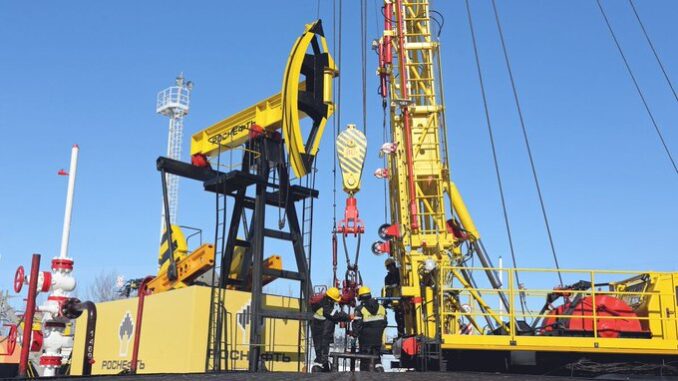
In a move that underscores the ongoing ripple effects of Western sanctions on Russia’s energy sector, at least one independent Chinese refiner—commonly known as a “teapot”—has snapped up Russian ESPO crude at a significant discount. The purchase, made late last week, came at a markdown of $7 to $8 per barrel below the ICE Brent benchmark, marking the deepest discount seen this year for the grade.
This development follows a sharp drop in demand for ESPO after the U.S. imposed fresh sanctions on major Russian producers Rosneft PJSC and Lukoil PJSC, highlighting how geopolitical pressures are reshaping global oil trade flows.The sanctions, part of a broader Western effort to curb Russia’s war funding through its fossil fuel revenues, have forced Russian exporters to offer steeper discounts to maintain sales volumes.
While no specific details on the refiner’s identity, the exact volume purchased, or precise delivery timelines were disclosed, the deal reflects a pattern where buyers in Asia, particularly in China and India, are capitalizing on these price breaks. ESPO crude, typically shipped from Russia’s Far East, has seen its appeal wane amid compliance fears, pushing sellers toward more opaque, intermediated transactions that further depress prices.
Are Sanctions Working, or Just Handing Out Bargains?
The big question swirling around this transaction: Are these sanctions truly biting into Russia’s oil machine, or are they merely giving opportunistic buyers like China and India a sweetheart deal? The evidence suggests a mixed bag. On one hand, sanctions—including the oil price cap mechanism—have undeniably squeezed Russian revenues. Recent analyses show Russia’s oil and gas earnings plummeting by up to 50% to a five-year low, battered by drone strikes on infrastructure and tighter enforcement.
The U.S. measures against Rosneft and Lukoil are expected to reduce export volumes and complicate foreign projects, adding to economic distress in Moscow.
A lower price cap, if enforced more rigorously, could slash revenues by as much as 40% from the EU embargo’s onset.
Yet, resilience in the Russian economy tells another story. Despite predictions of collapse, Russia has adapted through evasion tactics like the infamous “dark fleet” of shadow tankers, which continue to ferry oil to willing buyers while skirting restrictions.
Countries like India, China, and even Turkey are not exiting the market but adapting, opting for discounted barrels that bolster their energy security without fully complying with Western caps.
If these nations pull back due to compliance risks, they risk losing access to cheap Russian imports that have fueled their refining booms—but for now, the discounts appear too enticing to pass up.
This dynamic means sanctions are pressuring prices downward for Russian grades, but not halting flows entirely, allowing the Kremlin to sustain funding amid stagnation and militarization.
Experts argue that while the measures represent progress in Western strategy, more aggressive steps—like tightening the price cap further—are needed to amplify the impact.
In essence, sanctions are working to some degree by eroding Russia’s profit margins and forcing concessions, but they’re also inadvertently subsidizing energy-hungry economies in Asia with bargain-basement oil.
Strong Demand Signals Point to Higher Prices in 2026
Looking beyond the sanctions saga, the broader oil market narrative remains one of robust demand set against tightening supply. Projections indicate global oil consumption will continue climbing over the next 15 years, driven by economic growth and persistent energy needs despite the push toward renewables.
Key players like China, India, and the U.S. are at the forefront: China’s teapot refiners are ramping up amid domestic recovery, India’s import surge shows no signs of slowing, and U.S. consumption holds steady even as shale production faces volatility.
In the U.S., the Energy Information Administration (EIA) forecasts a slight dip in crude output for 2026, which could constrict supply and buoy prices.
Meanwhile, disruptions to Russian infrastructure from Ukrainian drone attacks are exacerbating global tightness, potentially elevating benchmarks.
Saudi Aramco’s massive $100 billion investment signals unwavering confidence in oil’s enduring value, aligning with a bullish outlook.
As long as demand from these powerhouse economies stays strong—and early indicators suggest it will—oil prices are poised for an uptick in 2026. Sanctions may dent Russian supply, but the resulting discounts could actually stimulate more buying from Asia, keeping the market balanced yet upward-trending. Investors should watch this space: Geopolitics may create short-term volatility, but the fundamentals scream resilience and growth.For more insights on energy markets, stay tuned to Energy News Beat, where we dive deep into the forces shaping tomorrow’s oil landscape.
Sources: Energynewsbeat.co, Bloomberg.com, cepa.org




