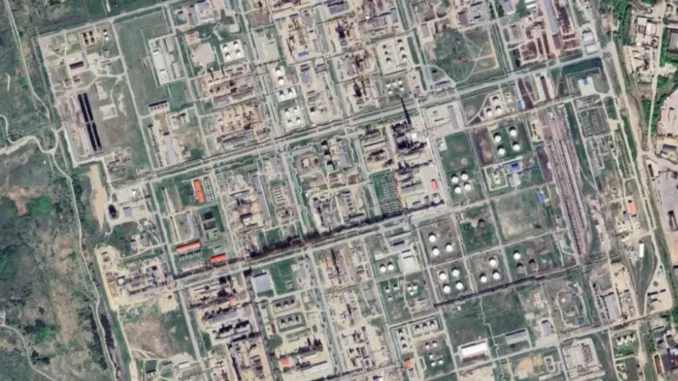
In a bold escalation of its long-range drone campaign, Ukraine has claimed responsibility for a strike on Rosneft’s Syzran oil refinery in Russia’s Samara region. The attack, which occurred overnight on December 27, 2025, marks the latest in a series of targeted operations aimed at disrupting Russia’s energy infrastructure amid the ongoing conflict. Ukrainian military sources confirmed the hit, reporting that drones ignited a fire at the facility, damaging key processing units and forcing the refinery to halt operations.
This incident underscores Kyiv’s strategy to weaken Moscow’s economic backbone by targeting oil production and refining capabilities, which have become increasingly vulnerable to such asymmetric warfare.
Details of the Syzran Strike and Damage Assessment
The Syzran refinery, a major asset for state-owned Rosneft, processes around 8.5 million tons of crude oil annually, producing diesel, gasoline, and other fuels critical to Russia’s domestic and export markets.
According to reports, multiple explosions were heard in the area, with air defenses activated but unable to prevent the drones from reaching their target.
Ukrainian intelligence assessed that the strike caused significant infrastructure damage, including to primary crude distillation units, leading to an immediate shutdown.
Initial damage assessments indicate that the fire affected storage tanks and processing equipment, with Reuters sources noting that the refinery could remain offline for weeks or longer.
This isn’t the first time Syzran has been hit; earlier strikes in August 2025 also targeted the site, suggesting a pattern of repeated attacks to maximize disruption.
Ukrainian officials estimate that such operations have inflicted substantial operational setbacks, though Russian authorities downplayed the incident, claiming only minor damage and no casualties.
Broader Context: Recent Ukrainian Drone Attacks on Russian Refineries
The Syzran strike is part of a intensified campaign that has seen over 140 Ukrainian drone attacks on Russian oil refineries and depots in 2025 alone—1.5 times more than in 2024.
November 2025 marked a record month with at least 14 strikes, crippling facilities across regions like Volgograd, Ryazan, and Novorossiysk.
These operations have reduced Russia’s overall refining capacity by an estimated 10-20%, with some analyses suggesting up to 38% of targeted refineries’ output has been affected at various points.
Despite Russia’s use of spare capacity to offset losses—resulting in only a 3% drop in overall oil processing this year—the cumulative impact has forced Moscow to prioritize domestic supply over exports.
Attacks have not only damaged physical infrastructure but also exposed vulnerabilities in Russia’s energy sector, which relies heavily on outdated facilities ill-equipped to withstand modern drone threats.
Russia’s Export Controls Amid Reduced Refining Capacities
In response to these disruptions, Russia has imposed and extended strict export controls on diesel and gasoline. The government recently prolonged a temporary ban on gasoline exports through February 28, 2026, and restricted diesel sales to non-producers and traders.
These measures, initially introduced in September 2025, aim to stabilize domestic fuel prices and prevent shortages amid a “fuel crisis” triggered by the attacks.
The bans reflect a broader shift: with refining throughput down by as much as 400,000 barrels per day in September 2025, Russia has redirected more crude oil to exports while curbing refined products.
This has led to a plunge in diesel exports to an eight-year low, exacerbating global supply tensions.
Economic Toll on Russia: Revenue Losses and Repair Costs
The financial repercussions for Russia have been severe. Ukrainian strikes have contributed to a collapse in oil revenues, with October 2025 alone seeing a $3.94 billion drop, bringing monthly earnings to around $9.46 billion—a 25% year-on-year decline when factoring in broader sanctions.
Overall, Kyiv estimates that its drone campaign has inflicted $74.1 billion in total damages to Russian infrastructure in 2025, much of it tied to energy targets.
Refinery disruptions have freed up crude for export, boosting those revenues slightly, but the net effect is a 17.1% decline in oil exports amid reduced refined product sales.
Repair costs remain opaque due to limited Russian disclosures, but experts indicate they are substantial and prolonged. Damaged facilities often require months or years to fully restore, with sanctions complicating access to Western parts and technology, potentially inflating costs by 20-50%.
For major refineries like Syzran, individual repair bills could run into hundreds of millions of dollars, with aggregate costs across affected sites estimated in the billions when including lost production time.
Who Buys Russian Diesel and Gasoline, and How Will They Be Impacted?
Since the EU’s 2023 embargo on Russian refined products, Moscow has redirected exports to non-Western markets. Key buyers include:Turkey: The largest importer, taking around 1.2 million tons of diesel monthly, accounting for a significant portion of Russia’s seaborne fuel exports.
Brazil: A growing market, importing about 0.53 million tons of diesel per month.
China and India: Major recipients of crude but also refined products, with China buying 40% of Russia’s total fossil fuel exports in August 2025.
Africa and Other Regions: Emerging buyers like those in Central Asia, which have faced shortages due to Russia’s bans.
These export controls will hit buyers hard. Turkey and Brazil may face supply shortfalls, forcing them to source costlier alternatives from the Middle East or the U.S., potentially driving up global diesel prices by 5-10%.
China and India could see minor disruptions but might absorb more crude instead. In Central Asia, countries like Kazakhstan have already experienced fuel price hikes and export delays linked to Russian infrastructure damage.
Overall, the bans expose the fragility of Russia’s “shadow fleet” and redirected trade routes, amplifying pressure on global energy markets already strained by geopolitical tensions.As Ukraine continues its drone offensive, the strikes on facilities like Syzran highlight the high-stakes energy war underpinning the conflict. For Russia, the costs are mounting—not just in rubles, but in strategic leverage lost.
Sources: yahoo.com, kyivindependent.com, qcintel.com, evrimagaci.org, rferl.org, themoscowtimes.com