


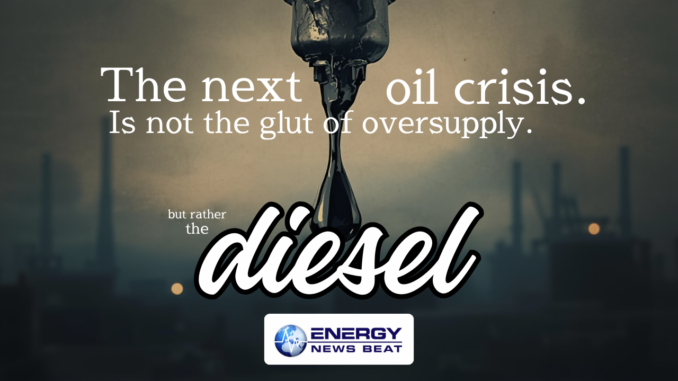
As we step into 2026, the global energy landscape is poised for turbulence, with whispers of an oil “glut” dominating headlines. Yet, this narrative may be overstated, influenced by geopolitical pressures and market dynamics that could reshape supply realities.
Drawing from recent analyses, including Reuters’ outlook and insights from OPEC and specialized energy commentary, here are five key trends to monitor. These trends highlight not just oversupply fears but also downstream pressures, pricing mechanisms, and shifts in renewables and gas markets.
1. The So-Called Oil Glut: Oversupply Fears vs. Geopolitical Realities
The International Energy Agency (IEA) forecasts a massive oil surplus in 2026, with global supply outstripping demand by about 3.85 million barrels per day (bpd)—roughly 4% of total demand.
This follows a 20% drop in Brent crude prices in 2025, settling around $60 per barrel, driven by booming production from the U.S., Canada, Brazil, and OPEC+ members. Seaborne oil stocks are at their highest since April 2020, and China’s stockpiling adds to the bearish sentiment. However, this glut may be overstated. Geopolitical pressures on the “dark fleet”, the shadowy network of aging tankers evading sanctions on Russian, Iranian, and Venezuelan oil, are intensifying.
Stricter enforcement could disrupt these flows, reducing effective supply and realigning markets toward true supply-demand balance. OPEC+ has paused planned output increases amid these surpluses, signaling a defensive stance to prop up prices.
Watch for how these factors play out: if dark fleet disruptions escalate, the glut could evaporate faster than expected, stabilizing prices around current levels rather than plunging further.
2. Refining Margins and Diesel Dynamics: Why Downstream Matters More Than Crude Fears
While crude oversupply grabs attention, the real story in 2026 lies downstream in refining and products like diesel. Diesel profit margins surged 30% in 2025, even as crude prices fell 20%, thanks to supply constraints from Ukrainian drone strikes on Russian refineries and EU bans on Russian fuel imports.
With minimal new refining capacity coming online, these trends are set to persist, creating a bifurcated market: cheap crude but pricey refined products. This downstream impact eclipses glut fears for several reasons. Crude gluts affect producers upstream, but diesel shortages hit consumers and industries directly—think transportation, agriculture, and manufacturing. Geopolitical disruptions amplify this, as seen with reduced Russian diesel exports. In a world of electrification and efficiency gains, demand for diesel remains resilient, making margins a bellwether for economic health. If peace in Ukraine emerges, it might ease pressures slightly, but expect volatility here to outweigh crude’s downward pull, potentially keeping end-user costs elevated.
3. LNG Oversupply: Squeezed Margins Amid Expanding Capacity
The liquefied natural gas (LNG) market mirrors oil’s glut narrative but with its own twists. Global export capacity is projected to balloon by 300 billion cubic meters per year by 2030—a 50% increase—with the U.S. accounting for 45% of the growth.
In 2026, supply will likely outpace demand, compressing margins and pushing prices lower, especially as U.S. natural gas prices rise. Yet, this could be a double-edged sword. Cheaper LNG might boost its competitiveness against oil and coal, spurring demand in Europe and Asia for power generation and heating. Geopolitical factors, like ongoing tensions in key export regions, add uncertainty. Track U.S. export policies and Asian import trends; if demand surges from economic recovery, LNG could avoid a full-blown slump, offering opportunities for traders navigating the glut.
4. Big Oil’s Outlook: Cost-Cutting Today, Investments Tomorrow
Major players like Chevron, Exxon Mobil, and TotalEnergies slashed 2026 spending by about 10% in response to low prices, announcing broad cost reductions.
OPEC+ is similarly cautious, with delegates confirming production pauses to counter surpluses and defend prices amid fiscal breakevens as high as $91 per barrel for Saudi Arabia.
Despite short-term headwinds, the long view is optimistic. Western majors are ramping up exploration for projects in the late 2020s and 2030s, while Middle Eastern producers like Saudi Arabia and the UAE prepare upstream investments. This could lead to acquisitions of struggling firms during the downturn. OPEC’s role in pricing remains central, but announcements suggest a shift toward more responsive mechanisms tied to actual production and demand—potentially evolving from rigid quotas to dynamic adjustments.
Will we see entirely new oil market pricing? Not a revolution, but incremental changes: OPEC’s World Oil Outlook emphasizes stability through supply matching demand, which could mean more market-driven pricing if non-OPEC output continues to surge.
Expect consolidation and strategic pivots as Big Oil weathers the storm.
5. Renewables Growth: Tempered Expectations in a High-Demand World
The IEA has downgraded its 2030 renewable power forecast by 248 GW (about one-fifth), now projecting 4,600 GW total capacity, with solar dominating at 80%.
Electricity demand is set to rise 4% annually through 2027, fueled by data centers and electrification, even as energy transitions slow for security reasons. Falling costs for solar, wind, and batteries will drive adoption, but geopolitical uncertainties and supply chain issues could hinder progress. One topic rarely discussed is the technology required to add solar and wind to the grid, with AC vs. DC electricity. This is an additional expense that consumers are usually required to pick up.
In the context of oil and gas gluts, cheaper fossils might tempt delays in green shifts—yet, long-term, renewables offer resilience against volatile commodity prices. Monitor policy incentives in the U.S. and EU; if AI-driven demand explodes, renewables could accelerate to fill the gap, countering the overall downbeat energy mood.
In summary, 2026’s “glut” label belies a complex interplay of supply gluts, downstream squeezes, and adaptive strategies. While crude oversupply looms, diesel’s resilience and OPEC’s maneuvers suggest markets could realign faster than feared, potentially ushering in pricing more attuned to production and demand fundamentals.
Stay tuned—energy markets rarely follow a straight script.
Sources: energynewsbeat.co, reuters.com, bloomberg.com, forbes.com



Be the first to comment