


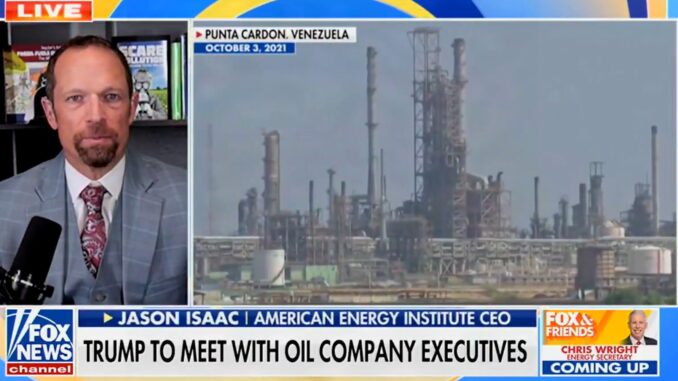
In a recent appearance on Fox & Friends First, former Texas State Representative and current CEO of the American Energy Institute, Jason Isaac, shared his expert insights on President Donald Trump’s upcoming meeting with oil industry executives. The discussion centered on the potential for U.S. companies to revitalize Venezuela’s vast oil reserves, a move that could reshape global energy dynamics. With Venezuela holding the world’s largest proven oil reserves—estimated at 303 billion barrels, accounting for about 17% of global reserves—this initiative comes at a pivotal time amid shifting geopolitical landscapes and domestic energy needs.
Jason raises some great points about the cost of electricity vs. the reduction in oil and gas costs. We have reached out to Jason to get him scheduled on the Energy News Beat podcast.
The interview, aired on January 9, 2026, highlighted Trump’s strategy to deploy American oil giants to repair and operate Venezuela’s dilapidated infrastructure following recent U.S. actions against the Maduro regime, including his capture. Isaac emphasized how this could counter rising electricity costs driven by what he termed “Green New Scam commitments and climate litigation,” while capitalizing on falling gas prices to ensure broader energy affordability.
Gas prices falling. Electricity costs soaring. That is not a coincidence. Green New Scam commitments and climate litigation are driving up power costs while China benefits. Real energy affordability starts with reliable electricity. My comments on @foxandfriends w/… pic.twitter.com/8ohHZdsQlH
— Fmr. Rep. Jason Isaac (@ISAACforEnergy) January 9, 2026
Key Insights from Jason Isaac’s Interview
Isaac, a vocal advocate for reliable and affordable energy, praised the plan as a pragmatic step toward energy independence. He noted that Venezuela’s oil sector has been crippled by years of mismanagement under socialist policies, leading to crumbling facilities and untapped potential. “We’re going to have our large oil companies go in, spend billions of dollars, fix Venezuela’s badly broken oil infrastructure, and start making real progress,” Isaac echoed Trump’s sentiments during the segment.
He tied this to broader U.S. energy trends: gas prices have been declining due to increased domestic production, but electricity costs are soaring because of regulatory burdens on traditional power sources. Isaac argued that unlocking Venezuelan oil could provide a buffer, allowing the U.S. to diversify supply chains away from adversarial nations like China, which benefits from current global energy imbalances. “Real energy affordability starts with reliable electricity,” he stated, underscoring the need to prioritize fossil fuels amid the push for renewables.
Visuals during the interview showcased Venezuela’s oil fields, flaring operations, and graphics detailing the reserves, reinforcing the scale of the opportunity.
Implications for the Oil Industry
This development could mark a significant shift for the global oil market. By allowing U.S. firms to invest heavily in Venezuela, the plan aims to boost production from the Orinoco Belt, home to the country’s heavy, viscous crude. Experts suggest this could add millions of barrels per day to global supply, potentially stabilizing or even lowering world oil prices in the long term.
However, challenges abound. Venezuela’s crude is notoriously difficult and costly to extract and refine, requiring specialized technology and infrastructure upgrades. Geopolitical risks, including ongoing instability and international sanctions, could complicate operations. Fact-checks from sources like PolitiFact have urged caution, noting Trump’s optimistic projections may overlook these hurdles. Additionally, as highlighted in a Wall Street Journal analysis, current global oil demand might not immediately absorb the influx, risking oversupply.
On the positive side, this aligns with Trump’s “drill, baby, drill” ethos, potentially easing regulatory pressures on U.S. producers and fostering new partnerships. It could also redefine influence in Latin America, reducing Russia’s and China’s footholds in the region.
Companies Poised to Benefit
Several major U.S. oil companies with historical ties to Venezuela are likely frontrunners in this initiative. Based on discussions and industry reports:
Chevron: Already holding stakes in Venezuelan projects, Chevron could expand operations significantly. The company has navigated sanctions in the past and possesses the expertise for heavy oil extraction.ExxonMobil: With prior disputes over expropriated assets, ExxonMobil stands to reclaim and develop fields. Their advanced drilling technologies would be key to revitalizing output.
ConocoPhillips: Similar to Exxon, Conoco has unresolved claims from past nationalizations and could see billions in compensation tied to new investments.
Other players like Occidental Petroleum or smaller independents might join, but the “big three” are expected to lead, investing billions to modernize refineries and pipelines. This could boost their stock values and production portfolios, providing a hedge against domestic regulatory uncertainties.
How This Could Benefit Consumers
At the heart of Isaac’s commentary is the consumer impact. Increased Venezuelan oil flowing into global markets could exert downward pressure on gasoline prices, which have already been trending lower. By securing more affordable crude, U.S. refiners might pass savings to drivers, potentially dropping pump prices below $3 per gallon in many regions.
Beyond gas, a more stable oil supply could indirectly curb electricity costs by reducing reliance on volatile natural gas markets and easing the strain from green energy mandates. Isaac pointed out that while electricity bills rise due to litigation and subsidies for renewables, abundant fossil fuels ensure baseload power remains reliable and cheap. For everyday Americans, this translates to lower utility bills, reduced transportation costs, and overall economic relief—especially for low-income households disproportionately affected by energy poverty.
Critics, however, warn of environmental trade-offs and the risk of entrenching fossil fuel dependence, but proponents like Isaac argue that responsible development in Venezuela could outperform dirtier alternatives from less regulated producers.
Looking Ahead
Jason Isaac’s insights on Fox & Friends paint a picture of opportunity amid energy challenges. As Trump meets with executives, the world watches to see if this bold strategy delivers on its promises. For the oil industry, it’s a chance at expansion; for consumers, a path to affordability. Stay tuned to Energy News Beat for updates on this evolving story.
Sources: Fox News interview with Jason Isaac (January 9, 2026), PolitiFact fact-checks, Wall Street Journal analysis, and industry reports.



Be the first to comment