



In the heart of California’s oil country, a critical artery for the state’s energy supply has been severed. The San Pablo Bay Pipeline, the largest inland crude oil pipeline in the Golden State, has shut down, forcing thousands of barrels of oil to be transported by truck instead. What was once a seamless underground flow from Kern County’s oil fields to Bay Area refineries now requires nearly 100 trucks rumbling down the roads every single day. This isn’t just a logistical headache—it’s a harbinger of skyrocketing fuel prices, potential shortages, and a deepening energy crisis that could push gas and diesel costs to $8 or even $10 per gallon. But the real question is: Has Governor Gavin Newsom’s relentless war on oil finally tipped California over the edge, compromising not just consumer wallets but national security?
The Pipeline Shutdown: A Domino Effect in Motion
The San Pablo Bay Pipeline, which carries crude oil from Southern California’s prolific Kern County fields northward to refineries in the Bay Area, is hemorrhaging money—losing about $2 million per month due to dwindling throughput.
The trouble escalated when Valero’s Benicia refinery canceled contracts in December 2025, leaving PBF as the only buyer and dropping volumes to around 30,000 barrels per day—well below the 60,000 needed for profitability.
With no viable path forward, the pipeline’s operators pulled the plug, stranding oil that now must be trucked to alternative destinations like Los Angeles refineries.
Steve Layton, president of E&B Natural Resources, painted a grim picture in a recent interview: “If at 15,000 barrels a day, that’s almost a hundred trucks a day that are on the road in Kern County that weren’t on the road three months ago.”
Trucking costs alone add $5 to $10 per barrel, a burden that will inevitably trickle down to consumers at the pump.
This shift not only increases emissions—ironic given California’s green agenda—but also strains already congested highways, raising safety concerns and further inflating transportation costs for everything from groceries to goods.This closure isn’t isolated. It’s part of a broader collapse in California’s refining infrastructure. Recent shutdowns, including Valero’s Benicia plant and another in the Bay Area, have slashed in-state production, with jet fuel output alone dropping by an estimated 600,000 gallons per day.
California, lacking inbound pipelines for crude, gasoline, or aviation fuels, relies heavily on tanker shipments—many from foreign sources—making it vulnerable to global disruptions like wars, sanctions, or shipping delays.
Consumer Pain: From $5 Gas to $10 Diesel?
Californians are no strangers to high fuel prices, but this could be the tipping point. Gas prices have already jumped 25 cents per gallon in just a week following recent refinery woes.
Experts warn that with continued closures and reduced domestic supply, prices could rip past $5 and head toward $8 or $10 for both gasoline and diesel by mid-2026.
The state’s unique fuel blend requirements exacerbate the issue, limiting imports and driving up costs.Beyond the pump, the ripple effects are profound. Higher diesel prices mean increased costs for trucking, which hauls 80% of California’s goods, leading to pricier food, construction materials, and everyday essentials. As one analysis starkly puts it, “Achieving California’s goal of net zero by 2045 requires rapidly transitioning away from combustible fuel. It’s a risky strategy.”
And with Shell announcing the closure or divestment of around 1,100 gas stations nationwide—hitting California hard—the state faces potential fuel deserts, where access to affordable energy becomes a luxury.
Newsom’s War on Oil: Mission Accomplished, But at What Cost?
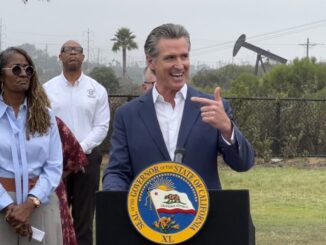
Governor Gavin Newsom’s policies have been the fuel behind this fire. From halting new fracking permits in 2021 to aiming for a complete phase-out of oil extraction by 2045, Newsom has made no secret of his intent to dismantle the fossil fuel industry.
Critics, including Republican Congressman Vince Fong, argue that this “war on energy is crippling California,” creating uncertainty that has driven refineries and pipelines out of business.
Recent attempts at relief, like approving 2,000 new permits in Kern County, fall short—the math simply doesn’t add up, with production too low to sustain infrastructure.
Newsom’s administration has been accused of regulatory overreach, with lawsuits and compliance burdens pushing operators to the brink. As Layton noted, “The state… has not been very shy about saying they want to put you out of business.”
Even efforts to find buyers for closing refineries, like Valero’s, highlight the desperation: California officials are intervening in rare moves to avert total collapse, yet dependency on imports grows.
This isn’t just economic sabotage; it’s a self-inflicted wound. California’s push for renewables has left it importing more foreign oil, ironically funding conflicts like the Ukraine-Russia war while closing local refineries.
The irony? The state’s military bases, key to national defense, are now at risk.
National Security on the Line: 30+ Military Bases in Jeopardy
California hosts over 30 military installations under the U.S. Indo-Pacific Command, from Air Force bases to Army outposts, consuming about 10 million gallons of gasoline annually.
These bases rely on local refineries for jet fuel, diesel, and gasoline—supplies now slashed by refinery closures. A projected drop of 600,000 gallons per day in jet fuel production could hamper rapid deployments, turning California’s energy crisis into a national security nightmare.
Congressman Fong warns that shortages could “undermine our military readiness,” as bases capable of global response in hours might be grounded without fuel.
With pipelines directly feeding some installations, the shutdown exacerbates vulnerabilities.
In an era of geopolitical tensions, relying on foreign imports for defense-critical fuels is a dangerous gamble. As one expert put it, California’s policies pose “a major national risk.”
The Breaking Point: Time for a Reckoning?
As 100 trucks hit the roads and prices loom higher, California stands at a crossroads. Newsom’s war on oil may have “succeeded” in driving out producers, but it’s left consumers, the economy, and national defense in tatters. With President Trump’s administration pushing back—seizing oversight of offshore pipelines and eyeing federal control of refineries—the showdown between federal energy independence and state green mandates is heating up.
Is this the breaking point? For millions of Californians facing lines at the pump and empty wallets, it sure feels like it. The state must prioritize reliable, domestic energy production over ideological pursuits—or risk a full-blown crisis that echoes far beyond its borders. Stay tuned to Energy News Beat for more on this unfolding story, and check out our podcasts for in-depth discussions on how policies like these are reshaping America’s energy landscape. Stu Turley will be interviwing Katy Grimes, Editor in Chief of the California Globe on this critical issue soon.
Sources: energynewsbeat.co, californiaglobe.com



Be the first to comment