


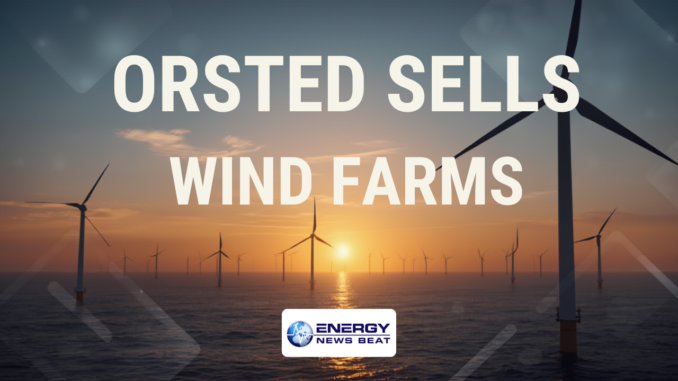
In a significant move within the renewable energy sector, Danish energy giant Orsted has divested its entire European onshore renewables business to Copenhagen Infrastructure Partners (CIP) for €1.44 billion, equivalent to approximately $1.7 billion.
This transaction marks the completion of Orsted’s planned divestment program, allowing the company to sharpen its focus on offshore wind development while bolstering its financial position amid ongoing industry challenges.
Why Is Orsted Selling?
Orsted’s decision to sell stems from a strategic pivot to concentrate resources on its core offshore wind operations in key European markets.
The company has faced a turbulent period, including setbacks in U.S. offshore projects and broader financial pressures in the renewables space.
By offloading its onshore assets, Orsted aims to strengthen its balance sheet and streamline operations. The sale is part of a broader divestment initiative designed to generate capital for reinvestment in high-priority areas, such as expanding offshore wind capacity. This move comes at a time when the global energy transition is accelerating, but rising costs and supply chain issues have prompted many firms to reassess their portfolios.
Who Is the Buyer?
The buyer, Copenhagen Infrastructure Partners (CIP), is a Danish investment firm specializing in energy infrastructure.
CIP manages funds focused on greenfield renewable projects and has a strong track record in onshore wind, solar, and battery storage. This acquisition aligns with CIP’s growth strategy, adding over 800 MW of operating and under-construction assets to its portfolio, along with a multi-gigawatt development pipeline.
Following the deal, the acquired business will operate as a standalone entity, potentially allowing for more agile development in the onshore renewables market.
Where Are the Wind Farms Located?
The portfolio spans four key European countries: Ireland, the United Kingdom, Germany, and Spain.
It includes approximately 578 MW of operational capacity and 248 MW under construction, encompassing onshore wind, solar energy, and battery storage projects.
These assets are strategically positioned in regions with strong renewable energy potential, contributing to local grids and supporting national decarbonization goals.
Implications for Investors and Consumers
For investors, this sale represents a consolidation trend in the renewables industry. Orsted’s shareholders may benefit from improved financial health and a more focused strategy on offshore wind, which could yield higher returns in the long term given the sector’s growth projections.
CIP investors, meanwhile, gain access to a diversified, high-quality portfolio with significant upside in development pipelines, potentially driving value through operational efficiencies and expansions. The deal underscores the attractiveness of onshore renewables amid falling technology costs and supportive policies, though investors should monitor regulatory risks and grid integration challenges.
Consumers in the affected regions stand to gain from continued investment in clean energy. The transition to CIP ownership could accelerate project development, enhancing energy security and reducing reliance on fossil fuels.
This might lead to more stable electricity prices over time, as renewables typically offer lower long-term costs compared to volatile fossil fuel markets. However, short-term disruptions during the handover are possible, and the broader impact will depend on how quickly new capacity comes online to meet growing demand.
Energy Mix in the Major Markets Impacted
The sale affects countries with varying energy profiles, each advancing toward greener grids. Below is a breakdown of the electricity generation mix for each based on 2025 data:
|
Country
|
Key Sources and Shares
|
Low-Carbon Share
|
Notes
|
|---|---|---|---|
|
Ireland
|
Gas: 39%, Wind: 32%, Solar: 4%, Biofuels: 4%, Coal: 3%, Hydro: 3%, Other: 15% (including imports).
lowcarbonpower.org
|
42%
|
Renewables hit 40% overall in 2024, with wind dominating; 2025 saw continued growth in solar and imports playing a key role.
cso.ie
|
|
United Kingdom
|
Renewables: 47% (Wind: 30%, Solar: 6%, Hydro/Biomass: 11%), Gas: 28%, Nuclear: 11%, Imports: 10%.
carbonbrief.org
|
58%
|
Record renewables output in 2025, with wind as the top source; gas rose slightly but coal phased out entirely.
lowcarbonpower.org
|
|
Germany
|
Wind: 29%, Coal: 22%, Solar: 16%, Gas: 13%, Biofuels: 9%, Hydro: 5%, Other: 6%.
lowcarbonpower.org
|
61%
|
Renewables covered 56% of consumption; solar surged 21%, overtaking lignite for the first time.
cleanenergywire.org
|
|
Spain
|
Wind: 22%, Solar: 20%, Nuclear: 20%, Gas: 20%, Hydro: 15%, Biofuels: 2%, Other: 1%.
lowcarbonpower.org
|
79%
|
Renewables at 56% (including self-consumption); solar led annual output, surpassing 100 GW installed renewable capacity.
ree.es
|
This divestment highlights the dynamic evolution of Europe’s energy landscape, where onshore renewables continue to play a pivotal role in achieving net-zero ambitions.
As Orsted refocuses and CIP expands, the deal could catalyze further innovation and investment in wind power. Countries such as China and India are shifting toward increased drilling for oil, gas, and rare earth minerals, even as energy security is a focus. If you cannot manufacture wind and solar components, those countries should consider adding baseload power to control fuel costs and availability. All four countries that have these wind farms also have the highest electricity and energy costs.



Be the first to comment