


By Stuart Turley, Energy News Beat
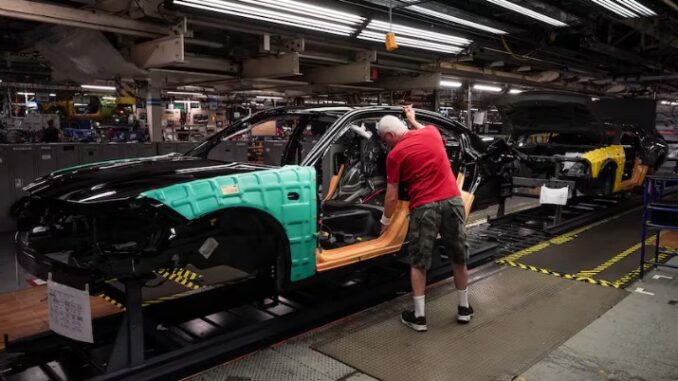
In a stunning admission that echoes the skepticism long voiced by industry watchers, Stellantis—the multinational automaker behind brands like Jeep, Chrysler, Fiat, and Peugeot—has taken a $26 billion sledgehammer to its electric vehicle (EV) ambitions. This massive write-down, announced as part of a broader “business reset,” signals a pivotal retreat from the aggressive all-in EV strategy that has left legacy automakers bleeding cash. Drawing directly from Robert Bryce’s sharp analysis on his Substack, the move underscores a harsh reality: customers, not corporate mandates or government edicts, are dictating the pace of the automotive energy transition.
Bryce, a veteran energy journalist with a knack for cutting through the hype, doesn’t mince words in his piece titled “Stellantis Writes Down $26B On EVs, Shifts To ‘Freedom Of Choice.'” He skewers the company’s press release for its almost comical rediscovery of basic marketing principles—putting “customers’ preferences at the heart” of plans and focusing on “demand rather than command.” It’s a biting reminder that Stellantis, once racing to electrify its lineup under former CEO Carlos Tavares’ vision of a fully EV Europe by 2030 and 50% EV penetration in the U.S., has been outpaced by reality. The $26 billion charge (equivalent to about €22 billion) reflects not just overbuilt factories and unsold batteries, but a fundamental miscalculation of consumer appetite for pure EVs.This isn’t an isolated fumble. Since 2022, seven major automakers have collectively hemorrhaged $140 billion on EV misadventures, with Stellantis’s hit pushing the tally even higher.
Ford and General Motors have already booked billions in similar writedowns, as EV sales growth sputters amid high prices, range anxiety, and a charging infrastructure that’s still more promise than reality.
In the U.S., EV market share hovered around 7-8% in 2025, far short of the 20%+ projections that fueled the frenzy. Europe fares no better, with subsidy cuts and economic headwinds cooling enthusiasm.
Pivoting to Hybrids: A Bridge Fuel That’s Paying Off
Enter the hybrid revival—a pragmatic “freedom of choice” menu item that’s suddenly the hottest ticket in town. Stellantis’s reset explicitly embraces a multi-pathway approach: scaling back pure EV targets while ramping up production of hybrids and plug-in hybrids (PHEVs) to meet actual demand.
CEO Antonio Filosa, Tavares’ successor, framed it as a customer-centric evolution, promising a lineup that includes gas, hybrid, and electric options tailored to regional preferences. For Stellantis, this means accelerating hybrid Jeep Wranglers and Chrysler Pacificas, vehicles that blend electric efficiency with the reliability of internal combustion engines—no wall plug required.If this shift sticks, the real winners aren’t the EV evangelists but the hybrid heavyweights who’ve been quietly stacking profits while others chased unicorns. Toyota, the undisputed king of hybrids, stands to gain the most. The Japanese giant has sold over 20 million hybrids since the Prius debuted in 1997, and its strategy of incremental electrification—hybrids as a stepping stone, not a skip—has shielded it from the EV bloodbath. In 2025, Toyota’s hybrid sales surged 25% year-over-year, capturing 40% of the U.S. hybrid market and delivering operating profits that dwarfed competitors’ EV losses.
With Stellantis and others flooding the market with new hybrid models, Toyota’s economies of scale in battery tech and transmissions will only widen the gap.
Honda isn’t far behind, leveraging its e:HEV system to power hits like the CR-V Hybrid, which outsold many pure EVs in 2025. And don’t sleep on Hyundai-Kia, whose affordable PHEVs like the Tucson have carved out a loyal following in fleet sales. Suppliers will feast too: Companies like Aisin (Toyota’s transmission arm) and LG Energy Solution could see order books swell as hybrid demand explodes. Analysts predict hybrid sales could hit 3 million units annually in North America by 2028, up from 1.5 million in 2025, as consumers seek the best of both worlds—electric torque without the full commitment to battery life.
This pivot validates what Bryce and other skeptics have argued: Hybrids aren’t a compromise; they’re a superior bridge fuel in an energy transition that’s anything but linear. They reduce emissions without stranding assets or ignoring the intermittency of renewables. For oil markets, it’s a boon—hybrids sip fuel more efficiently than pure gas guzzlers, but they keep demand steady, shielding producers from the EV cliff.
Tesla: The Tech Unicorn in EV Sheep’s Clothing
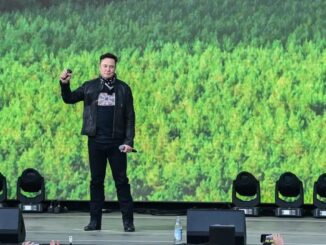
Amid the carnage, one EV pure-play emerges unscathed—and arguably strengthened: Tesla. While Stellantis licks its wounds, Tesla isn’t just surviving; it’s thriving as the tech disruptor that happens to build cars. Elon Musk’s empire transcends four wheels, positioning it as a winner for investors betting on innovation over incumbency.
Tesla’s secret sauce? Software and autonomy. Full Self-Driving (FSD) subscriptions now generate recurring revenue streams, turning vehicles into rolling data centers for AI training. The company’s Dojo supercomputer and Optimus humanoid robot hint at a future where Tesla is less Detroit and more Silicon Valley—poised for robotaxi fleets and energy ecosystems via Megapack batteries. In Q4 2025, Tesla’s energy storage deployments hit 10 GWh, outpacing vehicle sales growth and diversifying beyond the EV slowdown.
Investors get it: Tesla’s stock has decoupled from broader auto woes, trading at a premium valuation (forward P/E over 60) that screams “tech stock,” not “carmaker.” While Stellantis’s market cap languishes below $40 billion, Tesla’s exceeds $1 trillion, fueled by bets on AI and robotics. As hybrids steal share from legacy EVs, Tesla’s moat—vertical integration, OTA updates, and a cult-like brand—ensures it captures the premium segment. Bryce might quip that Tesla succeeded by ignoring the “command” playbook altogether, letting Musk’s vision command the market instead.
Choice Over Coercion: Lessons for the Energy Beat
Stellantis’s $26 billion epiphany isn’t just an auto headline; it’s a microcosm of the energy world’s broader reckoning. Bryce nails it: The EV rush was a top-down fever dream, subsidized by trillions in green mandates that ignored physics, economics, and human behavior. Freedom of choice—whether in powertrains or power sources—means hybrids, natural gas peakers, and nuclear baseloads all have roles in a resilient grid.
For Energy News Beat listeners, this is vindication. The podcast’s mantra of pragmatic energy solutions rings true: Let markets, not models, lead. As Stellantis serves up a diverse menu, the winners will be those who listened to customers first—Toyota’s hybrids humming along highways, Tesla’s bots revolutionizing labor, and an oil patch breathing easier. The transition continues, but on terms that finally make sense.
Stuart Turley is the host of Energy News Beat and a fierce advocate for energy realism. Follow him on X at @STUARTTURLEY16
for daily dispatches.
Sources: Tesla.com, automotivemanufacturingsolutions.com, robertbryce.substack.com


Be the first to comment