


By Stuart Turley, Energy News Beat
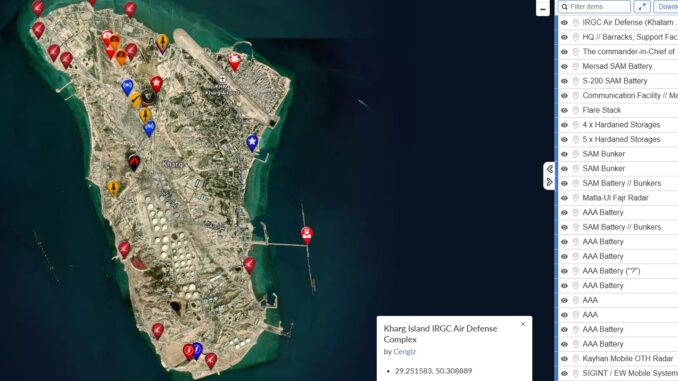
In a development that underscores the resilience of Iran’s oil infrastructure amid escalating geopolitical tensions, satellite imagery has confirmed the presence of two oil tankers at Kharg Island, Iran’s primary oil export terminal in the Persian Gulf. This sighting comes just hours after U.S. precision strikes targeted military installations on the island, signaling that critical energy assets remain operational and unharmed.
According to data from TankerTrackers.com, a leading firm in satellite-based ship monitoring, a very large crude carrier (VLCC) capable of holding up to 2 million barrels of oil and a smaller Aframax tanker were spotted berthed at the facility mid-morning on March 14, 2026. Neither vessel was present the previous day, indicating a swift return to loading activities despite the overnight military action.
Samir Madani, co-founder of TankerTrackers.com, highlighted the observation, noting the tankers’ arrival as a clear sign that export operations are proceeding without interruption.
The U.S. strikes, executed by Central Command, focused exclusively on over 90 military targets, including missile bunkers, naval mine storage, and other defense-related sites.
President Donald Trump described the operation as “one of the most powerful bombing raids in the history of the Middle East,” emphasizing that every military objective was “totally obliterated” while deliberately sparing the island’s oil infrastructure.
This targeted approach aligns with broader U.S. strategy to pressure Iran without disrupting global energy supplies, even as Tehran continues to block the Strait of Hormuz, a vital chokepoint for one-fifth of the world’s oil transit.
The confirmation of intact oil facilities at Kharg Island arrives against the backdrop of significant political shifts in Iran. Following the assassination of former Supreme Leader Ayatollah Ali Khamenei on February 28, 2026, his son Mojtaba Khamenei was unanimously elected by the Assembly of Experts as the new Supreme Leader on March 9.
In his first public statement, Mojtaba vowed to maintain the blockade on the Strait of Hormuz and demanded the closure of U.S. bases in the region, defying international calls for de-escalation.
This stance comes amid ongoing protests and economic turmoil in Iran, fueled in part by U.S.-led sanctions that have created a severe dollar shortage and rampant inflation.
U.S. officials view the continued functionality of Kharg’s oil operations as an opportunity to implement stricter financial controls. Treasury Secretary Scott Bessent, who has spearheaded the administration’s “maximum pressure” campaign, is poised to impose sanctions reminiscent of those applied to Venezuela’s oil sector.
These measures aim to restrict Iran’s access to global financial systems, targeting illicit petroleum sales and disrupting funding for its military and proxy activities.
Bessent has publicly acknowledged the role of these economic tactics in exacerbating Iran’s internal challenges, stating that they have successfully engineered a currency crisis without firing a shot.
Meanwhile, Energy Secretary Chris Wright is expected to take a leading role in overseeing any resumed Iranian oil sales under international supervision. Wright, a vocal advocate for energy security, has emphasized the need to secure the Strait of Hormuz, recently noting U.S. Navy escorts for tankers to ensure global oil flows.
He predicts a “surge of investment” in the Middle East once Iran’s regime is “defanged,” arguing that short-term price volatility will give way to long-term stability and lower costs for consumers.
With oil prices already climbing due to the conflict, Wright’s oversight could involve coordinating with allies to monitor and potentially redirect Iranian exports, preventing revenue from bolstering Tehran’s military ambitions.
This latest intelligence from Kharg Island not only affirms the precision of U.S. military operations but also paves the way for enhanced economic leverage over the new Iranian leadership. As global markets watch closely, the ability to maintain oil flows while tightening the financial noose could prove pivotal in resolving the standoff in the Persian Gulf. For energy stakeholders, it’s a reminder that even in times of conflict, the pumps keep running—ready for the next phase of strategic control.
Sources: wsj.com, bloomberg.com




Be the first to comment