


Energy News Beat – March 18, 2026
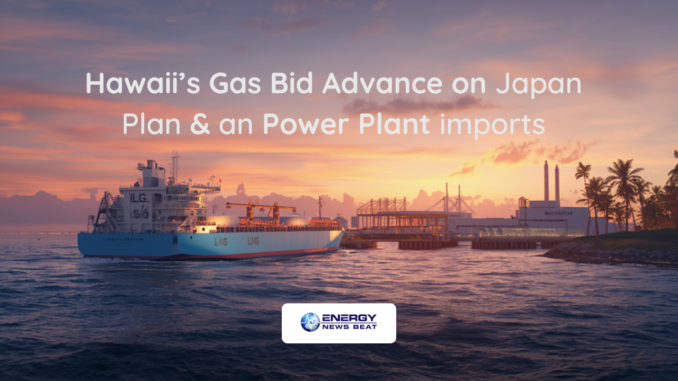
HONOLULU — Hawaii is moving decisively to break its decades-long dependence on expensive imported petroleum for electricity, with Japan’s largest power company, JERA Co., delivering a detailed blueprint that puts a new LNG-to-power solution firmly on track. The proposal, shared after a closed-door meeting with Trump administration officials on March 17 and made public the following day, calls for a ~500 MW hybrid combined-cycle and simple-cycle natural gas plant paired with an offshore floating LNG regasification facility — a $2 billion-plus investment expected to deliver cheaper, cleaner, and far more reliable power while serving as a practical bridge to the state’s 2045 100% renewable mandate.
Hawaii’s electricity mix remains the most oil-heavy in the nation. In 2025, Hawaiian Electric reported a consolidated 37% renewable portfolio standard across its islands (driven largely by solar, wind, geothermal, and biofuels), meaning roughly 63% still comes from petroleum. On Oahu — home to the vast majority of the state’s population and demand — the picture is even starker: approximately 70% of generation is oil-fired (up from ~60% before the 2022 coal plant retirement), with renewables at only ~30-31% in recent years. Statewide, petroleum accounts for 60-81% of electricity, depending on the dataset, pushing average retail rates above $0.43/kWh — more than three times the U.S. national average.
This oil dependence creates triple pain: sky-high bills for families and businesses, grid vulnerability to global supply shocks (exacerbated by Middle East tensions), and elevated emissions. Oahu’s carbon intensity sits at roughly 670 kg CO₂e/MWh — nearly double the U.S. average — because legacy oil plants run at low efficiencies (~32-34%).
Enter the LNG solution — and why it delivers immediate emissions cuts and strong investment returns.
JERA’s plan replaces aging oil-fired capacity with modern high-efficiency gas turbines (up to 57% efficient in combined-cycle mode). Independent analyses and Hawaii State Energy Office studies show natural gas combustion emits ~35% less GHG than low-sulfur fuel oil, and when paired with efficient new plants, lifecycle CO₂e reductions reach 38-44% versus continued oil use. JERA itself projects a ~20% drop in greenhouse gas emissions over the next two decades while enabling greater solar and wind integration by providing fast-ramping firm power that slashes curtailment (e.g., avoiding ~1 GWh/day of wasted solar).
The economics are equally compelling. JERA estimates electricity generation costs drop ~20% versus oil, delivering ~$170 million in annual savings for ratepayers (~$500/year per household) — with the LNG infrastructure paying for itself in under two years. Even under conservative sensitivities (3-year delay or 20% capital overrun), savings remain robust at ~$130-140 million/year. Over the decade-plus bridge period, total benefits run into the billions while hedging against volatile oil prices. The floating storage/regasification unit (FSRU) also opens maritime bunkering opportunities, adding another ~$25 million/year in economic upside.
A smart, flexible investment that aligns with Hawaii’s long-term goals.
The ~500 MW facility is explicitly designed for fuel flexibility — capable of transitioning to hydrogen or renewable natural gas post-2045 — and is sited in an industrial zone with pipeline ties to the existing grid. Construction targets completion by 2031 after 2.5 years of design/permitting, with first power as early as 2030. JERA brings proven expertise from island LNG projects worldwide and commits to partnering on additional renewables development.
Interior Secretary Doug Burgum called the plan “transformational,” noting it will “lower energy costs and strengthen the stability of the state’s power grid” by tapping America’s abundant LNG supply. Governor Josh Green added: “We are bringing billions of dollars in new energy investments to Hawaiʻi — securing more affordable, reliable energy for the people of our state.”
Critics rightly point to Hawaii’s ambitious 2045 renewable law and worry about any fossil extension, but the data show this is no detour — it is the fastest, lowest-cost path to cut emissions today while giving intermittent renewables the firm backup they need to scale without blackouts or massive overbuild. Oil is the status quo; LNG in modern, flexible plants is the proven bridge used successfully by other import-dependent islands (including Japan itself).
For Hawaii families paying triple-digit electric bills, businesses struggling with competitiveness, and a grid increasingly prone to outages, this JERA partnership is a pragmatic win: lower costs, lower emissions, higher reliability, and preserved optionality for a fully renewable future. The bid is advancing — and Hawaii’s energy future just got brighter, cleaner, and more affordable. Energy News Beat will continue tracking filings with state regulators and any final investment decision. Stay tuned for deeper dives on the emissions modeling and ratepayer impact.
Source: bloomberg.com, governor.hawaii.gov, hawaiianelectric.com
Get your CEO on the #1 Energy Podcast in the United States: https://sandstoneassetmgmt.com/media/
Is oil and gas right for your portfolio? https://energynewsbeat.co/invest/




Be the first to comment