


In a shocking escalation of the escalating Middle East conflict, Iranian missile and drone strikes have delivered a devastating blow to QatarEnergy’s core operations at Ras Laffan Industrial City — the world’s largest LNG export hub. The attacks have shuttered 17% of Qatar’s LNG production capacity for up to five years, triggering an estimated $20 billion annual revenue loss for the state-owned giant and sending ripples through global energy, technology, and agricultural supply chains.
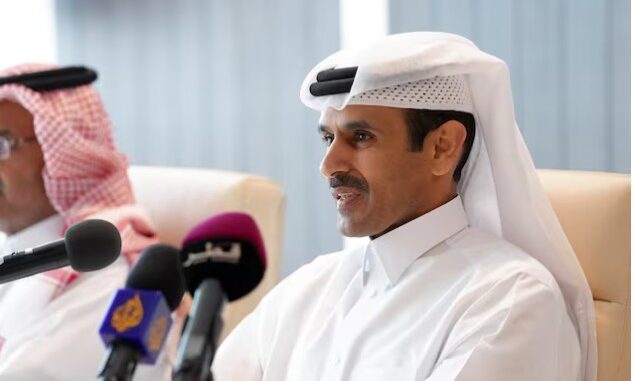
QatarEnergy CEO and Energy Minister Saad al-Kaabi described the strikes as unprecedented, stating, “I never in my wildest dreams would have thought that Qatar would be — Qatar and the region — in such an attack, especially from a brotherly Muslim country in the month of Ramadan, attacking us in this way.” He confirmed that production at the damaged facilities cannot restart until hostilities cease.
Damage Report: What Was Hit and How Badly?
Iranian strikes targeted Ras Laffan (and earlier Mesaieed facilities), causing extensive damage, including fires that have now been contained with no reported casualties:
LNG Trains: Two of Qatar’s 14 trains (S4 and S6) were severely damaged. These represent 12.8 million tons per annum (mtpa) of LNG capacity — equivalent to 17% of Qatar’s total LNG export capacity. Repairs will take 3–5 years. The damaged units alone cost approximately $26 billion to build.
Gas-to-Liquids (GTL) Facility: The Pearl GTL plant (one of two) sustained heavy damage. Shell-operated, it could be offline for up to one year.
Broader Shutdowns: QatarEnergy has halted all LNG and “associated products” production across Ras Laffan and Mesaieed, extending to downstream chemical and petrochemical operations.
ExxonMobil holds stakes in the damaged LNG trains (34% in S4 and 30% in S6), while Shell is a key partner in the Pearl GTL facility.
Products Affected: LNG, Helium, By-Products, and Fertilizers
The outage extends far beyond LNG. QatarEnergy has quantified the hits to key exports and by-products from the damaged facilities:LNG: 17% of national capacity offline (12.8 mtpa).
Condensate: Exports down 24% (18.6 million barrels affected).
LPG (Liquefied Petroleum Gas): Exports down 13%.
Helium: Output down 14% (Qatar normally supplies ~30% of global helium as a byproduct of natural gas processing at Ras Laffan).
Naphtha: Exports down 6%.
Sulphur: Exports down 6%.
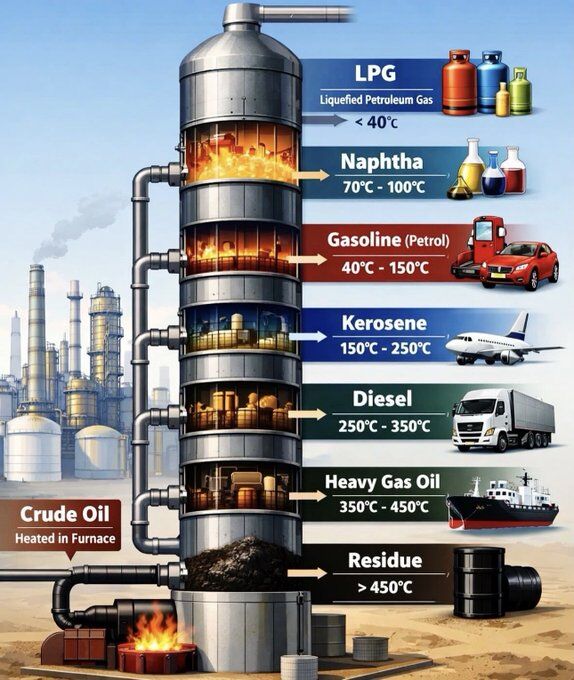
Additionally, downstream operations at Mesaieed have halted production of urea (fertilizer), polymers, methanol, and other petrochemicals. Natural gas feedstock shortages from the LNG shutdown directly starve these facilities, disrupting Qatar’s role as a major urea exporter.
Qatar accounts for nearly 20% of global LNG exports (second only to the U.S.), making this the most significant supply shock in years.
Perl GTL
Pearl GTL has been hit – and is now offline.
This cannot be understated.
Pearl is not just another facility. It is the world’s largest gas-to-liquids plant, one of the most complex and capital-intensive energy projects ever built.
Operated by Shell, it taps directly into… https://t.co/9Luik2a3wc
— Alexandre Araman (@TheBarrelMind) March 19, 2026
Saudi found the exit door but Iran is already targeting it
Count the strikes👇
💥 Mina al Ahmadi refinery — Kuwait
💥 Mina Abdullah refinery — Kuwait
💥 Pearl GTL facility — Qatar
💥 QatarEnergy LNG facilities — Qatar
💥 Samref refinery — Saudi Arabia
💥 Habshan gas facilities… pic.twitter.com/TyqQEzmKae— Jack Prandelli (@jackprandelli) March 20, 2026
Everyone’s watching oil but Nobody’s watching helium
⚠️ That’s a mistake
Qatar just lost 33% of global helium supply overnight.
Most people think helium = balloons🎈
Here’s what it actually powers:
🧠 MRI scanners, liquid helium is irreplaceable for cooling
💻 Chip… pic.twitter.com/NjUWvFIMbH— Jack Prandelli (@jackprandelli) March 20, 2026
Customers and Markets: Who Gets Hit First?
QatarEnergy has already declared (or will declare) force majeure on long-term LNG contracts for up to five years. Directly impacted buyers include:
Italy – Edison (via Train S4)
Belgium – EDFT (via Train S4)
South Korea – KOGAS (via Train S6)
China – Shell (via Train S6)
Europe and Asia face the greatest risk, with potential shortages driving spot prices higher. Secondary markets include:
India – Reduced LPG supplies could affect household cooking and restaurants.
South Korea & Taiwan – Helium shortages threaten semiconductor fabrication (chips for electronics, EVs, and AI).
Global Medical & Industrial Users – Helium is critical for MRI machines, cryogenics, and high-tech manufacturing. Analysts warn of a full-blown global helium crisis, with spot prices already doubling in some segments.
Naphtha and condensate shortfalls will squeeze petrochemical and refinery feedstocks worldwide. Sulphur reductions could indirectly pressure fertilizer production (sulphur is a key nutrient).Helium Outage: A Hidden Crisis for Tech and Medicine
Qatar’s Ras Laffan complex extracts helium as a byproduct of LNG processing. With Qatar historically providing one-third of the world’s supply, the 14% drop in Qatari output — combined with full plant shutdowns — removes a massive chunk of global traded helium. Semiconductor giants in Asia are already scrambling for alternative sources, but there is virtually no spare capacity.
Medical imaging and scientific research face allocation risks in the coming weeks.
Financial Impact of Iran’s Attack
Direct Hit to QatarEnergy: ~$20 billion in lost annual LNG revenue alone. Broader product losses (condensate, LPG, etc.) compound the damage.
Rebuild Cost: The two LNG trains alone represent $26 billion in invested capital.
Market Shock: Global oil and gas prices have surged. European and Asian spot LNG prices are spiking as buyers scramble for cargoes. North Field expansion projects (Qatar’s planned capacity growth) are now delayed by over a year.
Longer-Term: Repairs could take 3–5 years, setting the Gulf energy sector back “10 to 20 years,” per al-Kaabi. Force majeure declarations will trigger contract disputes and higher global prices for years.
Broader Implications for Global Secondary Markets
This isn’t just an energy story. Helium shortages threaten chip production and medical care. Fertilizer (urea) disruptions add upward pressure on food prices amid already tight global supplies. LPG shortfalls hit everyday consumers in Asia. Condensate, naphtha, and sulphur ripple into plastics, refining, and agriculture.
Energy News Beat will continue monitoring developments as the region assesses the full fallout. QatarEnergy’s emergency response teams remain on site, but full recovery hinges on de-escalation — something that currently looks distant.
Stay tuned to Energy News Beat for the latest on how this unprecedented attack reshapes global energy security. The shutter at Ras Laffan has opened a new chapter of vulnerability in world markets.
Sources: arabnews.jp, bloomberg.com, reuters.com




Be the first to comment