


Energy News Beat Channel Exclusive Analysis – March 21, 2026
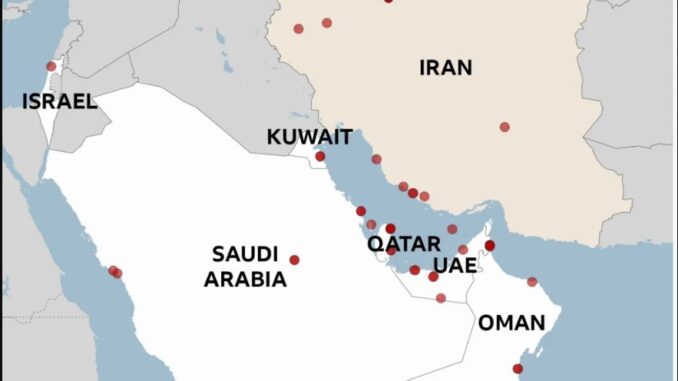
The U.S.-Israeli campaign against Iran, which escalated dramatically in early March 2026, has rapidly transformed into a full-scale “energy war.” Both sides and their proxies have deliberately targeted refineries, gas processing plants, LNG terminals, oil storage facilities, pipelines, and tankers. These strikes have disrupted critical supply chains across the Persian Gulf, effectively choking the Strait of Hormuz (through which ~20% of global seaborne oil and LNG normally flows) and triggering record spikes in oil (nearing $110+/bbl) and European natural gas prices (+35% in a single day).
Below is a comprehensive, country-by-country list of confirmed energy infrastructure targets hit as of March 21, 2026, including the perpetrator, type of facility, and estimated damage/repair timelines based on official statements and industry analysis. Impacts on oil, LNG, diesel, helium, and other products are quantified where data is available.
Iran (Targets Hit by Israel, with U.S. Awareness)South Pars / Asaluyeh Gas Field & Processing Complex (Bushehr Province): Israeli airstrike/drone attack on March 18 damaged four gas treatment plants and associated pipelines/storage. This field supplies 70-75% of Iran’s total natural gas production; the strike took ~12% of national gas output offline and halted two refineries processing 100 million m³/day. Fires were contained, but production remains curtailed.
Repair estimate: Months to 1+ year for full restoration of affected phases.
Off-market impact: Major domestic gas shortage; Iran halted exports to Iraq. Minimal direct crude oil loss (separate fields), but petrochemical output (including some diesel feedstocks) reduced.
Tehran Oil Storage Facilities:
Israeli strike on March 8 caused large fires and toxic “black rain.”
Repair estimate: Weeks for storage; ongoing environmental cleanup.
Off-market impact: Short-term crude and product storage disruption; no major export impact.
Kharg Island Terminal (90% of Iran’s pre-war ~1.6 mbpd crude exports): Military sites hit; oil export infrastructure explicitly spared so far. Operations largely intact but threatened.
Israel (Targets Hit by Iran)Bazan
(Oil Refineries Ltd) Haifa Complex: Iranian missile strike on March 19 caused localized damage to the electrical/power infrastructure and an administrative area. No hazardous leaks; most production units restarted quickly.
Capacity: 197,000 bpd (~64% of Israel’s total refining).
Repair estimate: Days to weeks; “not significant” per Energy Minister.
Off-market impact: Negligible long-term; minor short-term diesel/gasoline disruption inside Israel.
Qatar (Targets Hit by Iran)Ras Laffan Industrial City (World’s Largest LNG Hub): Multiple Iranian missile strikes (March 18-19) damaged two of 14 LNG trains and one gas-to-liquids facility. “Extensive damage” and fires were reported.
Capacity loss: 12.8 million tons per annum (mtpa) LNG — exactly 17% of Qatar’s export capacity — offline. Qatar supplies ~20% of global LNG.
Repair estimate: 3–5 years (two trains effectively destroyed; rebuild cost ~$26 billion). Force majeure declared on contracts.
Off-market impact: LNG: 12.8 mtpa permanently removed from global markets for years (~3–4% of world supply).
Helium: Qatar produced >1/3 of global supply pre-war; output now down 14% from this facility alone, triggering a global shortage (5.2 million m³/month removed). Critical for semiconductors, MRI machines, and data centers.
Other products: Condensate exports –24%, LPG –13%, naphtha & sulphur –6% each. ~$20 billion annual revenue loss.
Saudi Arabia (Targets Hit by Iran)SAMREF Refinery (Yanbu, Red Sea): Iranian drone strike; fire reported but “minimal impact.” Key alternative export route bypassing Hormuz.
Capacity: ~400,000 bpd (joint Aramco-Exxon).
Repair estimate: Days/weeks; loadings briefly halted, then resumed.
Off-market impact: Negligible net crude/product loss.
Shaybah Oil Field & East-West Pipeline: Drone/missile threats and possible strikes; used for Red Sea bypass exports.
Off-market impact: Temporary flow reductions; no long-term capacity loss confirmed.
Kuwait (Targets Hit by Iran)Mina Al-Ahmadi & Mina Abdullah Refineries (plus possible others): Iranian drone/missile strikes caused fires.
Combined capacity: ~800,000+ bpd (Mina Al-Ahmadi alone ~730,000 bpd).
Repair estimate: Weeks to months (exact damage assessments ongoing).
Off-market impact: Short-term diesel, gasoline, and jet fuel shortages in the region; global product market tightness.
United Arab Emirates (Targets Hit by Iran)Habshan Gas Facility, Shah Gas Field, Fujairah Oil Hub & Ruwais Refinery: Missile/drone strikes and fires; multiple facilities shut preemptively. Fujairah is the terminus for the Abu Dhabi crude pipeline (1.5 mbpd capacity).
Repair estimate: Variable — days for precautionary shutdowns, weeks for fire-damaged sites.
Off-market impact: Temporary gas and crude export reductions.
Tankers, Pipelines & Shipping (Primarily Iran Attacks via IRGC)20+ merchant vessels attacked or damaged in the Gulf and off Qatar/UAE.
Strait of Hormuz: Effectively paralyzed by Iranian warnings, mines, and attacks.
Off-market impact: ~15–21 million barrels per day (mbpd) of crude and products + associated LNG flows blocked or rerouted at massive cost. This is the single largest supply shock. East-West (Saudi) and Abu Dhabi-Fujairah pipelines are under pressure but not fully severed.
Energy Repair Timelines & Impact Calculations: By Country
Following the escalation of strikes on energy infrastructure, here is a country-by-country breakdown of repair estimates.
These are calculated using: Official statements (e.g., QatarEnergy CEO Saad al-Kaabi)
Historical precedents (2019 Saudi Abqaiq recovery in 48 hours partial / 2–3 weeks full; Russian refinery drone repairs in 2–8 weeks)
Industry engineering norms for gas processing, LNG trains, pipelines, and tankers
Current damage assessments from fires, missile/drone strikes, and force majeure declarations
Estimates assume no further strikes and access to spare parts (realistic only post-ceasefire; sanctions could double Iranian timelines). I’ve included projected downtime, rough repair costs (USD), and calculated off-market volumes (cumulative lost production where quantifiable, based on capacity × days/months offline).Iran (Targets: South Pars/Asaluyeh Gas Complex + Tehran Storage)Key damage: 4 gas treatment plants + pipelines (12% of national gas output).
Partial recovery: 1–3 months (Iranian engineers state even “complete destruction of all 24 refineries” could return in <3 months via platform isolation and modular fixes).
Full repair: 6–12 months (sanctions limit specialized equipment).
Est. cost: $2–5 billion (parts + rebuild).
Off-market impact calculation: 12% of Iran’s ~1 billion m³/day gas production offline initially → **36–110 billion m³ cumulative gas loss** over 3–12 months. No major crude export hit yet; domestic shortages + halted Iraq exports already occurring. Helium/petrochemicals minimally affected.
Israel (Targets: Bazan Haifa Refinery)Key damage: Localized electrical/power + admin areas (no core processing units).
Partial recovery: 3–7 days (most units already restarted).
Full repair: 2–4 weeks.
Est. cost: $10–50 million.
Off-market impact calculation: Negligible (<1% of Israel’s 197 kbpd capacity long-term). Short-term diesel/gasoline disruption inside Israel only.
Qatar (Targets: Ras Laffan LNG Hub – 2 of 14 trains + 1 GTL plant)Key damage: Two LNG trains (17% of export capacity) + associated facilities; “extensive” fires.
Partial recovery: None feasible (trains effectively destroyed).
Full repair: 3–5 years (confirmed by QatarEnergy CEO; rebuild mirrors original $26 billion construction cost for similar trains).
Est. cost: $20–26 billion (direct rebuild).
Off-market impact calculation: 12.8 mtpa LNG offline. Over 4-year average repair: ~51.2 million tonnes cumulative LNG loss (~3–4% of global supply).
Helium: 14% of global supply removed (Qatar = 1/3 pre-war); **62 million m³ cumulative loss** over 4 years → global shortages for semiconductors/MRI/data centers.
Revenue: $80 billion cumulative loss ($20B annual × 4 years). Condensate/LPG/naphtha/sulphur down 6–24%. Force majeure declared.
Saudi Arabia (Targets: SAMREF Yanbu Refinery + Shaybah/East-West Pipeline)Key damage: Minor fires/drone impacts (Red Sea bypass route).
Partial recovery: 3–10 days (loadings resumed quickly; mirrors 2019 Abqaiq: 2 mbpd in 48 hours).
Full repair: 2–4 weeks.
Est. cost: $100–300 million (hundreds of millions per 2019 precedent).
Off-market impact calculation: ~400 kbpd brief outage → <5–10 million barrels cumulative products lost. Negligible long-term (spare capacity + inventories used).
Kuwait (Targets: Mina Al-Ahmadi + Mina Abdullah Refineries)Key damage: Fires in processing units (~800 kbpd+ combined).
Partial recovery: 2–4 weeks (Russian/Ukraine drone precedent: primary units back in 12–25 days).
Full repair: 1–3 months (if distillation units hit).
Est. cost: $200–800 million.
Off-market impact calculation: 800 kbpd offline for avg. 45 days → ~36 million barrels cumulative diesel/gasoline/jet fuel removed from global markets. Regional tightness already emerging.
UAE (Targets: Habshan Gas/Shah Field + Fujairah Hub/Ruwais Refinery)Key damage: Fires + precautionary shutdowns (Fujairah 1.5 mbpd pipeline terminus).
Partial recovery: 1–2 weeks (precautionary sites already restarting).
Full repair: 2–6 weeks.
Est. cost: $150–400 million.
Off-market impact calculation: Temporary 1–1.5 mbpd crude/gas flow reduction for 2–4 weeks → **14–42 million barrels cumulative** equivalent offline. Mostly recovered via inventories.
Tankers, Pipelines & Shipping (Gulf-wide, Iran-attributed)Key damage: 20+ vessels hit/mined; Strait of Hormuz paralyzed; minor pipeline strikes (East-West, Abu Dhabi-Fujairah).
Partial recovery: Tankers: 2–6 weeks (drydock repairs); Pipelines: 1–4 weeks (small ruptures).
Full repair: 1–3 months for major hull/pipeline sections.
Est. cost: $50–200 million per tanker; $100–500 million per pipeline segment.
Off-market impact calculation: ~15–21 mbpd crude/LNG flows blocked short-term. Even post-ceasefire, hundreds of millions of barrels of cumulative rerouting/delays until shipping normalizes.
Summary: Total Calculated Global Impact (as of March 21, 2026 + projected 3 months)Crude & products: 8–10+ mbpd equivalent offline short-term (Hormuz + refinery hits) → ~720–900 million barrels cumulative over next 90 days.
LNG: 12.8 mtpa structural loss → ~3.2 million tonnes in next 3 months alone (escalating to 51+ million over years).
Helium & others: Immediate global shortages; prices surging 50%+.
Overall repair bill: $25–40 billion across the region (dominated by Qatar LNG rebuild).
These timelines explain why oil is at $110+/bbl and European gas +35%: the long-tail LNG hit in Qatar and Hormuz paralysis dwarf short-term refinery fixes. Repairs accelerate dramatically once hostilities cease (spares, crews, and funding flow). Energy News Beat will update as new satellite/damage assessments emerge. Ceasefire negotiations are now the single biggest variable for global energy markets.
Market-Wide Oil, Gas, and Product Calculations:
What’s Actually “Off the Market”?Crude Oil: Direct field/refinery hits are limited, but Hormuz closure + regional production cutbacks have removed the equivalent of 8–10+ mbpd from global markets in the short term (IEA-aligned estimates). Long-term repair-dependent losses are smaller but persistent.
LNG: 12.8 mtpa (Qatar) offline for 3–5 years — a structural global deficit.
Diesel & Refined Products: Kuwait + minor Gulf refinery outages = several hundred thousand bpd offline for weeks/months. Haifa’s impact is negligible. Global diesel tightness expected.
Helium: ~30%+ of world supply disrupted (Qatar’s share); prices already surging.
The semiconductor and medical sectors face shortages within weeks if unresolved.
Other (LPG, Condensate, Naphtha, Sulphur): Proportional cuts from Ras Laffan (13–24% reductions) plus petrochemical impacts in Iran.
Repair Timelines Summary LNG trains (Ras Laffan): 3–5 years.
Gas processing (South Pars): Months+.
Refineries (Kuwait, Saudi, UAE): Weeks to several months.
Tanker/shipping recovery: Immediate once hostilities cease.
Estimated Repair Costs:
This is the most severe energy infrastructure attack campaign since World War II. With Israel pledging to spare further Iranian energy sites (per Trump pressure) but Iran vowing “zero restraint,” the duration of these outages depends entirely on how quickly a ceasefire can be reached. Energy News Beat will continue monitoring — global markets are pricing in prolonged disruption.
Sources: QatarEnergy CEO statements, Reuters, AP, Bloomberg, Israeli Energy Ministry, and industry analysts (as of March 21, 2026).BBC, Grok
Check out the Energy News Beat Substack: https://theenergynewsbeat.substack.com




Be the first to comment