Germany, once hailed as a pioneer in the global shift to renewable energy, is now facing a stark warning from one of its major grid operators: a potential power shortage starting as early as 2031.
Amprion GmbH, responsible for a significant portion of the country’s high-voltage transmission, has highlighted that power security will deteriorate in the coming years due to rising demand and the rapid closure of traditional power sources without adequate replacements. This alert comes amid Germany’s ambitious Energiewende—the energy transition aimed at achieving net-zero greenhouse gas emissions by 2045, which has reshaped the nation’s energy landscape but at a considerable cost. As industries grapple with skyrocketing energy prices and the specter of deindustrialization, questions arise about whether Germany can navigate this crisis and what lessons other nations should heed from its experience.
The Path to Net Zero: Germany’s Energy Policy Overhaul
Germany’s journey toward net-zero began in earnest with the Energiewende, launched in the early 2010s, which emphasized phasing out fossil fuels and nuclear power while ramping up renewables like wind and solar. By 2023, the country had shuttered its last nuclear power plants, a decision rooted in post-Fukushima safety concerns and public opposition, despite nuclear power providing reliable, low-carbon baseload power.
Coal, another pillar of Germany’s energy mix, is targeted for a complete phase-out by 2030 in some regions, though delays have pushed this to 2038 in others.
This decommissioning has created gaps in dispatchable power—energy sources that can be turned on or off as needed—exacerbated by the intermittent nature of wind and solar.
To fill these voids, Germany invested heavily in renewables, achieving over 50% of its electricity from wind, solar, and other green sources by 2024.
However, the Russia-Ukraine war in 2022 disrupted supplies of cheap Russian natural gas, which had been a transitional fuel.
In response, Germany pivoted to imported liquefied natural gas (LNG) from sources like the US and Qatar, building new terminals at a cost of billions. This shift not only increased energy prices—LNG is more expensive than pipelined Russian gas—but also raised emissions temporarily as coal use surged to avoid blackouts.
These policies were designed to cut emissions by 65% by 2030 compared to 1990 levels, but they’ve come with trade-offs.
The rapid transition has strained the grid, requiring massive investments in infrastructure to transport power from windy northern coasts to industrial southern heartlands.
The Toll: High Energy Costs and Deindustrialization
The consequences of these policies are evident in Germany’s economy. Electricity prices for households and businesses have soared, with industrial users paying some of the highest rates in Europe—up to twice those in the US.
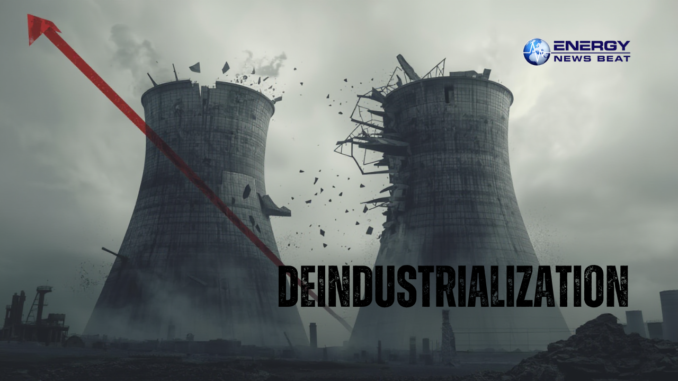
This has fueled deindustrialization, as energy-intensive sectors like chemicals, steel, and manufacturing relocate to countries with cheaper power, such as China or the US.
For instance, major firms like BASF have announced job cuts and shifted operations abroad, citing uncompetitive energy costs as a primary factor.
The 2022 energy crisis amplified these issues, with wholesale prices spiking amid gas shortages.
While Germany avoided widespread blackouts through conservation and imports, the long-term impact has been a slowdown in GDP growth and warnings from trade unions about job losses.
Critics argue that the Energiewende’s focus on speed over stability has undermined Europe’s largest economy, turning it from an energy exporter to an importer vulnerable to global price swings.
The Looming Shortage: Grid Operator’s Stark Warning
According to Amprion’s recent assessment, Germany could face a power supply deficit of 10 to 24 gigawatts by 2030—equivalent to the output of several large power plants—as it closes generation capacity faster than it builds new ones.
The operator cautions against decommissioning more coal-fired plants until there’s clarity on replacement capacity, emphasizing that demand is set to rise with electrification in transport, heating, and industry. This shortfall could lead to reliability issues from 2031 onward, potentially requiring imports or emergency measures to prevent disruptions.
This echoes earlier warnings from regulators, who noted that while reserves might cover rare shortfalls around 2030, the risk grows without swift action.
The grid itself is under strain, with balancing costs ballooning to €2.8 billion in 2024 due to renewable integration challenges.
What Should Germany Do to Avert the Crisis?
To mitigate the impending shortage, experts suggest several pragmatic steps. First, extend the life of reserve coal plants beyond current plans, as recommended by Amprion, to bridge the gap until new capacity comes online.
Second, accelerate the construction of hydrogen-ready gas power plants, with the government already planning investments to provide flexible backup for renewables.
Third, prioritize grid expansions and storage solutions, including batteries, to handle renewable intermittency and reduce blackout risks.
Additionally, streamlining permitting processes for renewable projects and enhancing energy efficiency could help, while reconsidering the full nuclear phase-out—though politically unlikely—might offer long-term stability.
Shortening notification periods for gas grid disconnections could also facilitate a smoother shift to electrified alternatives.
Lessons for Other Countries: Avoid Germany’s Pitfalls
Germany’s experience serves as a cautionary tale for nations pursuing net-zero goals. Key lessons include balancing ambition with reliability: phasing out baseload sources like nuclear and coal too quickly without sufficient backups can lead to instability and higher costs.
Diversify energy imports to avoid over-reliance on single suppliers, as seen with Russian gas.
Prioritize economic impacts, ensuring transitions are just and inclusive to prevent deindustrialization and public backlash.
Countries like the UK and the US should learn from Germany’s grid challenges by investing early in infrastructure and storage.
Ultimately, while renewables are essential, a pragmatic mix—including transitional fuels and technology-neutral policies—can achieve net-zero without sacrificing energy security or prosperity.
As Germany scrambles to adapt, the world watches to refine its own paths to a sustainable future.
Sources: poweringpastcoal.org, resilience.org, strategicenergy.eu, cleanenergywire.org, theelectricityhub.com, bloomberg.com,
Want to get your story in front of our massive audience? Get a media Kit Here. Please help us help you grow your business in Energy.