As the energy landscape evolves, Canada’s oil sands sector is buzzing with anticipation. Following a whirlwind 2025 marked by record production, infrastructure expansions, and shifting global demands, industry analysts predict a wave of mega-mergers in 2026. With smaller acquisition targets dwindling after a busy year of deals, larger players are eyeing consolidations to boost efficiency, cut costs, and capitalize on rising output from Alberta’s vast reserves.
This “merger mayhem” could reshape the sector, driving economies of scale amid volatile prices and geopolitical tensions.
A Banner Year for Production and Infrastructure2025 was a record-setter for Alberta’s oil industry, with production averaging around 4.1 million barrels per day (MMb/d), up from previous highs thanks to enhanced capacity.
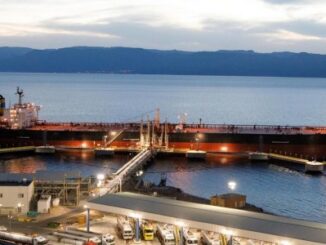
The Trans Mountain Expansion Project (TMX), which came online in 2024, played a pivotal role by increasing pipeline capacity to 890,000 b/d and enabling greater access to tidewater ports. This has not only alleviated bottlenecks but also opened doors to new markets, reducing Canada’s heavy reliance on U.S. exports.
Total Canadian crude exports hit new peaks, reaching 4.44 MMb/d in November 2025, driven by strong demand and diversified destinations.
However, this growth has set the stage for consolidation. After a spate of mid-sized acquisitions in 2025, fewer independent operators remain, pushing majors toward blockbuster deals. Potential targets include companies with undervalued assets in the oil sands, where synergies could unlock billions in value. Analysts point to factors like maturing fields, regulatory pressures, and the need for technological upgrades as catalysts for mergers.
Oil Flows South: Shipments to the United States
The United States remains Canada’s dominant oil customer, absorbing the lion’s share of exports. In 2025, U.S. imports of Canadian crude averaged around 3.8-4.1 MMb/d, representing about 85-93% of total exports depending on the month.
This volume edged up from 2024’s 3.93 MMb/d, bolstered by integrated infrastructure and proximity.
Key U.S. regions like the Midwest (PADD 2) and Gulf Coast (PADD 3) imported the bulk, with heavy oil from Alberta’s sands ideally suited for complex U.S. refineries.
Despite brief trade tensions, including a short-lived 10% tariff on Canadian energy in early 2025 (later exempted under USMCA), flows remained robust.
This interdependence underscores the strategic importance of Canadian oil to U.S. energy security, supplying over 60% of U.S. crude imports.
Domestic Consumption: Fueling Canada’s Economy
Within Canada, domestic crude oil consumption held steady in 2025, with total oil use at approximately 2.33 MMb/d.
Refineries processed around 1.75-1.89 MMb/d, with about 74% sourced domestically—primarily from Western Canada.
Alberta, Saskatchewan, and British Columbia rely almost entirely on local production, while Eastern provinces like Ontario (85% domestic) and Quebec import more from the U.S. and abroad.This consumption supports industrial sectors, transportation, and heating, with Canada ranking as the ninth-largest global oil consumer at about 2.3% of world demand.
As production surges, excess volumes are exported, but domestic needs ensure a balanced market, mitigating oversupply risks.
Expanding Horizons: Shipments to Asian Markets
A game-changer in 2025 was the surge in exports to Asia, fueled by TMX’s enhanced marine access. Non-U.S. exports climbed to a record 676,000 b/d in November, nearly tripling from the prior year and comprising 15% of total exports.
China emerged as the top Asian buyer, importing up to 354,000 b/d at peak, with total value reaching C$5.9 billion from May 2024 to September 2025.
Other destinations included Singapore (C$1.6B), Hong Kong (C$1.5B), South Korea (C$411M), and India (C$158M).This diversification addresses long-standing pipeline constraints, offering higher netbacks for producers and supply security for Asian refiners seeking alternatives to Middle Eastern and Venezuelan heavy crude.
With Asia’s oil demand at 39 MMb/d (37% of global), Canada is positioning itself as a key supplier, potentially boosting exports further in 2026.
Canadian Companies Eyeing U.S. Listings
Many Canadian oil giants are already dual-listed on U.S. exchanges, facilitating access to broader investor bases. Prominent names include:Canadian Natural Resources Ltd. (CNQ): A top producer with oil sands focus, traded on NYSE.
Suncor Energy Inc. (SU): Integrated operations, NYSE-listed.
Cenovus Energy Inc. (CVE): Heavy oil specialist, on NYSE.
Enbridge Inc. (ENB): Pipeline powerhouse, dual-listed on NYSE.
Imperial Oil Ltd. (IMO): Majority-owned by ExxonMobil, on NYSE.
Other notable listings: Tourmaline Oil Corp. (TOU), ARC Resources Ltd. (ARX), and Vermilion Energy Inc. (VET).
While no major announcements of new U.S. listings emerged in 2025, speculation surrounds smaller firms considering moves for better liquidity amid merger talks. U.S. investors have shown interest, with funds buying into stocks like Whitecap Resources and Cenovus, signaling confidence in Canadian assets.
Outlook: Navigating Merger Mayhem
As 2026 dawns, Canada’s oil sands are primed for transformation. Mega-mergers could streamline operations, enhance competitiveness, and support energy transition goals. Yet challenges loom: fluctuating prices, environmental regulations, and global demand shifts. For the Energy News Beat audience, this sector’s dynamism offers both risks and opportunities—stay tuned as the merger wave unfolds.
Get your CEO on the #1 Energy Podcast in the United States: https://sandstoneassetmgmt.com/media/
Is oil and gas right for your portfolio? https://sandstoneassetmgmt.com/invest-in-oil-and-gas/