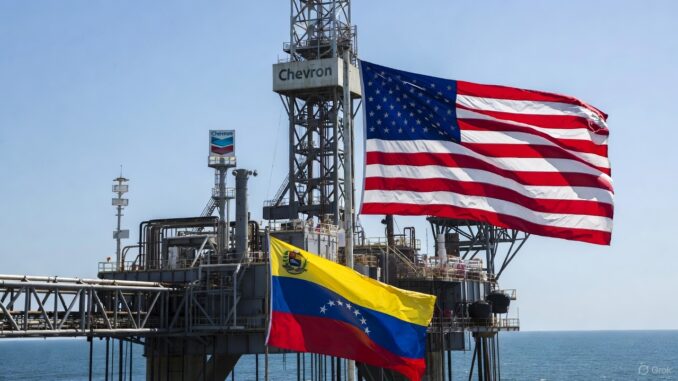
In the volatile landscape of global energy geopolitics, Chevron Corporation stands as a pivotal player in Venezuela’s ongoing crisis. As the only U.S. oil major still operating in the sanctioned nation, Chevron is navigating a complex web of political tensions, economic sanctions, and potential regime change under the Maduro government. Recent discussions between Chevron executives and the Trump administration highlight the company’s strategic importance to U.S. interests, while escalating U.S. military actions—such as strikes on Venezuelan vessels—add fuel to the fire. This article explores Chevron’s holdings in Venezuela, the capital required to ramp up production post-regime change, U.S. interventions involving Venezuelan tankers, their impact on the crisis, key investor considerations, and the vast oil reserves in Chevron’s operational areas.
Chevron’s Strategic Dialogue with the Trump Administration
Chevron has initiated high-level talks with the incoming Trump administration to secure its future in Venezuela, emphasizing that its operations align with U.S. national interests.
CEO Mike Wirth has publicly affirmed the company’s long-term commitment, noting that Chevron’s presence helps stabilize the region and counters adversarial influences.
These discussions come amid a restricted U.S. license granted in July 2025, which allows limited operations but prohibits direct payments to the Maduro regime in any currency.
Under this arrangement, Chevron hands over about half its production to state-owned PDVSA as an in-kind payment, with the U.S. Treasury enforcing strict compliance.
In August 2025, Chevron resumed oil shipments to the U.S. after a four-month pause, averaging over 100,000 barrels per day (bpd).
The company currently produces around 240,000 bpd in Venezuela but can only export half, focusing on heavy crudes from the Orinoco Belt that are upgraded into lighter synthetic oils like Hamaca.
Despite challenges, including production interruptions and a $3 billion debt owed by Venezuela at one point, Chevron employs about 3,000 people locally and has operated there for over a century.
Wirth’s stance underscores a “high-risk, high-reward” bet, with the 2025 license enabling limited drilling while balancing geopolitical pressures.
Chevron’s Holdings in Venezuela: A Network of Joint Ventures
Chevron’s assets in Venezuela are primarily concentrated in joint ventures (JVs) with PDVSA, focusing on the resource-rich Orinoco Belt and other onshore/offshore projects. Since 2006, the company has invested $100 million locally, making it one of the leading private oil firms in the country.
Key holdings include:
Petropiar JV: 30% Chevron interest in the Huyapari Field, processing extra-heavy crude.
PetroBoscan and Other JVs: Interests ranging from 25.2% to 40%, accounting for roughly half of Venezuela’s crude production across five JVs.
Overall Operations: Chevron’s activities represent nearly a quarter of Venezuela’s total oil output, with 2024 averages at 203,000 bpd for the company amid national production of 965,000 bpd.
These assets, valued in the billions, have faced scaling back in some areas due to sanctions, but Chevron maintains equipment and partnerships, positioning it for expansion if political conditions improve.
Capital Requirements for Post-Maduro Production Ramp-Up
A regime change in Venezuela could unlock significant production growth, but it would require substantial capital investment from companies like Chevron. Analysts estimate that Chevron could boost output by an additional 250,000 bpd in the near term with targeted investments, potentially without massive immediate capital outlays if sanctions are lifted.
However, broader industry recovery—aiming to restore Venezuela’s output to pre-sanction levels of over 2 million bpd—might necessitate billions in foreign capital for infrastructure upgrades, well maintenance, and technology.
Short-term disruptions from political upheaval could tighten global supply, but long-term, a stable government courting foreign investment could lead to rapid increases.
For Chevron specifically, estimates suggest investments in the range of $1-3 billion over several years to fully optimize its JVs, drawing from historical patterns where the company avoided significant capex until regulatory clarity.
This includes diluents for heavy crude processing and enhanced recovery techniques.
U.S. Seizures and Strikes on Venezuelan Vessels: Verification and Implications
Recent U.S. actions have intensified the Venezuelan crisis, with the Trump administration authorizing military strikes on vessels alleged to be involved in drug trafficking. In 2025, the U.S. conducted multiple strikes, including a sixth operation in October that sank a suspected Venezuelan drug boat, part of a broader campaign against “narcoterrorists” like the Tren de Aragua syndicate.
https://t.co/1BND27rOck pic.twitter.com/uMfRaZSQmW
— Tracy Shuchart (𝒞𝒽𝒾 ) (@chigrl) December 10, 2025
‼️‼️🇺🇸🇻🇪 BREAKING – U.S. forces have intercepted and seized a sanctioned oil tanker off the coast of Venezuela, according to Bloomberg.
See the latest updates with us: @visionergeo pic.twitter.com/sphEZD0lY1
— Visioner (@visionergeo) December 10, 2025
Footage shows the U.S. seize an oil tanker off the coast of Venezuela, Pam Bondi said on Wednesday, adding that they executed a seizure warrant for a crude oil tanker used to transport sanctioned oil from Venezuela and Iran @Osint613 pic.twitter.com/wy45p4lqh5
— Energy Headline News (@OilHeadlineNews) December 10, 2025
U.S. Navy destroyers like the USS Stockdale have intercepted shadow tankers, such as the Russian-operated Seahorse, which was blocked en route to Venezuela in November before eventually arriving.
These actions, including fighter jet overflights in the Gulf of Venezuela, have raised legal questions under international law and escalated tensions.
Trump has claimed each strike saves up to 25,000 lives by disrupting drug flows, though this is debated.
The impacts on Venezuela’s crisis are profound: disrupted fuel and oil shipments could exacerbate shortages, provoke retaliatory measures from Maduro, and signal potential U.S. military intervention, further destabilizing the economy and accelerating regime collapse.
For the energy sector, this heightens risks of supply interruptions, pushing oil prices higher amid global tightness.
What Investors Should Watch in Chevron’s Venezuelan Involvement
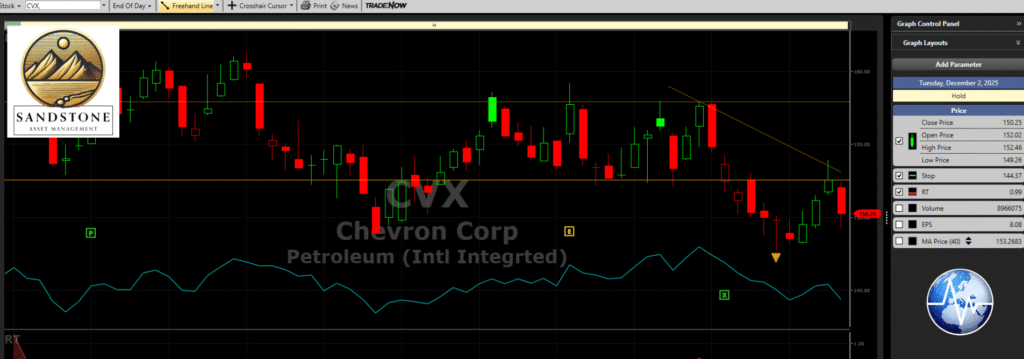
Investors eyeing Chevron’s Venezuelan exposure should prioritize several indicators:Sanctions and License Renewals: Monitor U.S. policy shifts under Trump; a full lifting could enable unrestricted exports and payments, boosting revenues.
Production Metrics: Track quarterly output increases—aiming for 250,000+ bpd growth—and export volumes to U.S. refineries.
Geopolitical Stability: Watch for regime change signals, as short-term chaos could halt operations, but long-term openness to foreign investment offers upside.
Partnerships and Debt Recovery: Progress on recovering the $3 billion owed by PDVSA, plus new JVs with smaller firms if Chevron scales back.
Oil Price Dynamics: Heavy crude from Venezuela suits U.S. Gulf refineries; rising global demand could amplify returns.
Overall, Chevron’s position offers asymmetric upside if tensions resolve favorably, but with elevated risks from U.S.-Venezuela frictions.
Known Reserves in Chevron’s Drilling Areas
Venezuela boasts the world’s largest proven oil reserves at approximately 300.9 billion barrels, with the majority—around 316 billion recoverable barrels from 1.3 trillion in extra-heavy hydrocarbons—located in the Orinoco Belt, where Chevron primarily operates.
In the Huyapari Field and surrounding areas under Petropiar, reserves are part of this vast belt, supporting Chevron’s long-term vision despite current constraints.
These resources underscore why Chevron remains committed, even as production hovers far below potential.As the Venezuelan situation evolves, Chevron’s frontline role could reshape global energy markets. Stay tuned to Energy News Beat for updates on this high-stakes drama.
Sources: chevron.com, aljazeera.com, finance.yahoo.com, discoveryalert.com.au,
Want to get your story in front of our massive audience? Get a media Kit Here. Please help us help you grow your business in Energy.