



In a significant boost for California’s energy security and domestic oil supply, Chevron Corp. announced plans to purchase up to 20,000 barrels per day of crude oil from Sable Offshore Corp.’s newly restarted Santa Ynez Unit platforms off the coast of Santa Barbara. The deal, reported today, marks one of the first commercial sales of oil from Sable’s federal waters operations since the Trump administration invoked the Defense Production Act earlier this month to override state-level delays and restart production.
Sable Offshore, which acquired the Santa Ynez Unit (including platforms Harmony, Heritage, and Hondo) from ExxonMobil, resumed oil flow through the Santa Ynez Pipeline System on March 14, 2026, following direct orders from U.S. Secretary of Energy Chris Wright. The company expects to ramp up to a gross oil rate of 50,000 barrels per day by early April, with first sales targeted for April 1. This restart represents a roughly 15% increase in California’s in-state oil production and has the potential to displace nearly 1.5 million barrels of foreign crude imports each month—oil that would otherwise be refined right here in the Golden State for California drivers, businesses, and consumers.
A Clear Win for California Supply and Jobs
This Chevron-Sable partnership is exactly the kind of pragmatic, pro-California move the state desperately needs. Instead of relying on tankers hauling foreign crude across the Pacific—often from regions now disrupted by global conflict—California refineries will process locally produced oil from federal waters just off Santa Barbara. The crude will flow directly into the state’s pipeline network, supporting in-state refining and keeping more energy dollars and jobs within California borders.
Sable already employs more than 100 workers and approximately 400 contractors in Santa Barbara County, with the restart expected to create hundreds of additional American energy jobs and generate millions in local economic activity. For a state that has aggressively pursued aggressive climate policies at the expense of its own energy infrastructure, this is a rare bright spot: more domestic supply, lower dependence on volatile imports, and tangible economic benefits without new drilling.
Both companies bring solid momentum to the table. Chevron reported robust fourth-quarter 2025 results on January 30, 2026, with adjusted earnings of $3.0 billion ($1.52 per diluted share), beating analyst estimates. The company achieved record worldwide and U.S. production levels in 2025—up 12% and 16%, respectively—while generating $10.8 billion in cash flow from operations and raising its quarterly dividend 4% to $1.78 per share. Chevron’s scale and financial strength position it perfectly to integrate this new local crude supply into its California operations.
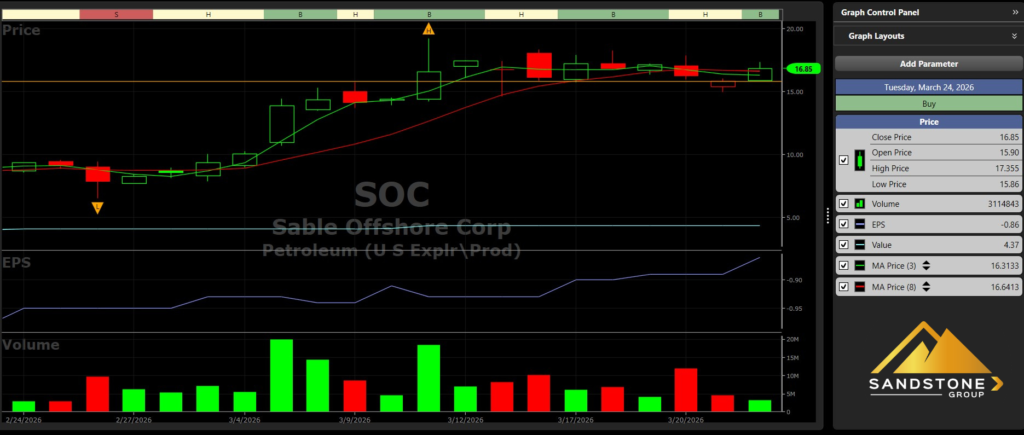
Sable Offshore, while still in turnaround mode, also showed resilience in its full-year 2025 results released February 27. The company posted a net loss of $410.2 million, driven largely by one-time production restart costs, general and administrative expenses, and non-cash interest—typical for a company bringing long-idle assets back online after a decade of shutdown. Yet Sable beat EPS expectations in Q4 and ended the year with $97.7 million in cash and a path forward now cleared by federal action. With first commercial sales imminent and a major buyer like Chevron committed, Sable is poised to transition from the heavy investment phase to revenue generation.
Short-Term Relief in a Tough California Climate
Make no mistake: California’s regulatory and climate policies have created an extraordinarily difficult operating environment for refiners. Environmental opposition delayed Sable’s restart for years, and the state continues to fight the project even as oil flows. Yet today’s announcement delivers a short-term win—more crude for California refineries at a moment when supply is tightening.The bigger picture remains sobering. Without continued federal intervention from President Trump, California is on track to lose massive refining capacity. Two major facilities—Phillips 66’s Los Angeles-area refinery (already closed) and Valero’s Benicia refinery (slated to idle in April 2026)—have already removed or will remove roughly 17% of the state’s gasoline production. Multiple other facilities face similar pressures, with industry leaders warning that as many as six of the state’s seven key refineries could be at risk of closure or severe curtailment absent policy relief. Chevron itself has publicly stated the state cannot afford to lose more refining capacity.
National Security Wake-Up Call from the Iran Conflict
The urgency could not be clearer. The ongoing Iran conflict has exposed the fragility of global energy markets, with disruptions in the Strait of Hormuz slashing oil and diesel supplies and sending prices soaring worldwide. Diesel shortages are rippling across continents, gasoline prices are climbing, and the U.S. military and domestic consumers are feeling the pinch from over-reliance on foreign energy. California’s self-inflicted dependence on imports—exacerbated by years of anti-oil policies—has left the state and the nation vulnerable.
President Trump’s swift use of the Defense Production Act to restart Sable was a national security masterstroke, directly addressing the very risks highlighted by the Iran crisis. The Chevron purchase agreement builds on that foundation, ensuring the new domestic crude actually reaches California consumers rather than sitting idle.
This is progress—but it is not a complete solution. The Chevron-Sable deal buys California valuable time and demonstrates what real energy leadership looks like. Yet without broader intervention to keep the state’s remaining refineries operating, the long-term outlook for affordable, reliable fuel in the nation’s largest gasoline market remains precarious.
Energy News Beat will continue tracking this story as Sable ramps production and first barrels reach Chevron’s California refinery in the coming weeks. For Californians, this is good news today—and a reminder that domestic energy production isn’t just good policy; it’s essential for security, jobs, and affordability.
Sources: sableoffshore.com, chevron.com, energy.gov, bloomberg.com
Check out The Energy News Beat Substack: https://theenergynewsbeat.substack.com/




Be the first to comment