


ENB Pub Note: This article is from Andrew Korybko’s Substack and has some interesting points.
The US might be disappointed, but India’s oil imports have always been driven by market conditions, and neither American nor Venezuelan oil is likely to replace Russian oil at scale anytime soon.
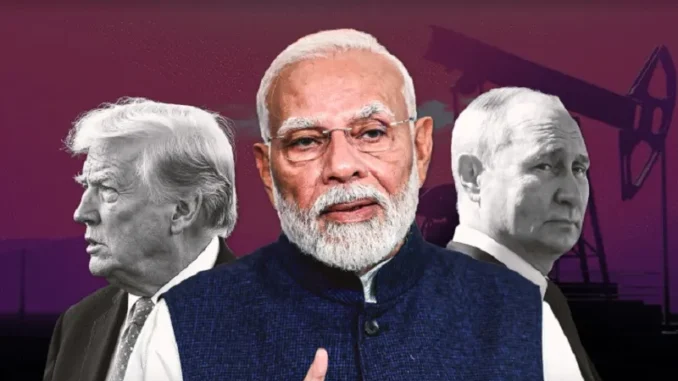
The most scandalous part of the Indo-US trade deal was Trump’s claim that “[Modi] agreed to stop buying Russian Oil, and to buy much more from the United States and, potentially, Venezuela.” Modi confirmed that a deal had indeed been reached, but he didn’t confirm the details, while his Trade Minister only reaffirmed India’s long-standing policy that it’ll continue diversifying its suppliers. Its large-scale import of Russian oil was always driven by market conditions, however, never ideology.
The basis for the US’ now-rescinded punitive tariffs of 25%, which was that these purchases fuel Russia’s war machine, was therefore misleading since that was never India’s intent. Nevertheless, the US obviously wants India to reduce India’s import of Russian oil in order to deprive the Kremlin of foreign budgetary revenue that helps stabilize the ruble and fund the special operation, ergo Trump’s claim. That’s easier said than done, assuming of course that India agreed to this demand, for several reasons.
Bloomberg reported that “Daily flows were still around 1.2 million barrels in January, according to data from Kpler. Top executives from India’s state and private refiners previously said that they expect these volumes to drop below 1 million barrels a day — a level that was seen as achievable for India and acceptable to the US.” Accordingly, while the potentially reduced 200,000 barrels of oil a day from Russia could hypothetically be replaced by the US and/or Venezuela, they’d struggle to replace the whole total.
The Wall Street Journal reported that “It takes longer to ferry oil from the U.S. to India than from Russia to India. Currently, transit time from the U.S. Gulf Coast to India is 54 days. From Russia, it is 36 days, according to Vortexa. Buying from the U.S. is also more expensive. Refineries in India would need to pay an extra $7 a barrel…Refineries in India are more used to refining heavy, sour crudes, which are the type of oil in Russia and in Venezuela, but not the light, sweet type in the U.S.”
DW correspondingly reported that “deliveries (from Venezuela) could be impacted by lingering sanctions as well as similar logistical hurdles and increased costs from moving oil from the other side of the world. With Venezuela’s oil output still hovering around 900,000 bpd — a fraction of the 3 to 4 million barrels it produced in the early 2000s — it will take years, stable politics and huge investments to ramp up supplies to satisfy India’s demand” keeping in mind that consumption is expected to continue growing.
The most likely scenario is therefore that India gradually replaces some of its Russian oil imports with Venezuelan ones, but the Venezuelan Ambassador to China told his hosts that the oil price will now be dictated by market conditions and Trump welcomed Chinese investment in the Venezuelan oil industry. India will thus have to compete with China for Venezuelan oil, and the price might soon become higher than Russia’s oil, so Venezuelan oil imports might not replace Russian ones as quickly as the US expects.
The result is that India’s import of Russian oil will likely only slowly decline, the trend of which was confirmed by its Oil Minister in late January (arguably in response to the US’ now-rescinded punitive 25% tariffs), which will prevent any shocks to both the Indian and Russian economies. The US might be disappointed, but just like with India’s import of Russian oil, its import of others’ is also driven by market conditions, not ideology, and business is business no matter how it makes either of them feel.



Be the first to comment