


California’s high regulatory burden and taxes have been the basis of corporate business decisions to leave California for more pro-business locations to run a business. The exodus out of California includes such majors as Tesla, Oracle, Chevron, SpaceX, Hewlett-Packard Enterprise, Charles Schwab, and Yamaha, which have relocated their headquarters from California to states with lower taxes and regulations.
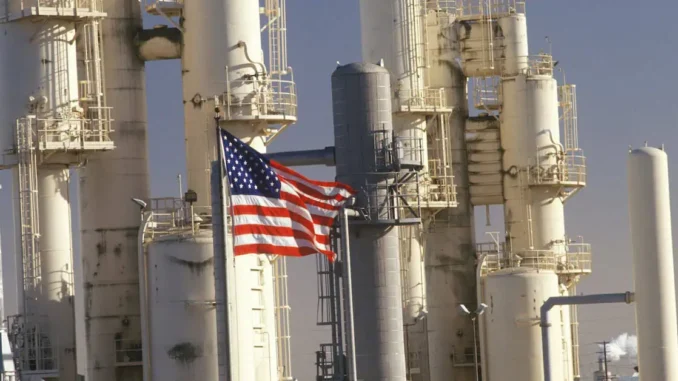
An increasingly adversarial policy environment has already contributed to recent refinery closures in California that have significantly reduced U.S. West Coast refining capacity, raising concerns about fuel shortages and price spikes. Key shutdowns include Phillips 66’s Los Angeles refinery (late 2025) and the Valero Benicia refinery (scheduled for April 2026), removing roughly 20% of California’s gasoline supply.
With no crude oil pipelines over the Sierra Mountains, California, the 4th largest economy in the world, is an “Energy Island” separated from the crude oil supply, and the infrastructure of oil refineries from the other 49 States. Thus, all in-state California transportation fuel demands for the military, ships, airports, cars, and trucks have staggering numbers FROM in-state refineries.
California’s economy faces threats with new energy policy changes as the California Air Resources Board (CARB), the agency responsible for enforcing air quality policies in the state, has proposed new limits on greenhouse gas emissions for local businesses. These changes pose serious risks to California’s cost of living, job security, and reliable supply chains of transportation fuels.
With the California “Energy Island” losing refineries, and CARB tightening the noose further, we’ll be losing more CA refineries at the time that the 4th largest economy in the world NEEDS new refineries to be built IN CALIFORNIA. The recent announcement of a new Reliance refinery in Brownsville, Texas, will be useless to the demands on the California “Energy Island.” California remains a national security risk to America.
CARB’s Proposed Cap-and-Invest Regulation will upend California’s transportation fuels market, threaten critical energy and national security assets, raise the prices of gasoline, jet fuel, and diesel, impact California jobs, and threaten America’s national security.
Transportation fuel supply declines from refinery closures are resulting in steep, sudden declines in production capacity of gasoline, jet fuel, diesel, and bunker fuel for the 1,000’s of merchant ships serving three of the busiest ports on the West Coast.
Affordability is a top concern for California residents, and these proposed amendments would only exacerbate the high cost of living in the state. For consumers, weakened refinery operations translate into tighter fuel supply, greater price volatility, and higher gasoline prices, particularly during periods of peak demand. Reduced in-state production increases reliance on costly and slow-to-arrive foreign imports that are ill-suited to respond to supply shocks and carry higher lifecycle emissions.
California’s instate refining system plays an important role in supporting U.S. energy security, Military readiness, and national defense, including military defense installations in the state that could be compromised if this CARB policy is finalized. California refineries supply a broad range of transportation fuels, including aviation fuels that are critical to commercial and military operations, and they operate near major ports, military installations, and strategic hubs serving the Pacific region.
Continued erosion of California’s refining capacity risks increased reliance on imported fuels that are slower to arrive, more exposed to global supply disruptions, and less reliable during emergencies or periods of heightened geopolitical risk.
Refinery closures in California reduce fuel supply resilience on the West Coast, increasing risks to military readiness and national security. Maintaining a stable policy framework that supports the continued operation of California refineries is therefore not only an economic and consumer affordability issue, but also a matter of broader national security and national defense.
The proposed CARB regulation changes will cripple the survivability of the State’s remaining refineries, resulting in California losing the entire refining industry to this misguided CARB program.
The California energy industry’s economic, industrial, environmental, and national security benefits have been the foundation of a healthy, prosperous state and nation. Adversarial policies at local, regional, and state levels have eroded that foundation. These proposed CARB regulatory changes threaten to destroy it and cause lasting and irreversible harm to California’s economy, energy security, and broader vital American interests.
The California energy island will be increasingly dependent on imported transportation fuels from new refineries in Africa, Asia, and the Middle East.
The supply chain of fuels and products refined from raw crude oil will face severe imbalance, leading to higher costs and shortages for future generations. In the future, new refinery units planned or announced in Africa, Asia, and the Middle East will provide transportation fuel to California’s 9 international airports, 41 military airports, and 3 of the largest shipping ports!
YES, California will be a national security risk for the entire country!
Africa, Asia, and the Middle East are moving forward with new refineries to meet worldwide demands. New refinery units are planned or announced, mostly in poorer developing countries, to process crude oil into the products and fuels demanded by those living on this planet, to begin operations worldwide by 2030.
Approximately 181 new oil refinery projects are planned or announced to commence operations in Africa, Asia, and the Middle East between 2024 and 2030, with Africa leading with roughly 70–89 projects, followed by Asia and the Middle East. These regions are driving global capacity growth, with significant investments aimed at meeting rising demand, shifting away from aging, less efficient facilities in other parts of the world.
California policymakers seem to be unaware that other, more business-friendly States may be a better business decision for in-state manufacturers, and that Africa, Asia, and the Middle East are savoring the future with their many refineries coming online to meet the supply chain of products and transportation fuel DEMANDS of California.
Again, the proposed CARB regulation changes will cripple the survivability of the State’s remaining refineries, which will result in California losing the entire refining industry to this misguided CARB program.
Please share this information with teachers, students, and friends to encourage Energy Literacy conversations at the family dinner table.
Click this Link to Sign up for Energy Literacy from Ronald Stein.


Get your CEO on the #1 Energy Podcast in the United States: https://sandstoneassetmgmt.com/media/
Is oil and gas right for your portfolio? https://energynewsbeat.co/invest/




Be the first to comment