


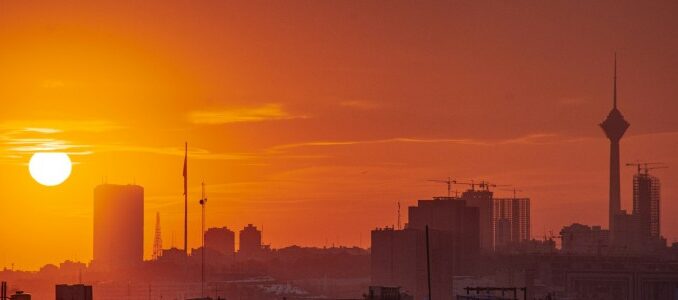
February 28, 2026 – In a dramatic escalation of long-simmering tensions, the United States and Israel have initiated joint military strikes on Iran, codenamed “Operation Epic Fury” by the U.S. and “Roaring Lion” by Israel. President Donald Trump announced the operations early this morning, stating they aim to dismantle Iran’s missile capabilities, prevent nuclear weapon development, and potentially facilitate regime change. Iranian forces have retaliated with missile strikes on U.S. bases in the Gulf and barrages toward Israel, heightening fears of a broader regional conflict. As energy markets react swiftly, oil prices are surging amid concerns over supply disruptions through critical chokepoints like the Strait of Hormuz.
Key Targets and Strike Details
The strikes began around 6:00 AM EST, focusing on high-value Iranian assets. Israeli forces targeted leadership sites, including districts in Tehran associated with Supreme Leader Ali Khamenei, the presidential palace, and the National Security Council.
U.S. operations emphasized military and nuclear infrastructure, drawing from lessons of last year’s June 2025 strikes, which damaged but did not fully eliminate sites like Natanz, Fordow, and Isfahan.
Reports indicate hits on ballistic missile facilities, intelligence headquarters, and naval bases in Kenarak.
Other targeted cities include Isfahan (nuclear-related sites), Qom (religious and military hubs), Karaj (industrial areas), Kermanshah (western military outposts), and Tabriz.
Iranian media confirmed strikes on University Street and the Jomhouri area in Tehran, with air defenses activated nationwide.
The Israeli military described the action as a “preemptive strike” following months of joint planning.
Reza Pahlavi, on X
My dear compatriots,
Decisive moments lie before us.
The assistance that the President of the United States had promised to the brave people of Iran has now arrived. This is a humanitarian intervention, and its target is the Islamic Republic, its apparatus of repression, and… https://t.co/YAq3rJLzdd pic.twitter.com/VVQ17mvhJ9
— Reza Pahlavi (@PahlaviReza) February 28, 2026
Erin Molan – “Iranians Take Back Your Country”
Trump to Iranians: TAKE BACK YOUR GOVERNMENT 💪 pic.twitter.com/qvE7KVtURz
— Erin Molan (@Erin_Molan) February 28, 2026
President Trump on Iran
President Donald J. Trump on the United States military combat operations in Iran: pic.twitter.com/LimJmpLkgZ
— The White House (@WhiteHouse) February 28, 2026
X Posts From Iran – “I love Trump.”
UNBELIEVABLE SCENES FROM IRAN 🇮🇷
Videos circulating online appear to show Iranian students thanking President Trump following strikes against regime targets.
“I love Trump!” one student can be heard shouting.
If authentic, this is extraordinary.
For decades the Iranian regime… pic.twitter.com/z1QeYAp7ej
— Jim Ferguson (@JimFergusonUK) February 28, 2026
Geopolitical Fallout – The UK refused to allow the US to use bases in the UK for this operation.
From last week – Keir Starmer refused US access to bases for the Iran strikes. Remember that. https://t.co/8Gb2M08YJa
— Bo Snerdley (@BoSnerdley) February 28, 2026
Locations of Explosions
Explosions have been reported across Iran and in retaliatory areas:Iran: Central Tehran (Seyed Khandan, Jomhouri Square, Hassan Abad Square), Isfahan, Qom, Karaj, Kermanshah, Tabriz, Ilam, Khorramabad, Urmia, and Chabahar.
Smoke plumes and air raid sirens dominated the capital, with Iranian airspace closed for hours.
Israel: Incoming Iranian missiles triggered explosions and interceptions in Jerusalem, Tel Aviv, Haifa, and northern regions. Sirens sounded nationwide.
Gulf States: Iranian retaliation targeted U.S. assets, with explosions in Bahrain (U.S. Fifth Fleet HQ in Manama), UAE (Abu Dhabi, Dubai), Qatar (Doha near Al Udeid Air Base), Kuwait (countrywide), and Saudi Arabia (Riyadh).
Missiles were intercepted over multiple sites, including near Jordan.
X posts from eyewitnesses and analysts confirm chaotic scenes, with air defenses active and smoke visible in urban areas.
— Edward G. 🇺🇸🦅 (@realEdwardG) February 28, 2026
Reports of Damages
Damage assessments are preliminary and limited due to restricted access. In Iran, aboveground structures at nuclear and military sites sustained heavy hits, but core underground facilities like centrifuges at Fordow and Natanz may remain partially intact, based on patterns from 2025 strikes.
Iranian officials report “severe blows” to ballistic missile launchers and leadership compounds.
Casualties include 24 children in a strike on Minab, Iran, and one civilian in Abu Dhabi from debris.
U.S. officials report no American casualties so far, though infrastructure damage occurred at Bahrain’s Fifth Fleet base.
Broader impacts: Over 600 killed in Iran from strikes and related actions, per some estimates, with economic losses potentially reaching $20 billion for Israel in similar past conflicts.
Radiation levels remain stable outside sites, but internal contamination risks exist.
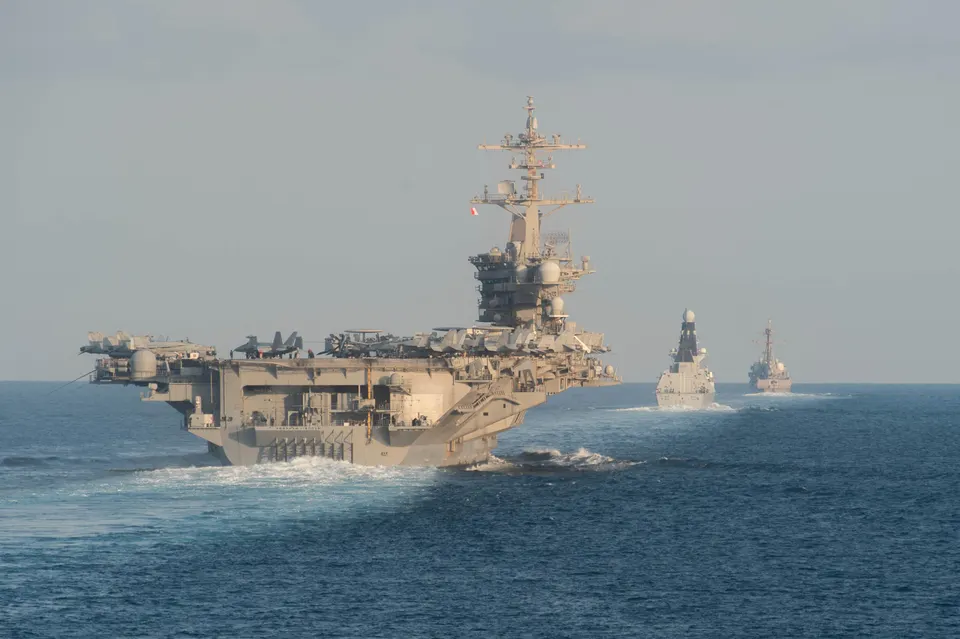
U.S. Military Assets in the Region
The reason that most people aren’t thinking of that the USS Gerald R Ford is parked off of the coast of Israel and not Iran.
Wake up people. He’s trying to prevent war.
Watch the video below. 👇🏻
pic.twitter.com/mf7RlKmUcg pic.twitter.com/Uo6KKV3Lg0
— ⚔️⚖️The Justice Cometh⚖️⚔️ (@justicecometh) February 27, 2026
The U.S. has amassed its largest Middle East force since 2003, with over 45,000 troops and civilian personnel.
Key assets include:Naval: Two aircraft carrier strike groups (USS Abraham Lincoln in the Arabian Sea, USS Gerald R. Ford en route), 13 cruisers/destroyers, 3 littoral combat ships – totaling 20 ships at sea.
Air: Over 150 aircraft redeployed since January, including F-15s, F-16s, F-35s, A-10s, EA-18Gs, B-2 bombers (with bunker-busters), and reconnaissance planes at bases in Jordan, Saudi Arabia, Greece, and Israel.
Ground/Bases: Major hubs at Al Udeid (Qatar, 10,000 troops), Ali Al Salem and Camp Arifjan (Kuwait), Al Dhafra (UAE), Prince Sultan (Saudi Arabia), and Fifth Fleet HQ (Bahrain).
This buildup, redirected from other theaters, supports sustained operations but lacks full ground invasion logistics.
Gulf States Quietly Approve, President Trump Humor Shows Through.
LMAO 🤣
Volume up 🔊 pic.twitter.com/XSBkxQdyLg
— Dr. Eli David (@DrEliDavid) February 28, 2026
Oil Price Surge in After-Hours Trading
Oil markets reacted immediately, with Brent crude settling at $72.48 (up 2.45%) and WTI at $67.02 (up 2.78%)
Friday, incorporating a $4-10 war premium.
After-hours futures on platforms like Hyperliquid surged 5% to $71.26.
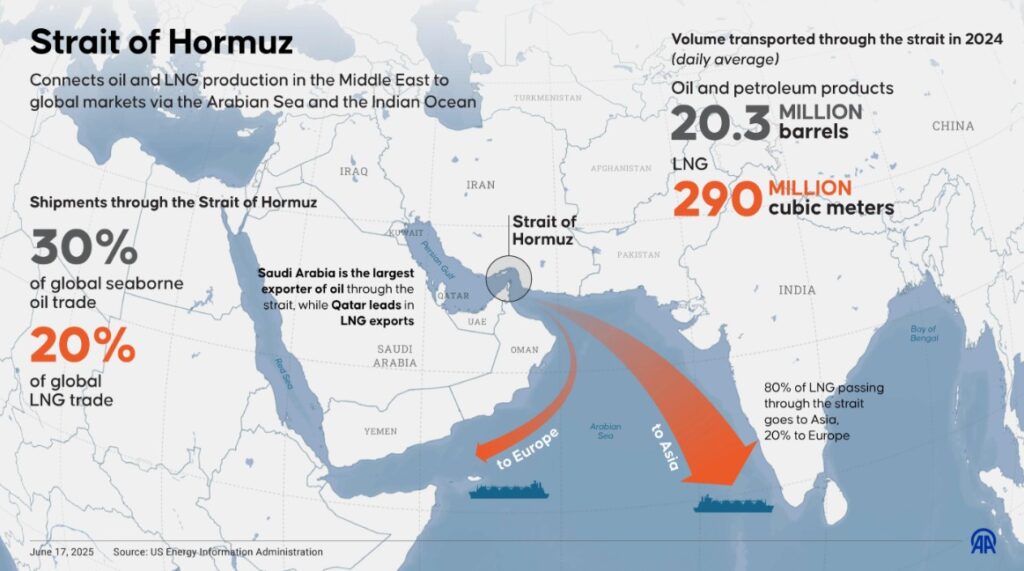
Analysts warn of $90-110 per barrel if Hormuz is disrupted, as it handles 20% of global supply.
No direct oil infrastructure hits yet, but Iran’s pre-strike export rush and shadow fleet activity heighten risks.
Global inflation could rise 0.1% per $1 oil increase, complicating Fed policy.
Potential U.S. Oil Sanctions Post-Strikes and Geopolitical Ramifications
Following the attacks, the U.S. could impose Venezuela-style sanctions on Iran, targeting its 3.3 million bpd production (3% of global supply).
This might include expanded measures against Iran’s shadow fleet (recently sanctioned with 12 more tankers added), blocking exports to China and others.
Venezuela’s sanctions slashed output by 80%, forcing reliance on allies like Iran for tech and trade.
For Iran, similar controls could disrupt 90% of its exports, embedding a $20-40 premium in oil prices.
Geopolitically, this risks broader conflict involving proxies like Hezbollah or militias in Iraq/Syria, inflating global energy costs and stoking inflation.
Gulf allies (Saudi Arabia, UAE) may join enforcement, but escalation could engulf oil infrastructure.
Trump and Netanyahu’s regime change calls echo past interventions, potentially destabilizing the region further while boosting U.S. energy independence narratives. However, Iran’s alliances with Russia and China could prolong resistance, mirroring Venezuela’s resilience through barter deals.
Fox News is reporting that over 32,000 people were killed by the Iranian leaders, and that was way past the Red Line set by President Trump. Watch for “False Flags” that they try to use the bodies and blame the US and Israel, or even sleeper cells in Israel or the US Homeland.
As strikes continue, energy stakeholders brace for prolonged volatility. Stay tuned for updates on Energy News Beat.
Sources: cnn.com, atlanticcouncil.org, finance.yahoo.com, X, @ThomasAKaspar,



Be the first to comment