• ENB Podcast
    • Conversation’s With Stu
    • Deal Spotlight
    • Daily Standup
    • Energy Realities
    • ENB Substack
    • George McMillan Geopolitical
    • Thought Leadership
  • ERCOT & Resources
    • California ISO
    • Climate Spending Near You
    • Data Centers
    • ERCOT Live
    • EIA Grid Update
    • Find Energy
    • Global Energy Monitor
    • Nuclear Energy Institute
    • Power Outage US
    • Trading Desk
  • Sandstone Group
    • Trading Desk
    • Media Kit
    • Need Power for your Data Center?
  • Do you have your 2025 Deductions?
Energy News Beat
  • Top News
    • ENB Daily News
    • ENB Pub Note
    • ENB Substack
  • U.S. Energy News
    • Coal
    • Crude Oil News – US
    • Downstream
    • Energy Crisis
    • Energy Policy
    • EIA News
    • Gasoline
    • Grid
    • LNG
    • Midstream
    • Natural Gas
    • Nuclear
    • Offshore
    • Pipeline
    • Upstream
  • International News
    • Crude Oil News – Int
    • EU
    • Geopolitical
    • India
    • Israel
    • OPEC
    • OPEC +
    • Russia
    • Saudi Arabia
    • UK
    • Ukraine
  • Finance
    • Earnings
    • Finance
    • Invest in Oil
    • 1031 Exchange and Investments
    • M & A
  • Renewables
    • Biofuels
    • Climate Crisis
    • Energy Crisis
    • Energy Storage
    • Energy Transition
    • Electric Vehicles
    • Geothermal
    • Hydrogen
    • Hydro Electric
    • Solar
    • Wind
  • Contact
    • Email
    • Investments w/Tax Benefits
    • Sandstone Group
    • Media Kit
  • YouTube
  • Twitter
  • Email
  • RSS
HEADLINES
  • [ December 14, 2025 ] Regime Change in Venezuela Will Change the Oil Markets Crude Oil News
  • [ December 14, 2025 ] Is the AI Data Center Build Out in Texas a Home Run or a Potential Bust? AI
  • [ December 13, 2025 ] Ukrainian Drone Strikes Escalate: Afipsky Refinery Hit Amid Wave of Attacks on Russian Oil Infrastructure Crude Oil News
  • [ December 13, 2025 ] What Are the Impacts to the EU Should They Seize Russian Monetary Assets? Financial Crisis
  • [ December 13, 2025 ] Dark Fleet Oil Ships Dock in Venezuela, Showing Challenge for US Crude Oil News
  • [ December 13, 2025 ] EIA forecasts U.S. crude oil production will decrease slightly in 2026 Crude Oil News
  • [ December 13, 2025 ] A Challenging and Volatile Year for U.S. Shale Crude Oil News
  • [ December 13, 2025 ] Blue States, High Rates Electrical Generation / Utilities
  • [ December 12, 2025 ] Russia’s Oil and Gas Revenues Set to Slide 50% to a Five-Year Low: Drones and Sanction Enforcement Take Their Toll Crude Oil News
  • [ December 12, 2025 ] US Rig Count Up Amid Continued Glut Warnings Crude Oil News
HomeRenewables Not SustainableHydrogen

Hydrogen

Back to overview No Green Hydrogen Available for Siemens Gamesa’s Zero Emissions-Ready Ship
Hydrogen

Back to overview No Green Hydrogen Available for Siemens Gamesa’s Zero Emissions-Ready Ship

December 16, 2021 Stu Turley

The latest member of Siemens Gamesa’s fleet of ships is ready for the addition of a 12-MW battery which would reduce energy consumption during operation, Siemens Gamesa said. The REM Energy is also capable to […]

California Drought -ENB
EIA News

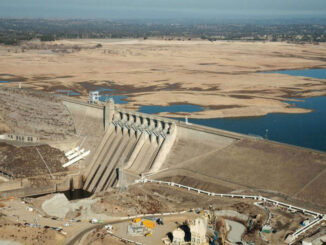
California hydroelectric facilities continue to respond to prices despite drought

December 1, 2021 Mariel Alumit

Source: Graph by the U.S. Energy Information Administration, based on data from the California Independent System Operator (CAISO). Despite widespread, intense drought conditions, hydroelectric power plants in the California Independent System Operator (CAISO), the grid operator for most of […]

ENB Pub Note

Saudi Arabia to Use $110 Billion Gas Field for Blue Hydrogen – If energy was a chess game the rest of the world would be playing checkers

October 24, 2021 Mariel Alumit

ENB Publishers Note: You have to hand it to Saudi Arabia, taking the lead to increase oil prices, start a consortium with Russia for natural gas and get into the driver’s seat for Blue Hydrogen. […]

U.S. coal exports
EIA News

California’s curtailments of solar electricity generation continue to increase

August 24, 2021 Andy Del Prado

Source: Graph by the U.S. Energy Information Administration, based on data from the California Independent System Operator (CAISO) Curtailments of solar-powered electricity generation have increased in the California Independent System Operator (CAISO) region, the part of the electric […]

Hydrogen

Novatek speeds up hydrogen and CCS preparations

July 30, 2021 Stu Turley

Russia’s largest independent gas producer, Novatek, is targeting the start-up of commercial hydrogen production and carbon capture and storage projects on the Yamal Peninsula in West Siberia within the next five years. Speaking during a […]

Off shore wind farm - Germany - EnergyNewsBeat
Electrical Generation / Utilities

German Offshore Wind Grinds to a Standstill in 2021

July 16, 2021 Stu Turley

Germany will not install a single offshore wind turbine in 2021, marking no expansion in offshore wind capacity in a calendar year for the first time in more than ten years, the country’s wind organizations […]

Hydrogen

Energy giant BP focuses on renewable investments in Turkey

July 11, 2021 Stu Turley

Turkey started attracting more investment in terms of renewables with global energy giant BP, which has already invested more than $500 million in the country in the last three years and has now focused on […]

The Blue Nile River in Sudan
Electrical Generation / Utilities

Giant Dam Is Messing Up Water in Africa Even Before It Is Filled

July 10, 2021 Stu Turley

As Ethiopia begins diverting 13.5 billion cubic meters of water from the Blue Nile river to its controversial new mega-dam, residents of Sudan to the south fear a repetition of last year’s devastating drought. The […]

Ahmad Al-Khowaiter - Cater Smith - Bloomberg - Energy Newsbeat
ENB Pub Note

Saudi Aramco is a state-owned oil and gas company in Saudi Arabia. They are now planning to become the largest hydrogen exporter in the world.

June 27, 2021 Stu Turley

Saudi Aramco has a smart management team. While the other supermajors are publicly running away from oil, Saudi Aramco embraces all forms of energy. At least they are upfront about their intentions. The largest oil […]

Japan has notoriously been dependent on energy imports, being the world’s fifth-largest crude importer and second-largest LNG importer (having lost the top position to China last year). Its self-sufficiency ratio dropped substantially after the 2011 Fukushima incident, from some 20% to 7-8%. Even though Tokyo did manage to hew off a couple of percentage points from its import dependence (around 12% by 2020), this was largely done by means of curbing energy consumption and rendering it more energy efficient. It is against this background that Japan started to make its first steps towards an all-encompassing renewables policy, going beyond the first pioneering projects that might have showed the way forward for Tokyo. Wind energy has so far been underrepresented in Japan’s energy matrix, however a slew of recent developments could portend a solid future for wind farms along the Japanese coast. The share of renewables sources in Japan’s total power generation has risen by approximately 1% per year in the past decade, bringing the tally to almost 20% in 2020. This is certainly a laudable achievement yet there are many countercurrents hindering renewables’ penetration. First and foremost, Tokyo’s aggregate primary energy supply is still dominated by oil – with a fleet of refineries whose total throughput capacity exceeds 3.3mbpd and a very energy-intensive industry sector, Japan still needs the fossils (not to forget that Japan still uses oil for electricity generation, albeit at 5% of total production). Second, oil and gas still prevail in the sphere of power generation, the two combined accounted for 70% of the total national tally. Against all this. the new Suga-led government tightened Japan’s emission-reduction goals, stipulating that by the fiscal year 2030 greenhouse gas emissions should drop by 46% compared to 2013. Related: Oil Prices Hit 2-Year High Interestingly, Japan’s new ambition of reaching a 50% share in power generation for its renewables and nuclear generation capacities does not specify the exact split between categories. Japan’s METI is currently reviewing its strategic nuclear plan yet the current could serve as a guidance – under it, nuclear energy is to account for 20-22% of power supply (and renewables for another 22-24%). Interestingly, this does not alter that much from Japan’s long-term plans before the Fukushima catastrophe. Before 2011 renewables amounted to some 10% of electricity generation (of which 8% was hydropower, just as today) and nuclear energy averaged 25%. As of today, Japan’s nine operating reactors account for merely 7% of aggregate electricity generation, all the while it keeps 30 reactors idled, either indeterminately or having it reassessed for a prospective restart. Japan has only 70 MW installed capacity of wind energy, with remarkably minuscule offshore numbers (4.4 MW). There are, however, three high-profile projects that might pioneer their way through Japan’s energy market. First, Japanese public utility firm JERA announced the country’s first-ever large-scale wind project, the 0.52 GW farm in Ishikari Bay, along the western coast of Hokkaido Island. Ishikari is also home to an operating LNG terminal, implying that a prospective wind farm might supplant some of liquefied imports that have heretofore supplied Sapporo and its surrounding area. JERA’s announced this March that it would seek to develop another 0.6 GW wind plant, just offshore the city of Tsugaru in Aomori prefecture, at the northern edge of Honshu Island. With construction expected to take 3 years in total, the two wind farms could come onstream by 2025. Related: IEA Backpedals, Says Oil Demand Will Soon Reach Pre-Crisis Levels In addition to JERA’s prospective projects, another large-scale wind developer might be shaping up, as can be attested by the 0.6 GW Seihoku-oki project managed by Acacia Renewables (bought up in 2020 by Iberdrola) in a joint venture with Cosmo Eco Power and Hitz. Following Iberdrola’s entering the Japanese wind market, the wind projects of Acacia boosted their status in terms of their probability. Now there is one problem with the above-mentioned projects – they have not yet been subjected to government auctions. Japan has so far had 5 solar auctions and 2 biomass auctions, with moderate solar success (4 auctions resulted in awarded capacity, totalling 574 MW) and complete lack of contracted capacities on biomass. It is assumed that the first-ever wind auction will take place in June 2021 when Japan’s Ministry of Economy, Trade and Industry (METI) is to decide on the Goto project, a 16.8 MW capacity wind farm off Nagasaki. The second step to be taken by METI is assumed to be a tender for the construction of bottom-fixed offshore wind parks – 4 areas were designated in Round 1, however they do not correspond with any of the projected wind farms. With this, arguably the most interesting areas of Japan at the northernmost tip of Honshu and along the western coastline of Hokkaido remain to be designated by the Japanese authorities. The so-called Promising Areas for Round 2, to which Iberdrola’s Seihoku-oki and JERA’s Tsugaru should assumedly belong to, is expected to be launched in 2022. Potential wind energy areas in Hokkaido, i.e. the northernmost of Japanese islands, are even less designated despite being preliminarily listed as potential areas. The gradual roll-out of wind auctions would naturally elevate the question of the Japanese government’s readiness to accommodate energy companies’ expectations and interests. If anything, Japan’s environmental impact assessments (EIA) still have quite the reputation of taking 3-5 years before the construction part can actually start. There is a logic underpinning the belief that maritime EIAs might be expedited to avoid unnecessary delays in Japan turning towards its greener future. Seabed deeper than in Europe’s North Sea and seismic risks anyways add additional layers to Japan’s offshore wind prospects, therefore Tokyo needs to offer attractive feed-in tariffs. One can assume that Tokyo is not willing to forgo commercial factors when shaping up its energy future and wind energy might play an important part in solving the overall equation but it will be quite the balancing act to do… By Gerald Jansen
Hydrogen

A new report from Wood Mackenzie estimates that by 2030, Asia Pacific renewable investments will double to a total of $1.3 trillion.

June 22, 2021 Stu Turley

Asia Pacific investments in renewable energy generation by 2030 may double to $1.3 trillion from the previous decade, dwarfing fossil fuel power expenditures that are expected to drop by about 25% to $54 billion annually, according to Wood Mackenzie. […]

Posts pagination

« 1 … 21 22 23 … 27 »

ENB Substack

Categories

Tag Cloud

Africa Australia Biden BP Brent California Canada Chevron China Daily Show EIA EPA ESG ET EnergyWorld EU Europe EV ExxonMobil Fed Finance France Geopolitical Germany IEA India Iran Israel Japan LNG M&A Norway OPEC President Trump Putin Russia sanctions Saudi Arabia Shell Tesla Texas UK Ukraine US US Energy News WTI

What Do You Think?

Get Your Story Out

Protect your People & Investments

Logo

About Us

Reporting and Publishing Global Energy News - Including Oil, Gas, Renewable, Solar, Wind, and Nuclear.

Quick links

Podcast

  • ENB Podcast
  • ENB Substack
  • Thought Leadership

Tax Reduction

  • Become An Oilman
  • Taxes Got You?
  • Buying Crude, Jet Fuel, Gasoline, LNG? Click HERE

Our Company

  • Sandstone Group
  • Daily Standup
  • Oil and Gas Dashboard

Copyright © 2025 | Sandstone Group

Verification: 7f1ceb4b4b21970d
We use cookies to ensure that we give you the best experience on our website. If you continue to use this site we will assume that you are happy with it.