


In the volatile world of global energy markets, narratives can shift as quickly as oil prices. For months, headlines have painted a picture of an oil glut—abundant supplies keeping Brent crude hovering around $67 per barrel and WTI at $64. Yet, beneath this apparent surplus lies a fractured market, distorted by uncounted volumes of sanctioned oil moving through shadowy channels. As Stu Turley, host of the Energy News Beat Podcast, has repeatedly emphasized, the enforcement of sanctions against the so-called “dark fleet” could upend this story, potentially benefiting OPEC by removing illicit supplies from the market and driving prices toward the $85-plus levels the cartel needs to balance budgets.
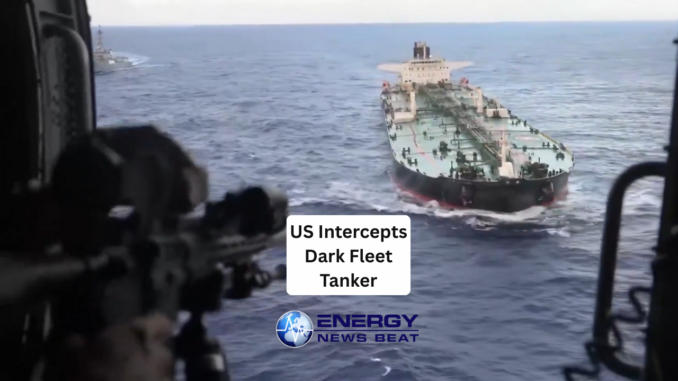
Recent U.S. actions, including an undeclared naval blockade under Operation Southern Spear, are exposing these cracks. Initiated by the U.S. Indo-Pacific Command and Fifth Fleet in December 2025, this campaign has led to high-profile seizures of tankers carrying sanctioned crude, signaling an aggressive shift in enforcement.
By targeting vessels evading Western sanctions, the U.S. is not only disrupting flows from countries like Russia, Iran, and Venezuela but also challenging the myth of endless oversupply. As these invisible barrels are forced into the light—or removed altogether—the glut narrative begins to dissipate, revealing a tighter market than many realize.
Understanding the Dark Fleet: Operations in the Shadows
The dark fleet, also known as the shadow or ghost fleet, represents a clandestine network of vessels designed to circumvent international sanctions on oil exports.
These ships form a parallel logistics system outside Western financial regulations, dollar-based settlements, and standard insurance frameworks provided by groups like the International Group of P&I Clubs.
Primarily composed of aging tankers—often 15-20 years old and destined for scrapyards—the fleet relies on deceptive tactics to transport sanctioned crude without detection.
Key operational methods include:AIS Manipulation and “Going Dark”: Vessels frequently disable their Automatic Identification System (AIS) transponders, which broadcast location data, or spoof signals to fake their positions. For instance, a tanker might appear off the coast of Guyana while actually loading in Venezuela.
False Flags and Opaque Ownership: Ships fly flags of convenience from lax jurisdictions like Panama, Liberia, or Cameroon, which rarely enforce safety or insurance standards. Ownership is hidden behind layers of shell companies in places such as Mauritius, Seychelles, or the UAE, making traceability nearly impossible.
Ship-to-Ship (STS) Transfers: Illicit oil is often transferred at sea in remote areas, blending sanctioned crude with non-sanctioned sources to obscure origins. This allows the oil to enter legitimate markets under false pretenses.
Forged Documentation and Identity Laundering: Tankers use fake insurance papers, change names or IMO numbers, and report vague destinations like “FOR ORDERS” to avoid scrutiny.
This fleet has ballooned since sanctions intensified following Russia’s 2022 invasion of Ukraine. Estimates vary, but it now comprises 978 to 3,300 tankers, representing 18-20% of global tanker capacity.
Russia owns a significant portion—around 750 of the 1,589 tankers identified in some analyses—using them to export oil to buyers in Asia and beyond.
The fleet’s growth, from just 97 vessels in 2022 to over 3,300 by the end of 2025, underscores its role in sustaining sanctioned regimes.
On February 9, the US Navy intercepted a Suezmax tanker in the Indian Ocean carrying 700,000 barrels of crude bound for China.
It was the sixth seizure in eight weeks.
This is not sanctions enforcement. This is 19th-century gunboat diplomacy conducted with a carrier strike… pic.twitter.com/g65xG5nN1x
— Shanaka Anslem Perera ⚡ (@shanaka86) February 10, 2026
The Hidden Volumes: Oil Not Counted in Trading Markets
One of the dark fleet’s most insidious impacts is the massive volume of oil it renders invisible to global markets. In 2025 alone, these shadow vessels transported an estimated 3.7 billion barrels, accounting for 6-7% of worldwide crude flows.
This untracked supply distorts official inventories and forecasting models, contributing to the perception of a glut while masking underlying deficits.A stark example comes from recent revisions by the International Energy Agency (IEA): 295 million barrels previously reported in storage “turned out to never exist,” flipping a 220-million-barrel surplus into a 75-million-barrel deficit for 2022-2024.
Analyst Shanaka Anslem Perera highlighted this in a February 10, 2026, X post, noting that 7% of global crude moves through channels invisible to OECD data systems.
Russia dominates, with shadow fleets carrying 63% of its Baltic crude exports and generating $87-100 billion annually—enough to fund its war efforts.
In November 2025, the fleet moved 299 million barrels, with Russia accounting for 63 million.
Buyers like China and India absorb much of this, with China stockpiling over 1 million barrels per day into strategic reserves—a “black box” operation that further obscures global supply dynamics.
Perera’s Substack article, “The Seizure: How America’s Undeclared Naval Blockade is Reshaping the Global Oil Market,” describes this as a $6 trillion fracture, with the market bifurcated into transparent, compliant systems and opaque alternatives.
Current low prices, he argues, are not equilibrium but a “fault line,” with unpriced disruptions like Permian depletion (60% in Tier 1 acreage) and declining U.S. production in 2026-2027 poised to ignite volatility.
The U.S. Naval Blockade: Enforcement Changes the Game
The U.S. has escalated from financial sanctions to direct action. Under Operation Southern Spear, naval forces have seized six tankers in eight weeks, confiscating over 2.7 million barrels of sanctioned oil and selling it via the “GREAT Energy Deal” program.
Notable incidents include the February 9, 2026, interception of the Aquila II (700,000 barrels bound for China) and the December 10, 2025, capture of the M/T Skipper (1.8 million barrels of Venezuelan oil).
These operations, backed by civil forfeiture laws, mark a return to “gunboat diplomacy,” extending enforcement globally.
In Venezuela, U.S. control over oil sales—funneled through Qatar’s banking system—could add $5-7 to prices if fully enforced, though the real impact stems from broader dark fleet crackdowns.
Tanker rates have surged, with Aframax hitting multi-year highs in January 2026, as vessels migrate out of shadow operations.
This enforcement squeezes Russia, whose National Welfare Fund may last only 12-18 months at $40 Urals prices.
OPEC as a Beneficiary: Stu Turley’s Insight
As Turley has pointed out on his podcast, OPEC stands to gain from the dark fleet’s dismantling. The cartel, facing budget shortfalls—Saudi Arabia’s true fiscal breakeven is $108-111 per barrel—relies on disciplined supply to maintain prices.
Removing illicit volumes could tighten the market, pushing prices higher and allowing OPEC to unwind voluntary cuts without flooding supplies. Turley’s recent posts question whether U.S. involvement in Venezuela makes America a de facto OPEC member, highlighting how enforcement aligns with the cartel’s interests.
With OPEC production stable at 30.07 million bpd in December 2025, despite Venezuelan declines, the blockade could provide the leverage needed for sustainable $85 oil. @STUARTTURLEY16
Looking Ahead: A Coiled Spring of Volatility
The oil glut narrative, fueled by uncounted dark fleet barrels, is unraveling under U.S. pressure. As seizures continue and invisible supplies vanish, expect tighter balances, higher volatility, and upward price risks. For energy stakeholders, this shift underscores the fragility of current lows—$67 Brent may be “the most dangerous price in a generation.”
As Turley aptly notes, 2026 is shaping up to be a wild ride in global energy geopolitics.
Sources: shanakaanslemperera.substack.com, atlanticcouncil.org, scanx.trade, theenergynewsbeat.substack.com



Be the first to comment