


ENB Pub Note: This article is from Andrew Korybko’s Substack newsletter. He has some very interesting points that seem to add up to the geopolitical actions going on right now.
This is the grand strategic context within which Russia’s talks with the US and Ukraine are taking place.
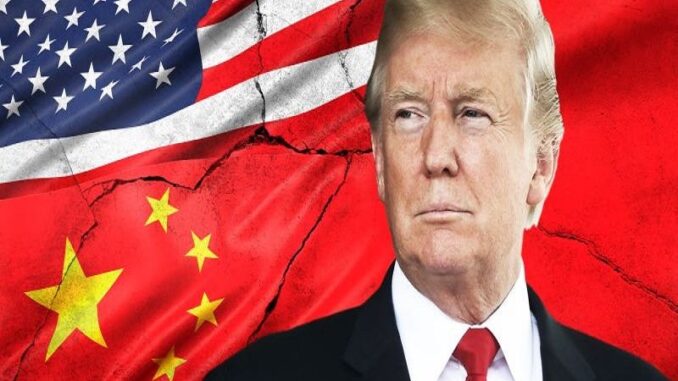
Casual observers are convinced that Trump is a madman with no method behind his madness, but the reality is that he and his team – collectively known as Trump 2.0 – are slowly but surely implementing their grand strategy against China. Every one of their moves abroad should be seen as a means to this end. They want to comprehensively contain China and then coerce it into a lopsided trade deal that “rebalance[s] China’s economy toward household consumption” per the National Security Strategy.
Trump 2.0 doesn’t want to go to war over this, however, which is why they’re careful to avoid replicating the Imperial Japanese precedent. Piling too much economic-structural pressure on China at once could spook it into lashing out in desperation before the window of opportunity closes. They therefore decided to gradually deprive China of access to markets and resources, ideally through a series of trade deals, in order to imbue the US with the indirect leverage required to peacefully derail China’s superpower rise.
The US’ trade deals with the EU and India could ultimately result in them curtailing China’s access to their markets under pain of punitive tariffs if they refuse. In parallel, the US’ special operation in Venezuela, pressure against Iran, and simultaneous attempts to subordinate Nigeria and other leading energy producers could curtail China’s access to the resources required for fueling its superpower rise. The combined effect thus far is already placing immense pressure upon China to cut a deal with the US.
This is the grand strategic context within which Russia’s talks with the US and Ukraine are taking place. It too is coming under immense pressure after Trump 2.0 unexpectedly (from their view) perpetuated the proxy war in Ukraine, pioneered a breakthrough to Central Asia through last August’s “Trump Route for International Peace and Prosperity” across the South Caucasus, and got India to curtail its oil imports. Russia must now decide whether to cut its own deal with the US or become more dependent on China.
The first scenario could include a resource-centric strategic partnership with the US in exchange for compromising on its maximalist goals in Ukraine, which could deprive China of access to the deposits that the US invests in as explained here. As for the second scenario, Russia could continue its special operation indefinitely with growing Chinese support in exchange for China receiving unrestricted access to its resources at bargain-basement prices, thus greatly helping China prepare for war with the US.
Framed in this way, reaching a deal with Russia could facilitate China’s strategic surrender to the US without spiking the risk of war, while failing to do so could spike the risk of war if Russia turns itself into China’s raw materials reserve for the aforesaid reason and with the same outcome vis-à-vis the US. This imbues Putin with leverage vis-à-vis Trump 2.0, but they’re also not desperate to reach a deal with Putin at any cost, ergo why they haven’t coerced Zelensky into his demanded concessions and might never.
If Trump 2.0 can’t cut a deal with Putin, then they’ll prepare for war with China, which their National Defense Strategy envisages given its explicitly declared World War-like military build-up. Be that as it may, replicating the Imperial Japanese precedent in that case dangerously risks a 21st-century Pearl Harbor, thus imperiling their planned restoration of unipolarity. It’s therefore better for Trump 2.0 to coerce Zelensky into giving Putin what he wants in order to continue peacefully containing China instead.
Get your CEO on the #1 Energy Podcast in the United States: https://sandstoneassetmgmt.com/media/
Is oil and gas right for your portfolio? https://sandstoneassetmgmt.com/invest-in-oil-and-gas/


Be the first to comment