


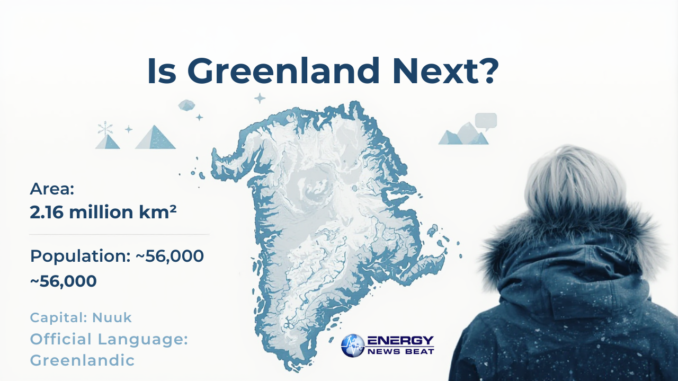
In the early days of his second term, President Donald Trump has wasted no time reshaping America’s foreign policy landscape. Fresh off a bold military operation in Venezuela that ousted Nicolás Maduro and curtailed Russian and Chinese influence there, Trump’s gaze has shifted northward to Greenland. What began as a quirky proposal during his first presidency—publicly floating the idea of purchasing the world’s largest island from Denmark—has evolved into a serious strategic pursuit. Trump’s aides, including Stephen Miller, have openly questioned Denmark’s claim to Greenland, framing it as essential for U.S. national security.
politico.com
But why Greenland, and why now? This article explores the island’s strategic value, its ties to an evolving “Donroe Doctrine,” parallels with recent actions in Latin America, the potential fallout for NATO, and investment opportunities for those eyeing the Arctic’s untapped wealth.
Greenland’s Strategic Relevance: A Frozen Fortress in a Warming World
Greenland isn’t just a vast expanse of ice—it’s a geopolitical prize. Situated above the Arctic Circle, the island’s location makes it a linchpin for monitoring and defending against threats from Russia and China in the increasingly navigable Arctic region. The U.S. already operates Thule Air Base there, a key asset for space domain awareness, satellite tracking, and early warning systems against ballistic missiles.
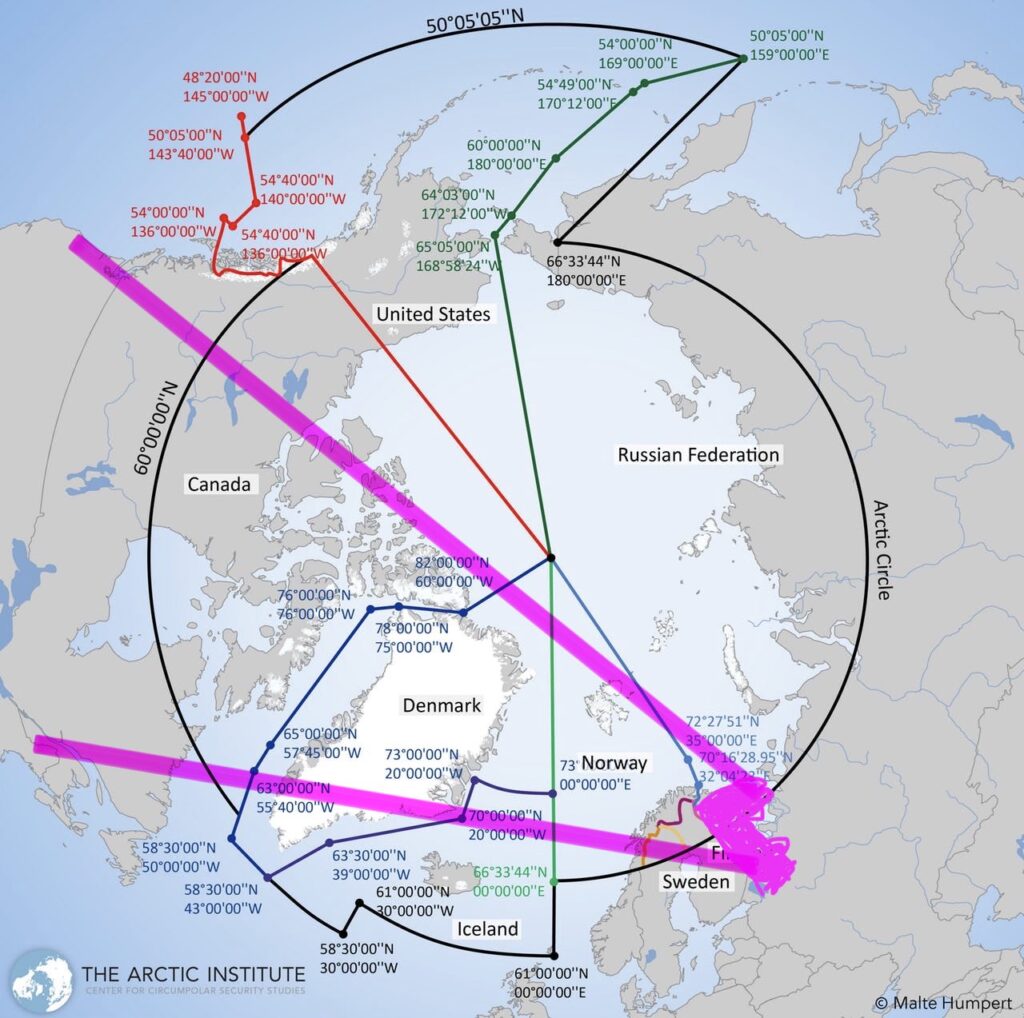
Flight paths for potential Russian intercontinental ballistic missiles (ICBMs) from the Kola Peninsula often arc over Greenland, making it the ideal spot for intercepts at the missile’s apogee.
Beyond military utility, Greenland is rich in resources critical to modern economies. It holds vast deposits of rare earth elements, essential for electronics, renewable energy tech, and defense systems. Climate change is melting ice caps, exposing more mineral wealth, and opening new shipping routes like the Northern Sea Route, which could shave days off journeys between Asia and Europe.
Trump has cited these factors, claiming Greenland is “surrounded by Russian and Chinese ships,” though such assertions have been questioned.
In an era of great-power competition, controlling Greenland means dominating Arctic trade, resources, and security.
From Monroe to “Donroe”: Trump’s Hemispheric Power Play
The Monroe Doctrine, established in 1823, declared the Western Hemisphere off-limits to European colonialism, positioning the U.S. as the dominant force in the Americas.
Trump has rebranded this as the “Donroe Doctrine,” a muscular update that not only curbs foreign adversaries like China, Russia, and Iran in the region but asserts outright American primacy through military and economic means.
In a recent press conference, Trump described it as superseding the original by “a real lot,” emphasizing U.S. control over strategic assets.
This doctrine isn’t confined to Latin America. Trump’s vision extends to the Arctic, viewing Greenland as an extension of the Western Hemisphere’s “backyard.” Critics call it “rank imperialism,” but supporters see it as pragmatic realpolitik in a multipolar world.
The “Donroe” approach blends historical U.S. policy with Trump’s deal-making style, prioritizing direct negotiations—potentially bypassing Denmark to appeal straight to Greenland’s Inuit population for independence or alignment with the U.S.
Venezuela as Precedent: Expelling Adversaries and Eyeing the North
The U.S. special operation on January 3, 2026, to capture Maduro dealt a blow to Russian and Chinese footholds in Venezuela. Maduro’s regime had deep ties with Moscow and Beijing, including oil deals and military cooperation; his removal disrupts those alliances, potentially increasing U.S. “oil clout” and sending a message to other hemispheric partners.
Russia loses a key ally that backed its Ukraine invasion, while China faces setbacks in its ideological and economic outreach.
This pattern—targeting foreign influence in resource-rich areas—mirrors Trump’s Greenland rhetoric. Just as Venezuela was seen as a neighborhood threat, Greenland’s proximity and assets make it a logical next step under the “Donroe Doctrine.” Trump’s team argues that Denmark’s oversight is insufficient against Arctic encroachments, and outright U.S. control would secure NATO interests—ironically, by challenging a NATO ally.
European leaders are rallying behind Denmark, but Trump’s direct appeals to Greenlanders suggest a hybrid strategy of diplomacy and pressure, not invasion.
Is Greenland Next? The Push for Annexation and Its Drivers
Yes, Greenland appears firmly on Trump’s agenda. Since 2025, he’s threatened annexation or hybrid tactics, refusing to rule out force while emphasizing national security.
Aides like Miller have escalated, stating “no one would fight” over it and that Greenland “should be part of the United States.”
The why is clear: countering Russia and China in the Arctic, securing minerals amid global supply chain tensions, and leveraging melting ice for economic gains. Greenland’s government dismisses takeover fears but seeks stronger U.S. ties, creating an opening for Trump.
Outright annexation is unlikely, but a push for independence or a U.S. protectorate could achieve similar ends.
Annexation and the Fate of NATO: A Breaking Point?
If the U.S. annexes Greenland, it could spell the end of NATO, according to Danish Prime Minister Mette Frederiksen.
As a Danish territory, Greenland falls under NATO’s umbrella via Denmark’s membership since 1949.
An American move against it would violate Article 5’s collective defense principle, pitting the alliance’s leader against a member state. European allies are blocking any takeover, viewing it as a test of international law versus “law of force.”
Trump’s Venezuela raid has already sown uncertainty, and Greenland could trigger a chain reaction, weakening transatlantic bonds.
Yet, some in Trump’s circle argue U.S. control would ultimately strengthen Arctic defenses for the alliance.
Investment Plays: Where U.S. Investors Should WatchFor investors, Greenland’s drama spells opportunity in mining and energy. The island’s government is opening doors to foreign capital, focusing on sustainable extraction amid geopolitical tensions.
Key signals: U.S.-Greenland deals, relaxed mining permits, or shifts toward independence that favor American firms.
Promising companies include:
Energy Transition Minerals (ASX:ETM): Specializes in Greenland’s critical minerals for low-carbon tech, with exploration and development projects poised for growth.
Critical Metals: Advancing the Tanbreez rare earths project, expecting to secure offtake deals by Q1 2026. Rare earths are vital for EVs and defense, making this a high-upside play.
Amaroq Minerals (AIM:AMRQ): Focused on gold and strategic metals in southern Greenland, with U.S. investors eyeing its Nalunaq gold mine for expansion.
Broader options: ETFs like the Iceland ETF, which includes Greenland exposure in mining and energy diversification.
Watch for U.S. policy announcements—tariffs on Chinese rare earths could boost Greenland alternatives. Risks abound, including environmental pushback and diplomatic fallout, but the Arctic’s resource boom is just heating up.
In summary, Trump’s Greenland fixation isn’t whimsy—it’s a calculated move in a high-stakes game of global influence. As the “Donroe Doctrine” unfolds, the island could redefine U.S. power, alliances, and investment landscapes. Stay tuned; the ice is cracking.
Sources: nytimes.com, icelandetf.com, X, reuters.com, spglobal.com, politico.com




Be the first to comment