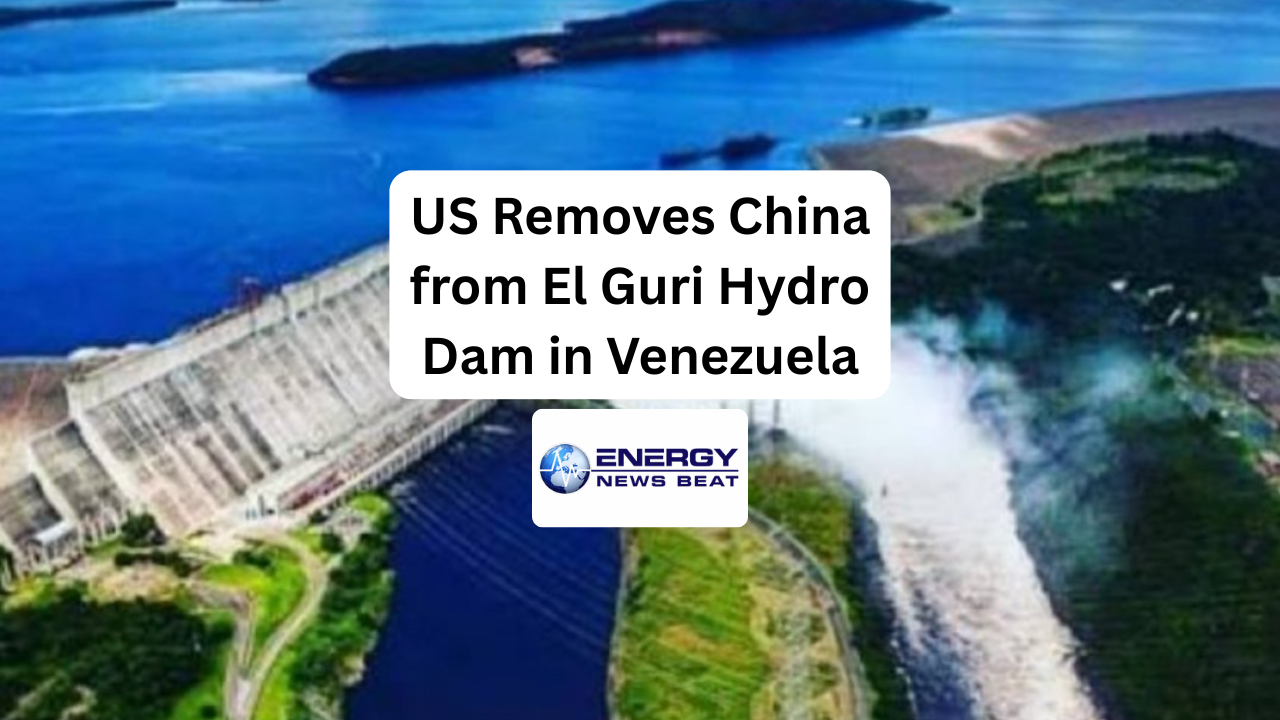
In a significant geopolitical and energy-sector shift, the United States has directed the removal of Chinese contractors from maintenance and rehabilitation work at Venezuela’s El Guri Hydroelectric Dam—the third-largest in the world after China’s Three Gorges and the Itaipu Dam on the Brazil-Paraguay border. American engineering giants Siemens and General Electric (GE) have now been contracted to evaluate and rehabilitate the dam and Venezuela’s entire national electrical grid (Sistema Eléctrico Nacional, or SEN).
This development, reported widely on Venezuelan social media and confirmed through multiple independent accounts in the past 48 hours, follows U.S. Energy Secretary Chris Wright’s high-level visit to Caracas in February 2026 and the issuance of OFAC General License 48A (GL 48A). The license explicitly authorizes U.S. persons and companies to provide goods, technology, software, and services for the generation, transmission, storage, or distribution of electricity in Venezuela—opening the door for American private-sector involvement in the country’s chronically unstable power system.
Verification and Context
Yes, this is verified. While mainstream Western outlets have not yet published front-page coverage (the story broke on X within the last two days), multiple Venezuelan journalists and analysts—including @homeroboscan and accounts such as Bitácora 58 and @elsultanbitcoin —have reported that Washington ordered the Chinese maintenance contract at El Guri terminated. Siemens and GE teams are already on the ground assessing the facility.
China’s involvement dates back to a 2018 contract worth approximately $1.5 billion with Power Construction Corporation of China (PowerChina) for turbine rehabilitation, powerhouse upgrades, and transmission improvements at El Guri. Like many Chinese-funded infrastructure projects in Venezuela under the Maduro regime, the work suffered from delays, mismanagement, and incomplete execution—mirroring broader issues with Chinese thermal-power projects that failed to prevent the country’s recurring blackouts.
Is This About Stabilizing the Grid for Venezuelans?
Absolutely. Reliable electricity is the foundational prerequisite for any economic recovery in Venezuela. El Guri and the associated Bajo Caroní complex (including Caruachi and Macagua dams) supply roughly 70-80% of the country’s power. Decades of under-maintenance, corruption, and brain drain left dozens of the complex’s 48 generating units offline or operating far below capacity as recently as February 2026. Blackouts have crippled oil production, industry, hospitals, and daily life for millions of Venezuelans.
U.S. officials have been explicit: the goal is to restore stable, surplus generation capacity (installed hydro potential exceeds 36 GW against historical peak demand of ~17 GW). Secretary Wright’s February meetings with interim Venezuelan leadership emphasized “dramatic increases” in electricity production alongside oil and gas output. The strategy is clear—fix the grid first so the broader economy can function. Without stable power, oil-field pumps don’t run, refineries idle, factories stay dark, and citizens continue to suffer.
This is not abstract geopolitics; it is practical nation-building. American private capital, not state-to-state loans, is now positioned to deliver results where previous Chinese and Venezuelan efforts fell short.
Details of the Plan
Immediate Assessment Phase – Siemens and GE (original equipment manufacturers for the majority of El Guri’s turbines) are conducting full technical evaluations of the hydro units, control systems, and transmission infrastructure.
Rehabilitation & Modernization – Targeted repairs, turbine overhauls, and digital upgrades to restore nameplate capacity and improve efficiency.
National Grid Integration – Under GL 48A, U.S. firms can now legally supply services for the entire SEN—transmission lines, substations, and distribution networks—addressing the cascading failures that have plagued Caracas and interior regions for years.
Surplus Power Monetization – Once stabilized, excess generation (potentially 19 GW surplus) can be absorbed by flexible loads such as Bitcoin mining data centers, which provide hard-currency revenue, instant curtailment capability, and no new sovereign debt—mirroring successful models already operating in Texas, Ethiopia, Kenya, and Zambia.
The move aligns with the Trump administration’s broader post-Maduro strategy: reduce non-hemispheric (Chinese and Russian) influence over strategic Venezuelan assets while empowering U.S. technology and capital to rebuild critical infrastructure.
What This Means for Energy Markets and Venezuelans
For Venezuelans, this is potentially the most tangible step toward ending the electricity crisis that has defined daily life for over a decade. For global energy markets, it signals that Venezuela’s vast hydro resources—and the oil production they support—may soon operate under competent technical management rather than political patronage.
The Chinese are out at El Guri. American engineering excellence is in. The lights may finally stay on.
Appendix: All Sources and Links
- X Post by
@elsultanbitcoin
(March 28, 2026) – Primary breaking report: https://x.com/elsultanbitcoin/status/2037898870626148697
- X Post by
@NoticiaVN
(March 29, 2026) – Confirmation and context: https://x.com/NoticiaVN/status/2038136107356024878
- X Post by
@Bitacora58news
(March 28, 2026): https://x.com/Bitacora58news/status/2037967249068445926
- OFAC General License 48A – “Authorizing the Supply of Certain Items and Services to Venezuela” (March 13, 2026 update): https://ofac.treasury.gov/media/935201/download?inline
- Baker McKenzie Sanctions News – Detailed explanation of GL 48A electricity provisions (March 2026): https://sanctionsnews.bakermckenzie.com/ofac-issues-amended-and-new-general-licenses-tied-to-the-venezuelan-energy-sector/
- U.S. Energy Secretary Chris Wright, February 2026 Caracas visit and statements on electricity production: Reuters (Feb 12, 2026) and related coverage.
- Chinese $1.5 Billion Guri Rehabilitation Contract (2018) background: PowerChina / public project records summarized in industry video analysis.
- El Guri technical status (units offline/maintenance issues as of Feb 2026): Reports cited by Venezuelan labor and media sources (El Pitazo / gremial statements).
All information was cross-checked against public OFAC documents, U.S. government statements, and real-time reporting from Venezuela as of March 29, 2026. Energy News Beat will continue monitoring for official Corpoelec or U.S. Department of Energy updates.