


The wind energy industry loves to portray itself as the ultimate green savior—clean, renewable, and kind to the planet. But a closer look at its supply chain reveals a dirty secret hidden in the Amazon rainforest. Balsa wood, prized for its lightweight strength, forms the core of many wind turbine blades. The boom in wind installations has triggered a surge in balsa harvesting that is devastating forests, fueling organized crime, and leaving non-recyclable blades to pile up in landfills.
A recent post on X by Peter Clack (@PeterDClack) pulls no punches on this issue. It highlights how roughly 91% of forest loss in the Brazilian Amazon is now linked to organized crime, according to monitoring agencies. No longer just small-scale farming or palm oil, this is militarized drug operations. Up to 70% of “legal” balsa exports are likely laundered wild timber. Logging tracks have become arteries for the drug trade, with cartels like Comando Vermelho and Primeiro Comando da Capital trading precursor chemicals for illegal Amazonian gold and timber. When we subsidize wind turbine blades, we’re financing global organized crime.
The tragedy of the Amazon is simply the business model for the drug cartels.
We talk about ‘deforestation’ as if it’s just local farmers. It’s not. It’s ‘environmental laundering’ by drug syndicates. They use the same bulldozed tracks to move cocaine that they use to extract… pic.twitter.com/Xbynho2MXV
— Peter Clack (@PeterDClack) March 29, 2026
Illegal loggers don’t just sell balsa on the black market, they are laundering it into a global criminal supply chain.
Criminal gangs are mixing wild-cut balsa from pristine areas with legal timber from certified plantations in Ecuador and Peru. Once mixed, it is given a legal… pic.twitter.com/jLgIItSigu
— Peter Clack (@PeterDClack) March 29, 2026
The Balsa Boom: From Plantations to Rainforest Plunder
Balsa trees (Ochroma pyramidale) grow fast—ready for harvest in 3–7 years—and are native to the tropical Americas. Ecuador dominates global supply (over 90% of exports), with much of it historically from coastal plantations. But the wind industry’s explosive growth, especially in China, outstripped sustainable supply. The 2019–2020 “balsa fever” sent loggers rushing into the Ecuadorian Amazon, including protected areas like the UNESCO Yasuní Biosphere Reserve, and spilling into Peru and Colombia.
Wild balsa is now blended into “legal” exports at rates of 10–70%, often smuggled and laundered. Investigative reports from the Environmental Investigation Agency (EIA) document incursions into indigenous territories (Achuar, Kichwa, Shuar, Waorani) and national parks. Logging roads fragment habitats, enable further illegal activities, and leave communities with pennies per tree while facing violence, drug abuse, and displacement.
The Numbers Don’t Lie: How Many Trees, and Where Do They End Up?
Global wind installations hit a record ~127 GW in 2024, with 23,098 new turbines deployed worldwide.
Not every blade uses balsa anymore (some manufacturers have shifted to polymer foams), but the wind sector still drives the majority of global balsa demand—estimated at 55% of production.
Balsa per turbine: A typical set of three blades for an 8 MW turbine uses about 5.8–6 tons (roughly 39–40 m³ at 150 kg/m³ density), equivalent to 40 mature balsa trees. Larger blades (up to 100m) can require even more.
Annual harvest for wind: Ecuador produces ~500,000 m³ of balsa annually. With wind accounting for ~55% of that, consumption equates to over 1 million trees harvested yearly for turbine blades. Up to half a million or more are illegally logged from Amazon rainforests, according to multiple analyses tying production shortfalls directly to wild harvesting.
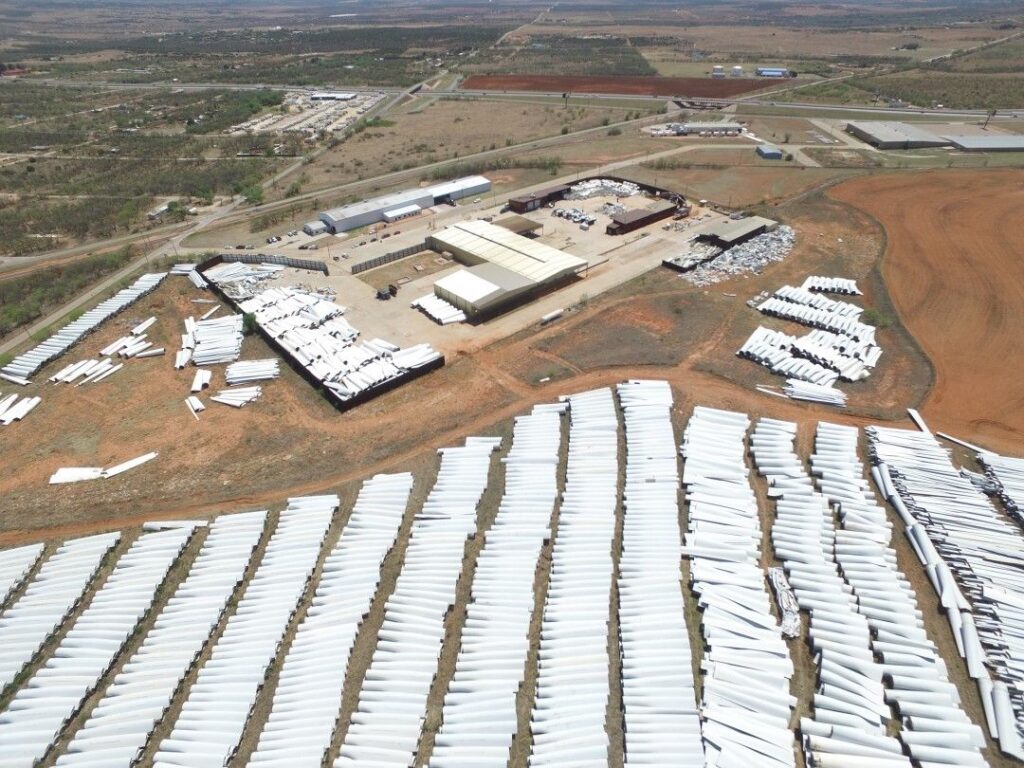
These trees are “created” (harvested) annually to feed new turbine production. But here’s the eco-irony: wind turbine blades are notoriously difficult to recycle. They’re composites of fiberglass, epoxy resins, and balsa wood bonded together. The vast majority end up in landfills—safe in terms of toxicity, but a massive waste of space and resources. Projections show tens of millions of tons of blade waste globally by 2050. The balsa harvested today will largely follow the same path in 20–25 years when those turbines are decommissioned.
Damage to the Amazon Rainforest
The environmental toll goes far beyond the balsa trees themselves:
Deforestation and habitat loss: Illegal logging invades primary forests, riverbanks, and islands in the Amazon basin. It fragments ecosystems, threatens over 130 endangered species, and accelerates erosion and biodiversity collapse in places like Yasuní.
Indigenous impacts: Communities report forced sales, low pay (as little as 22 cents per tree), and social breakdown. Logging often occurs without consent on indigenous lands.
Crime nexus: As the X post notes, balsa logging roads double as drug trafficking routes. Cartels launder timber, barter for chemicals, and control entire illegal economies—turning “green” energy subsidies into funding for organized crime.
Broader Amazon crisis: While balsa isn’t the sole driver of deforestation, it contributes to the 91% organized-crime-linked loss in Brazil and similar patterns in Ecuador/Peru. Plantations themselves often replace primary forest.
Proponents claim balsa plantations are sustainable and that foam alternatives are rising. But the data shows demand still overwhelms plantations, pushing illegal wild harvest—and the crime and ecological damage that comes with it.
Time to Rethink “Green” Energy
Wind power generates electricity without direct emissions, but its full lifecycle—from Amazon logging to landfill-bound blades—tells a different story. Subsidies and mandates are driving destruction in one of the planet’s most vital ecosystems while financing criminal networks. True environmental stewardship requires looking beyond the turbine blades to the hidden costs upstream and downstream.
When you add up the critical pile of waste from the blades in bone yards, and the estimated 89 billion dollar liability for land reclamation on the wind mills in the United States alone, you start to see a not-so-eco-friendly picture. On top of this, the true cost of renewables not being counted in grid resilience, you have yet more CO2 being produced when wind and solar are connected to the grid. That is another huge topic for a longer article.
Policymakers, utilities, and consumers deserve transparency. Until the industry proves it can source materials responsibly and recycle blades at scale, claims of being “eco-friendly” ring hollow.
Appendix: Sources and Links
- X post by
@PeterDClack
(March 29, 2026): https://x.com/PeterDClack/status/2038068454008504692
- Environmental Investigation Agency (EIA) “ILL WIND” report (Oct 2024): https://eia.org/report/ill-wind/ and full PDF: https://eia.org/wp-content/uploads/2024/10/EIA_US_Wind_Turbine_Timber_Report_1024_FINAL.pdf
- Rainforest Rescue petition on balsa and wind energy: https://www.rainforest-rescue.org/petitions/1255/don-t-plunder-the-rainforest-for-wind-energy
- Daily Sceptic / USAREF article on 500,000+ illegal trees: https://www.usaref.org/500000-balsa-trees-illegally-logged-to-feed-global-wind-turbine-demand/
- Dialogue Earth on “balsa fever” in Ecuador/Amazon: https://dialogue.earth/en/forests/balsa-fever-brought-hope-and-havoc-in-the-amazon-what-happened-next/
- El País on wind power driving Amazon deforestation: https://english.elpais.com/usa/2021-11-26/how-the-wind-power-boom-is-driving-deforestation-in-the-amazon.html
- Forest Trends balsa report: https://www.forest-trends.org/wp-content/uploads/2022/06/Balsa-Report-FINAL.pdf
- GWEC 2024/2025 wind market data (turbine installations): https://www.gwec.net
Energy News Beat will keep digging into these real-world costs. Stay tuned for more unfiltered energy truth.