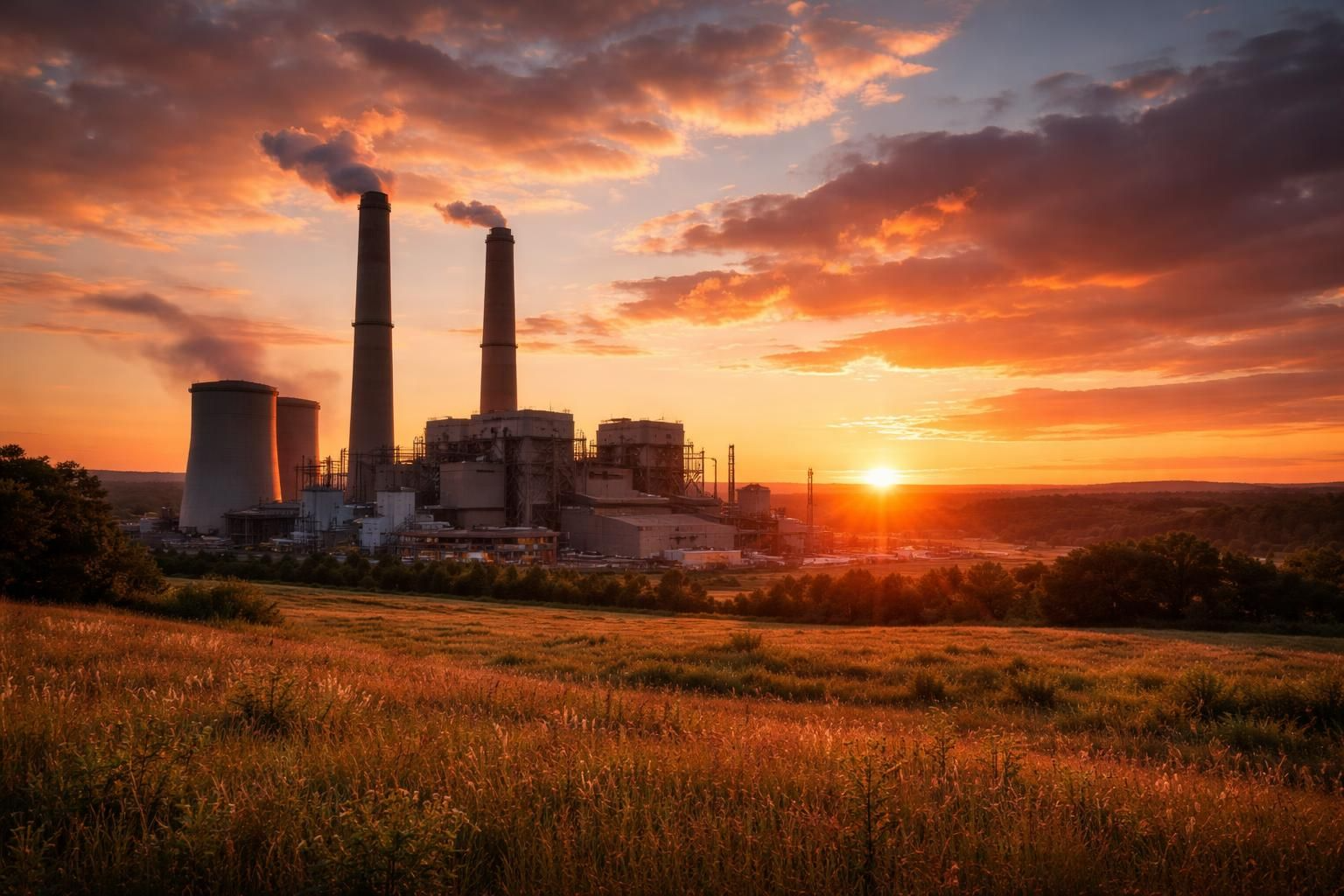
In a rare show of bipartisan cooperation on energy policy, two major coal-fired power plants in western Pennsylvania that were slated for retirement in 2028 will now remain online for several more years. The decision, sealed through a state consent decree and highlighted by President Donald Trump on Truth Social, underscores Pennsylvania’s pragmatic “all-of-the-above” energy strategy at a time when grid reliability and surging electricity demand are top priorities.
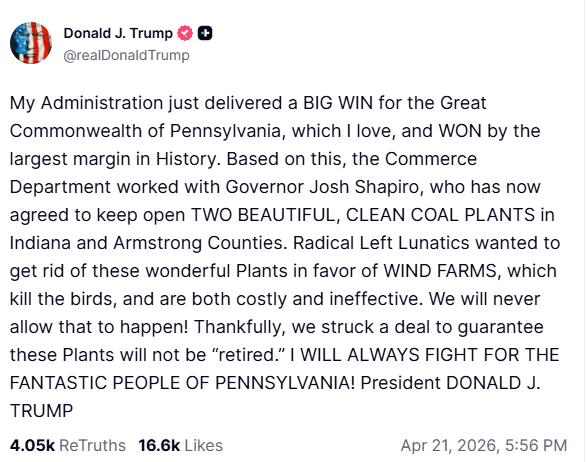
President Trump announced the development in a Truth Social post on April 21, 2026:
“My Administration just delivered a BIG WIN for the Great Commonwealth of Pennsylvania, which I love, and WON by the largest margin in History. Based on this, the Commerce Department worked with Governor Josh Shapiro, who has now agreed to keep open TWO BEAUTIFUL, CLEAN COAL PLANTS in Indiana and Armstrong Counties. Radical Left Lunatics wanted to get rid of these wonderful Plants in favor of WIND FARMS, which kill the birds, and are both costly and ineffective. We will never allow that to happen! Thankfully, we struck a deal to guarantee these Plants will not be ‘retired.’”
The plants in question are the Keystone Generating Station in Armstrong County (Shelocta area) and the Conemaugh Generating Station in Indiana County (New Florence area). Together, they provide approximately 3,400–3,583 MW of reliable baseload power to the PJM Interconnection grid—the largest in the nation.
The Agreement and UpgradesKeystone-Conemaugh Projects, LLC (Key-Con), the operator of both facilities, had originally planned to shut them down after 2028 because the cost of complying with federal wastewater discharge rules (specifically, Effluent Limitation Guidelines for bottom ash transport water and coal ash) no longer made economic sense amid softer power market conditions at the time.
Under the new consent decree with the Pennsylvania Department of Environmental Protection (DEP)—now pending final court approval in Indiana County Common Pleas Court—Key-Con will install and operate upgraded bottom ash handling systems at both plants. Key milestones include:
Completing construction of the upgrades.
Beginning operation of the upgraded systems within 60 days of construction completion.
Paying daily penalties until upgrades are complete (with additional penalties for missed milestones).The upgrades will allow continued operation through at least 2032 while significantly reducing the plants’ environmental footprint, particularly discharges to state waters. Gov. Josh Shapiro, who describes himself as an “all-of-the-above energy governor,” praised the deal:“Pennsylvanians are worried about rising energy costs right now, and they need reliable, affordable sources of power to ensure our homes and businesses can keep the lights on without breaking the bank. I’m an all-of-the-above energy Governor, and by upgrading the environmental controls at the Keystone and Conemaugh Generating Stations to keep them operating for longer, we will protect energy jobs and ensure Pennsylvania generates enough energy to support the regional grid while reducing their impact on our environment.”
Pennsylvania’s Energy Mix: Why This Matters
Pennsylvania’s electricity generation has shifted dramatically in recent years. According to the U.S. Energy Information Administration (EIA):Natural gas dominates at ~58–59% of in-state generation (2024–2025 data).
Nuclear provides ~30%.
Coal has fallen sharply to just 5–7% (down ~90% since 2005, when it was the leading source).
Renewables (wind, solar, hydro, biomass) make up the balance.Over 5,300 MW of coal capacity has retired statewide between 2015 and 2025. Yet demand is surging—driven by data centers, AI infrastructure, manufacturing reshoring, and electrification. The Keystone and Conemaugh plants represent critical dispatchable, around-the-clock power that wind and solar cannot fully replace without massive battery storage or new gas/nuclear builds.
How Keeping These Plants Open Helps Consumers
Grid Reliability & Avoiding Blackouts — PJM has repeatedly warned of capacity shortfalls during extreme weather or peak demand. These ~3,400 MW of baseload power act as a buffer, especially as neighboring states push aggressive renewable mandates that can strain the regional grid.
Price Stability — Premature coal retirements have contributed to higher wholesale power prices during tight supply periods. Keeping proven assets online reduces the need for expensive peaker plants or imports, helping keep residential and commercial bills in check.
Jobs & Local Economy — The plants support more than 1,000 direct high-paying jobs, plus thousands in supply chains, mining, and related industries. They also generate millions in tax revenue for local schools and communities.
Environmental Gains with Realism — The required upgrades deliver measurable pollution reductions while preserving dispatchable capacity—exactly the pragmatic balance Shapiro and Trump both endorsed.
What Utilities and Investors Should Watch
Keystone-Conemaugh Projects, LLC operates the plants, but ownership is held by a consortium of investors. Notable stakes include:
Talen Energy — Holds a minority interest (approximately 12% in Keystone and a similar share in Conemaugh). Talen (NYSE: TLN) investors gain exposure to these assets’ extended cash flows in a capacity-constrained PJM market.
Other stakes are held by private equity firms (including affiliates of Bardin Hill and Riverstone, following earlier transactions involving ArcLight Capital Partners and PSEG’s 2019 exit).
For potential investors, this deal signals renewed value in existing dispatchable generation assets amid rising electricity demand. It also highlights how federal and state policy can extend the life of coal plants through targeted environmental upgrades rather than outright retirement.
Appendix: Sources and Links
- President Trump Truth Social Post (April 21, 2026): https://truthsocial.com/@realDonaldTrump/posts/116445165496999724
- ABC27/WHTM Coverage: https://www.abc27.com/pennsylvania/pennsylvania-will-keep-2-coal-fired-power-plants-open-earning-praise-from-shapiro-and-trump/
- Yahoo News / AOL: https://www.yahoo.com/news/articles/pennsylvania-keep-2-coal-fired-013459859.html
- PA Environment Daily (Consent Decree details): http://paenvironmentdaily.blogspot.com/2026/04/dep-files-final-consent-decree.html
- EIA Pennsylvania Energy Profile: https://www.eia.gov/states/PA/analysis
- Low Carbon Power PA Mix (2025): https://lowcarbonpower.org/region/Pennsylvania
- DEP / Court Filing References via local coverage: https://levittownnow.com/2026/04/22/gov-shapiro-pres-trump-announce-deal-to-keep-key-coal-plants-online/
- Talen Energy Plant Page (ownership): https://www.talenenergy.com/plant/keystone-generating-station/
- Historical ownership background (IEEFA report): https://ieefa.org/sites/default/files/2022-06/Private%20Equitys%20Losing%20Bet%20on%20PJM%20Coal%20Plants_June%202022.pdf
This agreement proves that pragmatic energy policy—keeping reliable, upgraded coal capacity online while meeting environmental standards—delivers wins for Pennsylvania families, workers, and the grid. As demand grows, “clean coal” isn’t a slogan; it’s part of the solution.