

South Korea’s planned U.S. investment package includes a framework for eight large nuclear reactors, with Commerce Secretary Howard Lutnick naming Ohio, Tennessee, South Carolina, and Kentucky as expected host states. The September 30, 2026 White House announcement is real, but it is a commercial framework tied to last year’s tariff deal—not a zero-cost gift fully locked in for those four states.
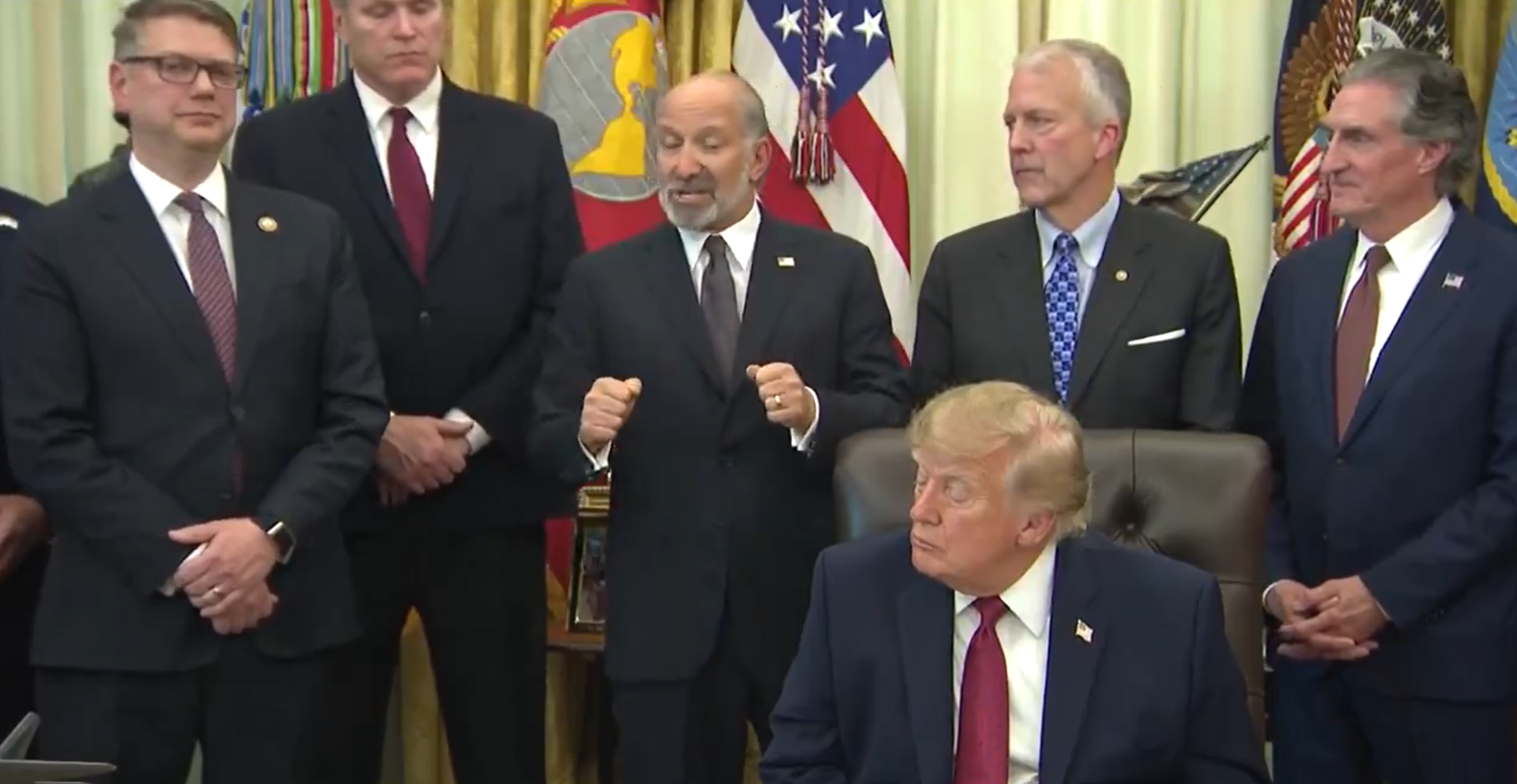
President Donald Trump unveiled the package at the White House alongside Lutnick and other officials. Social-media summaries, including a widely viewed post by Nick Sortor, framed the nuclear piece as eight “massive” plants “fully paid for by the Korean government” at “zero cost to the United States” because Seoul sought tariff relief. Official accounts from both governments describe something more conditional: structured investment capital that expects returns, with individual projects still subject to site selection, commercial review, and further agreements.
What was announced
The nuclear element, called Project Power, sits inside Seoul’s broader $350 billion U.S. investment commitment under the 2025 trade understanding that cut U.S. tariffs on most Korean goods from 25% to 15%. Of that total, $150 billion is allocated to shipbuilding cooperation and $200 billion to strategic investments. Project Power can draw up to $120 billion of the strategic pool—about $100 billion in overnight construction costs and $20 billion in contingency reserves that count toward the investment total.
The reactor mix is six Westinghouse AP1000 units (roughly 1,100 MW class) and two Korean-designed APR1400 units (about 1,400 MW each). Combined nameplate capacity is on the order of 10 GW. Construction sequencing discussed by Korean officials starts with two AP1000s, followed by two APR1400s plus two more AP1000s, then a final pair of AP1000s. Units are expected to be sited on federal land. Lutnick said the plants would be built in Ohio, Tennessee, South Carolina, and Kentucky; the joint descriptions still list specific sites as “to be specified,” and Seoul has said final decisions wait on commercial-reasonableness reviews, project structures, and domestic procedures.
A separate, more advanced piece of the same package is a roughly $22.3 billion, about 6 GW combined-cycle gas plant at Encinal, Texas (Project Star), aimed at serving AI data-center load, with first power targeted for 2029. An Alaska LNG pipeline and export project (Project North, cited above $50 billion) remains under commercial and legal review and is not finalized.
Deal structure
This is investment, not a grant. Korean reporting describes an umbrella investment vehicle and project-level special-purpose vehicles. Profits are split 50/50 between the Korean and U.S. sides until Korea recovers principal and interest across the covered investments; the split then shifts sharply toward the U.S. side (reported as 1:9). Annual deployments under the strategic package are capped at $20 billion. Both sides have agreed to cooperate on up to $10 billion in advance funding by the end of 2026, mainly to order long-lead equipment, subject to legal requirements.
Korean companies are also negotiating a significant minority equity stake in Westinghouse—figures discussed in the 5–10% range—with terms still open. Cameco, which owns 49% of Westinghouse, has said it does not expect that participation to dilute its own interest.
A central commercial term is a one-time waiver under the January 2025 intellectual-property settlement between Westinghouse, Korea Electric Power Corp. (KEPCO), and Korea Hydro & Nuclear Power (KHNP). That settlement had restricted APR1400 exports and imposed technology fees. The waiver would allow up to two APR1400s on U.S. soil. Compensation to Westinghouse is described as roughly $2 billion of value per APR1400 through licensing, engineering and procurement services, subcontracting, and long-term fuel fabrication. If built, these would be the first foreign-designed large reactors constructed in the United States, and the first Korean reactors on the U.S. mainland roughly 50 years after American technology helped launch Korea’s program at Kori.
Seoul has repeatedly stressed that individual nuclear projects proceed only after commercial rationality is confirmed. Trump and Lutnick have spoken more definitively about the eight plants and the four states. That gap is the main execution risk.
Relationship and joint export potential
The framework is explicitly aimed at long-term cooperation in the global nuclear market. U.S. Commerce Department language says the parties will combine American technology with Korea’s supply-chain and construction capabilities, using successful U.S. deployment as a reference. Korea already has a strong large-reactor export record—most notably the four APR1400 units at Barakah in the United Arab Emirates, delivered by KHNP and Korean contractors on a schedule and budget that contrasted with recent Western projects.
A U.S. track record for both the AP1000 (with heavy Korean equipment and construction participation) and the APR1400 would give the two countries a shared reference plant set. That can support joint or coordinated bids in third countries where Chinese and Russian designs are the main competitors, and where buyers want Western or allied technology plus proven delivery. The partial resolution of the Westinghouse–KEPCO/KHNP IP dispute removes a standing obstacle to Korean exports and creates a template for shared work. It does not automatically produce a single joint venture for every overseas tender, but it aligns incentives: Westinghouse gains licensing and fuel revenue even on APR1400 units, while Korean suppliers gain U.S. content and a path into the American fleet.
Companies involved
- Westinghouse Electric Company — AP1000 design, expected engineering, procurement, and fuel role; potential equity investment target for Korean firms. Cameco holds 49%.
- KEPCO and KHNP — Korean state-linked sponsors of the APR1400 side and parties to the IP settlement and framework.
- Korean equipment and construction suppliers historically tied to APR1400 and export builds, including Doosan Enerbility (major components) and civil/construction contractors that worked on Barakah and domestic units. Exact scopes for the U.S. plants are not yet awarded.
- On the Texas gas side: NextEra Energy and Related Companies as lead developers, with Lewis Energy Group providing land, gas, and related infrastructure. Korean capital is the investment source.
- U.S. utilities, federal site owners, and the Nuclear Regulatory Commission will determine offtake, licensing, and actual construction consortia once sites are chosen.
What investors and consumers should watch
Investors should treat the $120 billion figure as a ceiling on a framework, not a closed order book. Key markers are: final site designations and any federal land transfers; whether the APR1400 obtains the NRC design approvals required for U.S. construction (a multi-year process even with a waiver of the commercial IP restriction); the size and price of any Westinghouse equity stake and the timing of a possible Westinghouse IPO; and the $10 billion long-lead advance. Korean nuclear suppliers (KEPCO, KHNP-related names, Doosan Enerbility) have already moved on earlier headlines. Cameco has a direct fuel-and-ownership angle. Cost discipline matters: the only operating U.S. AP1000s, Vogtle 3 and 4, finished years late and billions over budget. A repeat would pressure returns under the 50/50 recovery formula.
Consumers and large power users, especially data-center operators, care about firm, high-capacity-factor generation. Eight large reactors would be material baseload if delivered, and the Texas gas plant is explicitly aimed at AI load. Near-term bill impacts are limited. Longer-term rate effects depend on who owns the plants, how offtake is contracted, and whether overruns land on ratepayers or on the investment vehicles. Federal siting may keep some projects outside the traditional state rate base.
The strategic bet is straightforward. Korea supplies capital and a proven construction supply chain in exchange for tariff relief and U.S. market access. The United States gets reactors toward the goal of 10 large units under construction by 2030 without appropriating the full capital itself, plus a tighter industrial link with a top-tier allied nuclear exporter. Whether that becomes eight operating plants in Ohio, Tennessee, South
Making Appendices Great Again
Check out the World’s Greatest Podcast Show Notes at EnergyNewsBeat.co or EnergyNewsBeat.com.
Appendix: sources and links
- Nick Sortor post (Sept. 30, 2026): https://x.com/nicksortor/status/2105400250957451484
- Yonhap, Trump unveils investment plans (Oct. 1, 2026): https://en.yna.co.kr/view/AEN20261001000854315
- World Nuclear News, six AP1000 and two APR1400 framework: https://www.world-nuclear-news.org/articles/usa-south-korea-targeting-six-ap1000-two-apr1400-units
- Korea Times, three energy investments: https://www.koreatimes.co.kr/business/others/20261001/korea-us-unveil-3-investments-in-energy-projects
- Reuters, South Korea unveils energy plans: https://www.reuters.com/world/asia-pacific/south-korea-unveils-major-energy-investment-plans-us-2026-09-30/
- Chosun Biz, $120 billion nuclear build and APR1400 export: https://biz.chosun.com/en/en-policy/2026/10/01/WMAY3QOHTBGUVOXXOME7GD2XP4/
- Seoul Economic Daily, four-state locations: https://en.sedaily.com/finance/2026/10/01/korea-us-energy-plan-puts-120-billion-nuclear-push-in-four
- Korea Herald, Trump unveils three projects: https://www.koreaherald.com/article/10889661
- Nikkei Asia, $120 billion nuclear commitment: https://asia.nikkei.com/economy/trade-war/trump-tariffs/south-korea-to-build-8-nuclear-power-plants-in-us-invest-120bn
- Earlier WSJ-based reporting (Nuclear News Network, Sept. 11, 2026): https://www.nuclearnewsnetwork.com/news/south-korea-nears-100bn-us-reactor-deal
- Reuters on September negotiations: https://www.reuters.com/world/asia-pacific/south-korea-nears-agreement-worth-over-100-billion-us-investments-wsj-reports-2026-09-10/