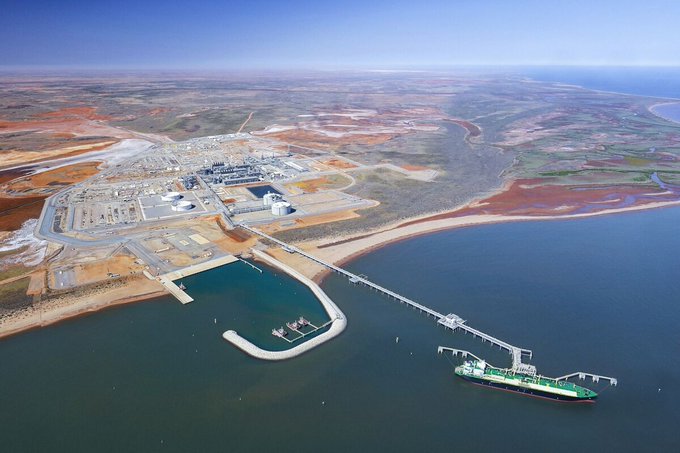
A powerful Tropical Cyclone Narelle has forced Chevron to shut down production at its Wheatstone LNG facility in Western Australia, adding fresh pressure to an already strained global liquefied natural gas (LNG) market. The outage, which began on March 26-27, 2026, stems from storm damage to the offshore platform and onshore processing plant near Onslow.
The Wheatstone project consists of two LNG trains with a combined nameplate capacity of 8.9 million tonnes per annum (mtpa) and a domestic gas plant. Chevron holds approximately 64.14% equity in the project.
Outage Details and Expected Downtime
An outage hit the offshore Wheatstone platform (located ~225 km off the coast) around midday local time on March 26, suspending both LNG and domestic gas production. All personnel were safely demobilized beforehand, with operations managed remotely.
As of March 29, Chevron confirmed that equipment damage from the cyclone is hampering restart efforts. Comprehensive inspections are underway at both the offshore platform and onshore facilities. The company stated that it will likely take “a number of weeks” or “several weeks” before full production resumes.
(Note: Chevron’s larger Gorgon LNG facility — 15.6 mtpa capacity — also experienced a temporary outage but has now returned all three trains to operation.)
Damage Assessment
The full extent of storm-related damage (to equipment and infrastructure) is still being evaluated. No specific repair cost figures have been released, but the multi-site assessment and need for safe repairs point to a complex recovery process rather than a quick fix. This is distinct from catastrophic damage scenarios; it is weather-induced operational disruption requiring targeted fixes.
Impact on the Already Stressed Global LNG Market
Australia’s Wheatstone and Gorgon plants together account for more than 5% of global LNG supply. Even a temporary outage of this scale tightens the market further at a critical time.
The LNG market was already reeling from the ongoing U.S.-Israeli conflict with Iran. Key disruptions include:
Iran’s closure of the Strait of Hormuz (handling ~20% of global LNG and oil flows).
Iranian missile strikes on Qatar’s Ras Laffan LNG complex, sidelining ~17% of Qatar’s LNG capacity (approximately 12.8–13 mtpa) for an estimated 3–5 years.
Analysts (S&P Global, ICIS, Kpler, Rystad, Wood Mackenzie) have collectively slashed 2026 global LNG supply outlooks by up to 35 million tonnes — roughly 500 cargoes.
This has driven Asian spot prices (JKM marker) sharply higher — reaching multi-year highs above $20–25/MMBtu in recent weeks, with some forecasts exceeding $26/MMBtu through Q2.
The Wheatstone outage, while smaller in volume (~0.5–0.7 mtpa equivalent if offline 3–4 weeks), exacerbates the tightness because it removes a reliable Australian supply precisely when buyers in Asia and Europe are scrambling for alternatives.
Calculated Production Loss and Chevron Q2 Revenue Impact Daily capacity: 8.9 mtpa ÷ 365 ≈ 24,380 tonnes per day (tpd) total.
Equity share (Chevron 64.14%): ~15,640 tpd.
Assumed outage duration: 3–4 weeks (conservative based on “several weeks” guidance) = 21–28 days.28-day scenario → ~682,000 tonnes total lost production.
Chevron equity portion → ~437,000 tonnes lost.
Using a conservative market-equivalent price of ~$960 per tonne (derived from recent JKM ~$20/MMBtu and standard LNG energy content of ~48–52 MMBtu per tonne):
Potential gross revenue loss (industry-wide): ~$650–700 million for a 4-week outage.
Chevron’s equity share impact: ~$400–450 million in foregone revenue (pre-variable costs and taxes).
This would primarily hit Q2 2026 results (April–June), as the outage spans late March into April/May. For context, Chevron’s quarterly sales and operating revenues routinely exceed $45 billion. The hit represents a noticeable but not company-threatening dent to LNG segment earnings — especially given long-term contracts that may allow some makeup cargoes later. Actual cash-flow impact could be lower if Chevron diverts from other portfolio assets or invokes force majeure clauses.
What Investors Should Watch For:
Restart timeline and damage updates — Chevron is expected to provide more detail in upcoming operational releases or the Q1 2026 earnings call.
LNG price volatility — Any prolongation of the outage (or further Australian/ global disruptions) could push JKM above $30/MMBtu.
Contract performance — Watch for force majeure notices or spot-market activity that could offset or amplify the hit.
Broader supply dynamics — Continued Iran-related tightness benefits Chevron’s other LNG assets (e.g., Gorgon, U.S. Gulf Coast exports) and could support higher realized prices across the portfolio.
Q2 2026 guidance — Look for commentary on production recovery, margin resilience, and any knock-on effects to domestic gas sales in Western Australia.
Bottom Line
The Wheatstone shutdown is another reminder of LNG’s vulnerability to both weather and geopolitics. While the direct volume loss is modest compared with the massive Qatar outage, it arrives at the worst possible moment — compounding a supply crunch that has already sent prices soaring and forced buyers to rethink energy security. Chevron shareholders can expect a short-term Q2 revenue headwind of several hundred million dollars (equity basis), but the resilient global LNG backdrop may cushion the blow and reward diversified producers in the months ahead.
Appendix: Sources and Links
All information drawn from publicly available reports as of March 29, 2026. Key references (in order of citation):
- Reuters (March 26–29, 2026): Chevron outage details and market impact — https://www.reuters.com/business/energy/chevron-reports-outage-australian-gas-facilities-due-cyclone-2026-03-26/
- Chevron Australia official project page and JV structure — https://australia.chevron.com/what-we-do/wheatstone-project
- ICIS, Bloomberg, LNG Prime (March 29, 2026): “several weeks” repair timeline — https://www.icis.com/explore/resources/news/2026/03/29/11193121/chevron-says-wheatstone-could-be-offline-fo-weeks-woodside-working-on-nws/ and https://lngprime.com/australia-and-oceania/chevron-says-all-gorgon-lng-trains-operating-wheatstone-damaged/181665/
- Reuters analysis on Iran war / Qatar damage (17% capacity offline 3–5 years) — https://www.reuters.com/business/energy/iran-war-damage-qatar-hits-global-lng-outlook-upends-asia-demand-growth-2026-03-26/
- Additional market context: OilPrice.com, Upstream Online, Chevron 2025 financial supplements — https://oilprice.com/Latest-Energy-News/World-News/Cyclone-Causes-Outages-at-Australias-Top-LNG-Projects.html
Energy News Beat will continue monitoring Chevron’s progress and global LNG developments. Stay tuned for updates.
What do you feel about this post?

Like

Love

Happy

Haha

Sad