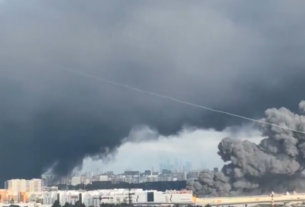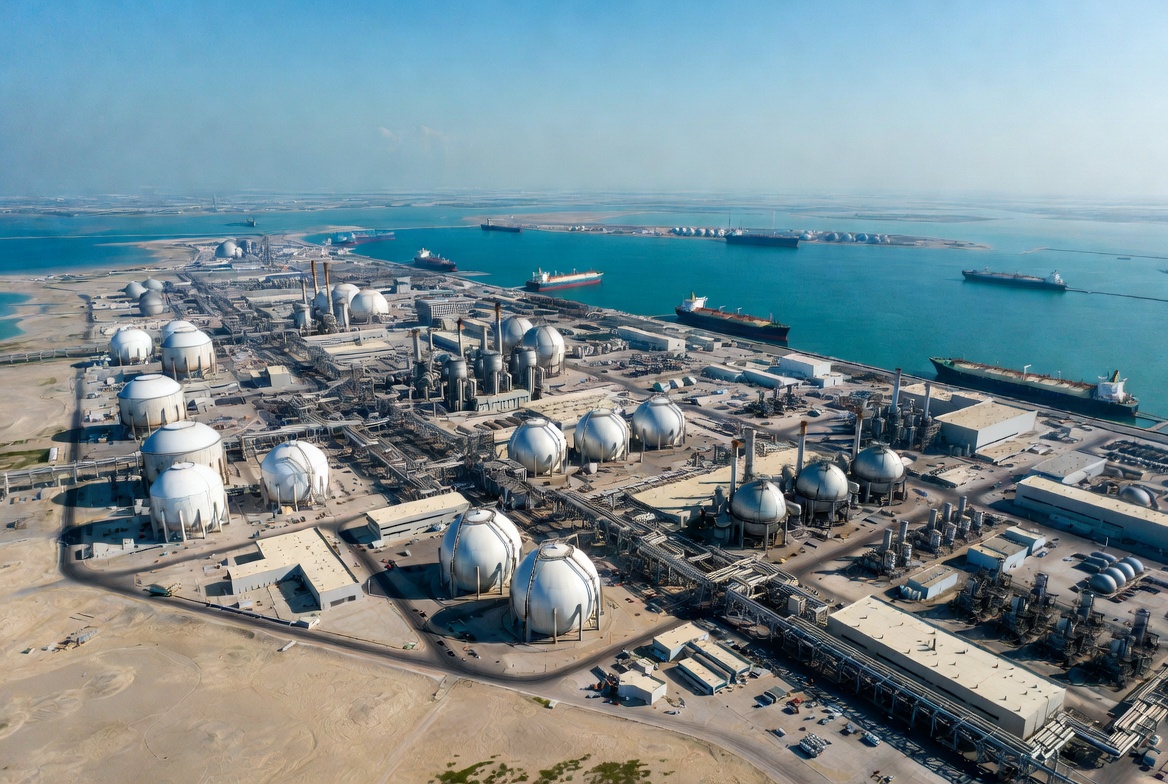
QatarEnergy has formally extended its force majeure declaration on liquefied natural gas (LNG) supplies through mid-June, according to Bloomberg. Customers received the latest notice as the Strait of Hormuz remains almost entirely closed to tanker traffic following Iranian missile strikes on the Ras Laffan Industrial City in March.
This isn’t a surprise—it’s a continuation of the chaos that started back in early March when QatarEnergy first declared force majeure after production halts at its massive Ras Laffan facility, the world’s largest LNG export hub. The strikes knocked out roughly 17% of Qatar’s LNG capacity (about 12.8 million tonnes per annum) for what could be three to five years of repairs.
The Straight Scoop on the Disruption
Qatar is no small player—it accounts for around 20% of global LNG exports. The ongoing closure of the Strait of Hormuz has strangled tanker movements, turning what was supposed to be a manageable outage into a prolonged headache for buyers in Europe, Asia, and beyond. Initial force majeure notices hit contracts with customers in Italy, Belgium, South Korea, and China, and now the extension locks in more cancellations through mid-June.
Italian importer Edison already flagged back in April that the disruption could stretch beyond mid-June, and they’ve been scrambling to replace 10 cancelled cargoes (about 1.4 billion cubic meters) with U.S. LNG.
EU Summer Refill Season: Already Under Pressure
Europe is heading into the critical summer injection season with storage levels that are anything but comfortable. As of May 4, 2026, EU underground gas storage sits at just 34.14% full (386.34 TWh), according to the latest Gas Infrastructure Europe (GIE) data.
That’s well below five-year averages and leaves the bloc vulnerable. The EU’s target is 90% full by November 1 for winter security, but regulators (ACER) have already signaled flexibility down to 80% is more realistic given the tight market. At current LNG import rates (~11 bcm/month), 80% is doable—but hitting 90% will be tough and expensive without additional supply.
Qatar traditionally supplied around 7-10% of Europe’s LNG imports. With those volumes offline, Europe is leaning harder on U.S. cargoes and spot market purchases. The result? Higher prices this summer and tougher competition with Asia for every available molecule. A cold winter already drained stocks more than expected, and now the Qatar outage is amplifying the refill challenge.
Overall LNG Market: Tighter Than Forecasted
Before the Iran conflict, analysts were calling 2026 the year of the “LNG wave”—plenty of new supply from the U.S., Qatar’s North Field expansion, and elsewhere that was supposed to ease prices and create a surplus. That narrative flipped fast. The Qatar outage has offset most of the expected global surplus, tightening the market and pushing prices higher in both Europe (TTF) and Asia (JKM).
U.S. LNG exporters are the big winners here, ramping up utilization and filling the gap left by Qatar. Europe’s imports are still expected to rise overall in 2026 as Russian pipeline gas phases out further, but the near-term squeeze means higher costs for storage refill and potential demand destruction in industry and power if prices spike.
Global supply growth is still coming, but the Qatar hit (and lingering Hormuz risks) has delayed the rebalancing. Seasonal peaks this summer could create localized shortfalls, especially as Europe and Asia compete head-to-head.
My Take: Mid-June? I Bet Later.
Look, extending to mid-June is the official line today. But given the scale of damage at Ras Laffan—two trains potentially offline for years—and the fact that even Italian buyers were already bracing for longer disruptions, I’m not holding my breath. Repairs don’t happen overnight in a war zone, and tanker traffic through Hormuz isn’t normalizing anytime soon. This force majeure could drag into the second half of 2026, keeping the market tighter and prices firmer longer than anyone wants to admit.
Europe’s energy security just got another reality check. U.S. LNG is stepping up, but it comes at a premium. Watch storage injection rates closely over the next few months—that’s where the real stress test will show up.
Stay tuned to Energy News Beat for the latest on this evolving story. We’ll keep you posted as more details emerge on Qatar’s restart timeline and how buyers are repositioning.
Appendix: Sources and Links All information in this article is drawn from publicly available reporting as of May 5, 2026. Key sources include:
- Bloomberg: “Qatar Extends Force Majeure on LNG Supply Through Mid-June” (May 4, 2026) – https://www.bloomberg.com/news/articles/2026-05-04/qatar-extends-force-majeure-on-lng-supply-through-mid-june
- Reuters: Multiple reports on Qatar force majeure, Edison comments, and EU storage outlook (March–April 2026) – e.g., https://www.reuters.com/business/energy/edison-says-qatar-may-extend-gas-force-majeure-sees-us-lng-filling-gap-2026-04-15/
- Gas Infrastructure Europe (GIE) – Latest EU storage data (as of May 4, 2026): https://www.gie.eu/
- ACER (Agency for the Cooperation of Energy Regulators) – EU storage refill analysis (April 23, 2026)
- Al Jazeera, Investing.com, LNG Industry, and Wood Mackenzie – Background on initial force majeure and Ras Laffan damage (March–April 2026)
- ICIS, Argus, and Kpler – Global LNG market outlooks for 2026
Full links and additional context available via the original reporting. No confidential or non-public information was used.