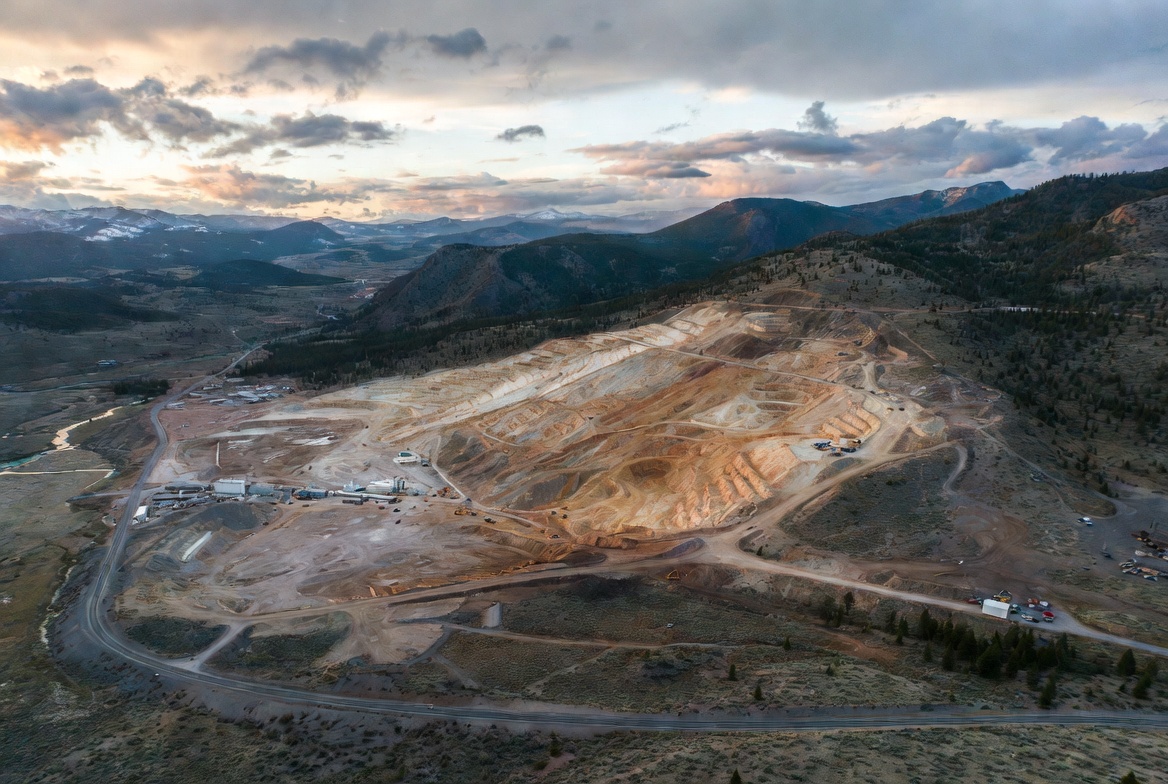
In a significant victory for U.S. critical minerals security and domestic mining, the U.S. District Court for Idaho has denied a preliminary injunction sought by climate activist groups, clearing the way for construction to advance on Perpetua Resources’ Stibnite Gold Project. The ruling, issued late last week, removes a major litigation hurdle for what is poised to become America’s only near-term domestic source of antimony—a critical mineral essential for national defense, energy technologies, and manufacturing.
The decision comes at a pivotal moment. The Stibnite site in central Idaho’s Payette National Forest is a historically disturbed brownfield from over a century of prior mining activity. During World War II and the Korean War, it supplied approximately 90% of America’s antimony needs. Today, the project holds an estimated 115 million pounds of antimony reserves alongside substantial gold (about 4.2 million ounces) and silver (1.7 million ounces) resources. Perpetua Resources, a Canadian company with strong U.S. operations based in Boise, Idaho, plans to restart responsible mining operations by 2029 while committing to extensive site restoration, including removing legacy tailings and restoring fish passage on the East Fork of the South Fork Salmon River. The company has already invested more than $17 million in cleanup and environmental work.
The U.S. Forest Service granted final approval for the project in January 2025 following years of exhaustive environmental reviews. The court’s denial of the injunction turned on the plaintiffs’ inability to demonstrate “imminent, irreparable harm”—a high legal bar that has frequently been used to stall resource development. The ruling was supported by the U.S. Department of Justice’s Environment and Natural Resources Division, underscoring the project’s alignment with national security priorities.
National Security and Supply Chain Resilience at Stake
Antimony is listed as a critical mineral by the U.S. government. It is vital for munitions, military-grade antimony trisulfide, lead-acid batteries, advanced sensors, radar materials, flame retardants, and components in solar panels and electric vehicles. China dominates global production and has repeatedly used export restrictions as leverage, leaving U.S. defense stockpiles depleted and supply chains vulnerable. Between 2020 and 2023, China accounted for about 70% of U.S. rare earth and critical mineral imports in related categories.
Michael Cadenazzi, Assistant Secretary of War for Industrial Base Policy, emphasized the urgency: “The urgent construction of the Stibnite Gold Project and commencement of antimony production from the Project is of paramount importance to national security. The Stibnite Gold Project is the only opportunity known to the Department which is projected to produce sufficient antimony quantities to meet defense requirements by 2029 and supply substantial quality to the U.S. commercial market.”
Principal Deputy Assistant Attorney General Adam Gustafson added: “Antimony is among the minerals most vital to our national defense, and for too long the United States has relied on foreign adversaries to supply it. This decision allows construction to move forward on the most significant domestic source of antimony.”
The project exemplifies modern, responsible mining: restoring a legacy site, improving water quality and fish habitat, and delivering economic benefits to rural Idaho through jobs and infrastructure.
Perpetua Resources’ Q1 2026 Earnings: Steady Progress Amid Development Phase
Perpetua Resources (NASDAQ/TSX: PPTA) reported its Q1 2026 financial results on May 11, 2026, reflecting a typical pre-production profile for an advanced development-stage mining company. The company posted a net loss of approximately $48.63 million (EPS of -$0.39), compared to a $8.2 million loss in Q1 2025. The increase in expenses was driven by accelerated project activities, including detailed engineering ($31.5 million), exploration and pre-development costs, and general/administrative expenses.
Despite the bottom-line loss, the balance sheet remains robust with $669.5 million in cash on hand as of March 31, 2026. The company continues to advance key milestones:Early works construction is underway following groundbreaking in late 2025.
Detailed engineering and long-lead procurement are progressing.
EPCM responsibilities for the processing plant transitioned smoothly to Hatch for stronger execution capacity.
A strong safety and environmental record: zero lost time incidents and zero reportable spills.
On the financing front, the U.S. Export-Import Bank (EXIM) has advanced a proposed ~$2.7 billion senior secured loan, with a Congressional notice period completed and a board vote anticipated in the near term (originally slated for May 21, 2026). If approved, the financing—combined with existing cash—would fully cover the project’s estimated $2.576 billion in direct capital costs per the updated December 31, 2025 Technical Report Summary (TRS), plus financial assurance and other expenses. The March 2026 TRS update reaffirmed compelling economics across a range of gold and antimony prices.
Recent permitting wins in January and April 2026 (Stream Alteration, IPDES, and modified 401 Water Quality Certification) further de-risk the path forward, though some appeals remain pending.
Investor Perspective: A Major De-Risking Catalyst
For investors, this court ruling represents a clear positive inflection point. Litigation risk has long been one of the biggest uncertainties hanging over the Stibnite project. By denying the injunction and allowing critical-path construction activities to proceed (including Burntlog Route work, worker housing upgrades, powerlines, and drilling), the decision accelerates the timeline toward first production and revenue.
The ruling aligns with broader U.S. policy momentum to onshore critical mineral supply chains, reducing dependence on adversarial nations. Combined with strong Pentagon and DOJ backing, robust EXIM financing progress, and a healthy cash position, it materially improves the probability of a successful Final Investment Decision (FID) in the second half of 2026.
While the company remains pre-revenue and will continue to report operating losses until commercial production begins (targeted for 2029), the strategic value of antimony—coupled with byproduct gold and silver—positions Perpetua for substantial upside. The project’s brownfield restoration narrative also appeals to ESG-focused investors and policymakers.
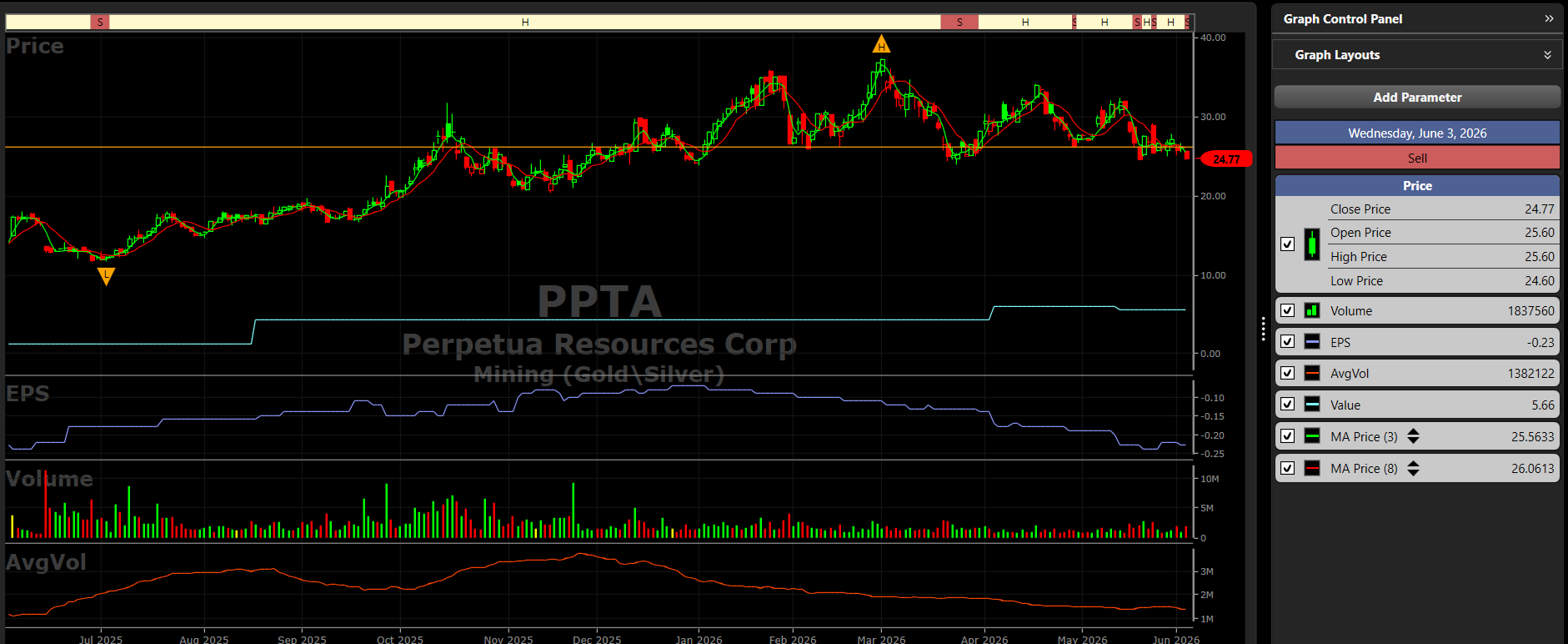
Short-term stock volatility is possible (the company’s shares saw some initial negative reaction to related news flow in early June), but the long-term outlook for patient investors is markedly brighter. The ruling removes a key overhang, validates the project’s national importance, and supports Perpetua’s path to becoming a cornerstone U.S. supplier of antimony while delivering one of America’s highest-grade open-pit gold operations.
Appendix: Sources and Links
- Forbes article (primary source for court ruling, project background, and quotes): “Court Clears Path For Idaho’s Critical Stibnite Antimony Mine” by David Blackmon, June 4, 2026. https://www.forbes.com/sites/davidblackmon/2026/06/04/court-clears-path-for-idahos-critical-stibnite-antimony-mine/
- Perpetua Resources Q1 2026 Financial Results Press Release (May 11, 2026): https://www.prnewswire.com/news-releases/perpetua-resources-announces-first-quarter-2026-financial-results-302768145.html and PDF version.
- Perpetua Resources Investor Relations – Financials & Filings (including 10-Q): https://www.investors.perpetuaresources.com/investors/financials
- Perpetua Resources Official Site: https://perpetuaresources.com/ and https://www.investors.perpetuaresources.com/
- Additional context on post-ruling construction advance (June 1, 2026 PR): Perpetua Resources press release on injunction denial.
All information is drawn directly from the cited public sources as of June 4, 2026. Investors should conduct their own due diligence and review Perpetua Resources’ SEC filings for full risk factors.