
Expand Energy Corporation (NASDAQ: EXE), North America’s largest independent natural gas producer, has reported a strong initial production (IP) rate of 27.5 million cubic feet per day (MMcf/d) from its first horizontal wildcat in the Far Western Haynesville. The Bobby Yancey #2H well, located in Houston County, Texas, features an 8,158-foot lateral and represents an extension attempt of the emerging Far Western Haynesville play pioneered farther west by operators such as Comstock Resources.
This result follows earlier vertical appraisal work on the Bobby Yancey #1 and comes amid Expand’s disciplined appraisal program in the area. The company has positioned the Western Haynesville as a long-dated strategic option rather than a near-term growth driver, with roughly $75 million allocated to appraisal spending within its 2026 capital budget.
Company Context from Recent Results and Outlook
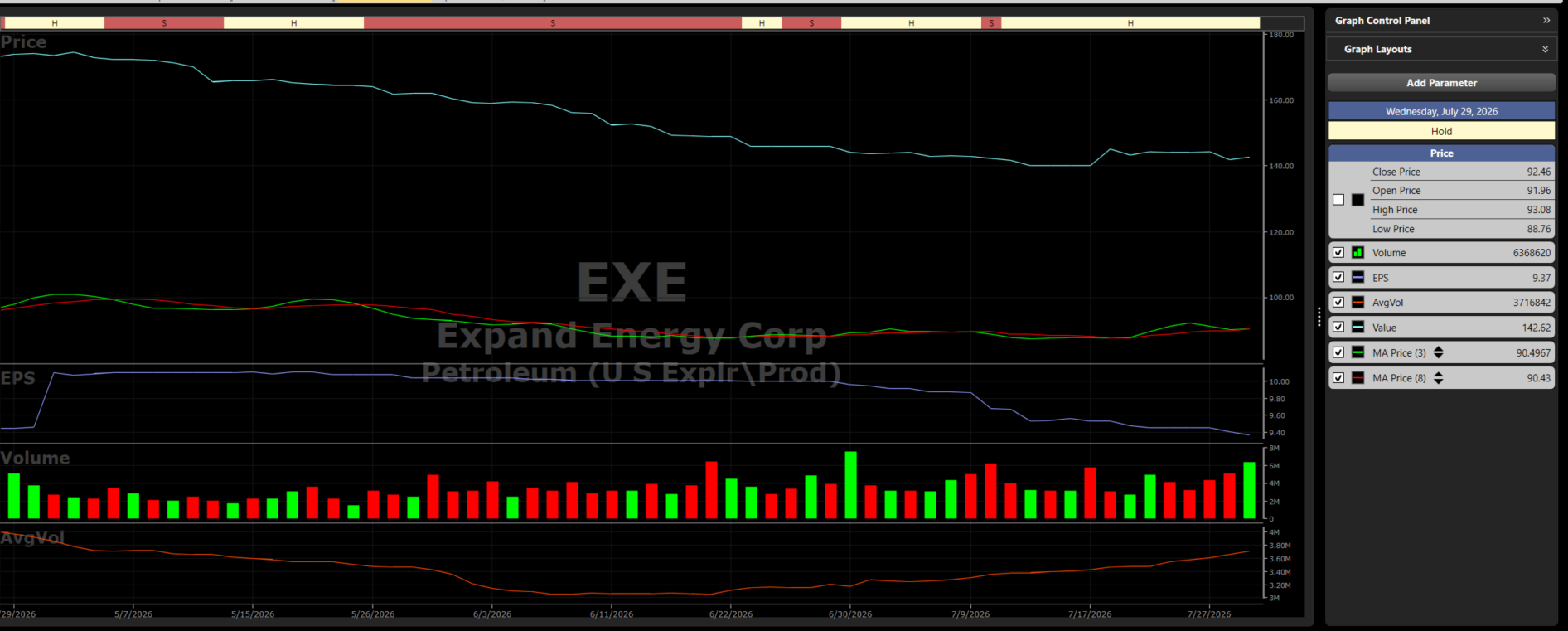
Expand Energy, formed from the combination of Chesapeake Energy and Southwestern Energy, operates primarily in the Haynesville Shale (Louisiana and East Texas) and the Appalachian Basin (Northeast and Southwest). In its second-quarter 2026 results released July 28, 2026, the company reported net production of approximately 7.48 billion cubic feet equivalent per day (Bcfe/d), of which about 92% was natural gas. Haynesville output contributed roughly 3,187 MMcfe/d in the quarter.
Key financial highlights included net cash from operating activities of $1,096 million, adjusted EBITDAX of $1,183 million, adjusted net income of $317 million ($1.33 per diluted share), and a peer-leading leverage ratio of about 0.5x after reducing net debt. The company executed approximately $530 million in share repurchases during the quarter (about $850 million year-to-date, reducing shares outstanding by roughly 4%) and authorized an additional ~$1 billion in buybacks. It also maintained its quarterly base dividend of $0.575 per share.
Full-year 2026 guidance was reaffirmed at 7.4–7.6 Bcfe/d on capital spending of approximately $2.75–$2.95 billion (centered near $2.85 billion), with an expected 11–12 operated rigs. Haynesville remains a core focus, representing roughly half of capital allocation, supported by ~745,000 net acres and more than 2,000 gross locations, including recent organic leasing and a previously noted Western extension position. Completions optimization, including Gen3 designs and testing of GenX concepts, continues to improve productivity and lower breakevens (many under $2.75/Mcf in the core).
In parallel, Expand announced the acquisition of Twin Eagle to create a more integrated natural gas platform with enhanced market access from coast to coast. Interim President and CEO Mike Wichterich highlighted disciplined execution, balance-sheet strength, inventory extension at attractive costs, and acceleration of the commercial strategy in the company’s commentary.
Earlier guidance (including full-year 2025 results and the 2026 outlook issued in early 2026) had already flagged the ~$75 million Western Haynesville appraisal component as part of a measured approach. First-quarter 2026 commentary had described early results from the initial Western Haynesville well as encouraging.
The Far Western / Western Haynesville Play
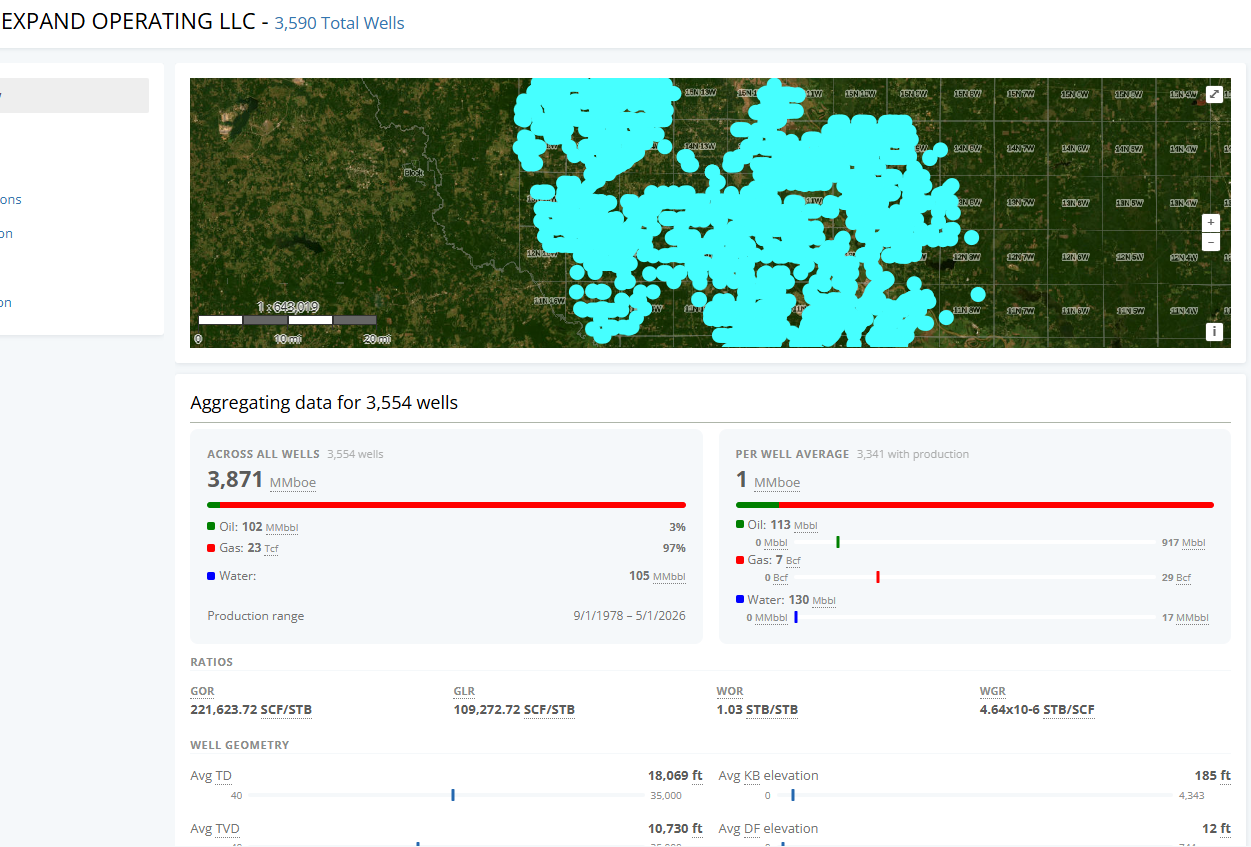
The traditional Haynesville Shale core spans northwestern Louisiana and adjacent East Texas, valued for its proximity to Gulf Coast LNG export terminals and industrial demand. The Far Western or Western extension lies farther west into East and Central Texas counties (including areas around Leon, Robertson, and Houston counties north of Houston). This deeper, higher-pressure/higher-temperature setting has delivered strong well performance for early movers such as Comstock, with some wells showing robust cumulative production and high IPs.
Expand’s entry includes acreage additions (reports have referenced positions on the order of 75,000 net acres in the western extension with associated locations acquired at costs well below recent core transactions). The Bobby Yancey #2H tests the eastern fringe of this emerging fairway relative to more established Western activity. Industry observers note the play’s potential for high estimated ultimate recoveries in successful areas, though costs are higher due to depth and conditions, and economics remain sensitive to natural gas prices and takeaway infrastructure.
Implications for Investors and Consumers
For investors, the 27.5 MMcf/d IP provides an encouraging early data point that Expand’s low-cost acreage in the extension may hold productive potential. Successful appraisal could organically expand long-term inventory without the premiums paid in core M&A, supporting the company’s multi-decade runway in a basin already contributing ~42% of production in recent years. Combined with a fortress balance sheet, aggressive but flexible shareholder returns (dividends plus buybacks), operational efficiencies, and the Twin Eagle integration for better marketing and midstream access, the result reinforces Expand’s positioning as a pure-play natural gas leader geared toward growing demand from LNG, power generation (including data centers/AI), and industry. Risks remain typical of appraisal: longer-term decline rates, well costs, infrastructure needs, and commodity prices will determine whether this becomes material development inventory or stays a longer-dated option. Results from additional planned tests will be closely watched.
For consumers and the broader market, successful development of Western/Far Western Haynesville resources would add to U.S. natural gas supply optionality at a time of rising demand. The Haynesville’s Gulf Coast proximity already supports LNG exports that help meet global needs while generating domestic economic activity. Incremental low-to-mid-cost supply from extensions like this can help moderate price volatility, support reliable power generation, and underpin industrial growth—even as overall U.S. production scales. In the near term, one strong wildcat does not shift the supply balance, but confirmation of a broader productive fairway would enhance the resource base available to serve both domestic and export markets.
Expand continues to emphasize capital discipline and market responsiveness, with production flexible to prices and seasonal factors. Further updates on the Bobby Yancey well’s performance, follow-on tests, and any capital allocation shifts are expected in coming quarters and earnings calls.
Appendix: Sources and Links
- Hart Energy: “Expand Energy’s First Far Western Haynesville Wildcat IPs 27.5 MMcf/d” (July 29, 2026) – https://www.hartenergy.com/upstream/emerging-plays/he-expand-western-haynesville-ip/
- Expand Energy Investor Relations – 2Q26 Earnings Press Release, Presentation, Outlook, and related materials: https://investors.expandenergy.com/investor-relations/ and https://investors.expandenergy.com/news-releases/news-release-details/expand-energy-corporation-reports-second-quarter-2026-results
- Expand Energy Operations overview: https://www.expandenergy.com/operations/
- Expand Energy full-year 2025 results and 2026 outlook references (including Western Haynesville appraisal spend): Available via investors.expandenergy.com press releases and filings.
- Supporting industry context on Western Haynesville: Rystad Energy insights, prior Hart Energy coverage of Comstock and related activity, Oil Gas Leads analysis of Expand’s approach, and related reporting on acreage and vertical appraisal (Bobby Yancey #1).
- Additional summaries and discussion: Houston.com reporting summarizing the Hart Energy article; public mineral rights and industry forums referencing the Yancey wells in Houston County, Texas.
All figures and statements are drawn from publicly available company releases, presentations, and contemporaneous industry reporting as of late July 2026. Natural gas development involves inherent geological, operational, and market risks.