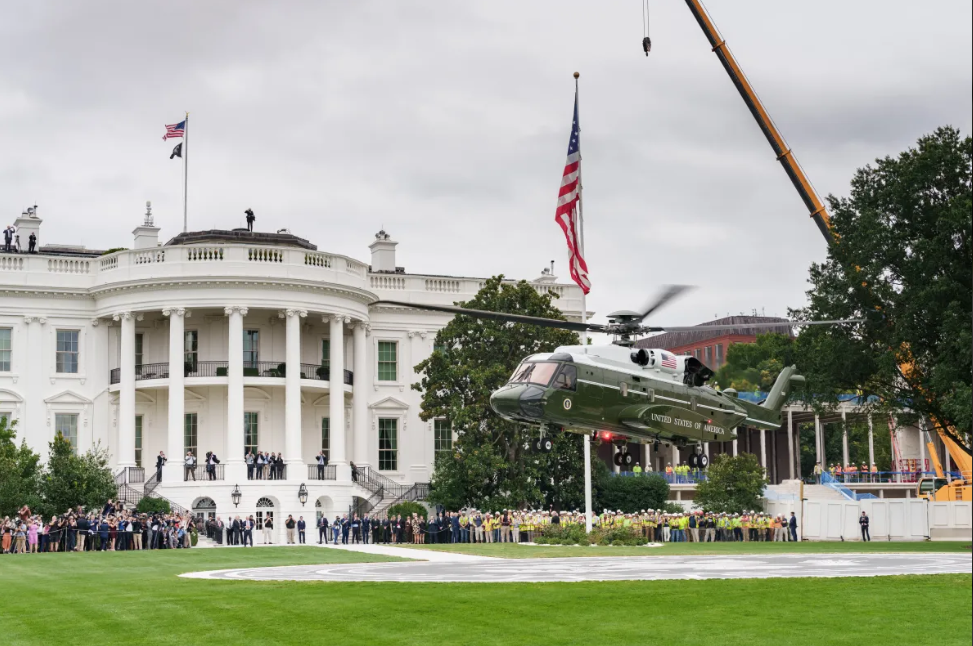
President Donald Trump’s August 26, 2026, Executive Order 14421, “Declaring a National Emergency to Secure the United States Bulk-Power System,” aims to protect the U.S. electric grid from foreign supply-chain and cybersecurity risks. The order cites digital backdoors, malicious remote access, and supply disruptions as threats magnified by the rapid growth of artificial intelligence data centers, advanced manufacturing, and defense production. It authorizes the Secretary of Energy to prohibit or condition acquisitions, imports, transfers, or installations of foreign-produced bulk-power system electric equipment linked to a “Covered Foreign Entity” when the Secretary finds undue or unacceptable national-security risks. Rules are due by December 24, 2026 (120 days), with recommendations for Federal Acquisition Regulation changes due in 180 days. Souce White House
Rystad Energy’s analysis, published via OilPrice.com and its own channels on or around October 12, 2026, argues the order is more likely to disrupt battery storage supply chains critical to AI and data center resilience than the transformers and switchgear that have already largely shifted away from Chinese sources. This assessment aligns with the order’s explicit coverage of battery energy storage systems (BESS) and uninterruptible power supply (UPS) systems supporting critical infrastructure, which extends to behind-the-meter systems used by data centers.Source Oilprice
The Executive Order’s Scope and Rationale
The order invokes the International Emergency Economic Powers Act and National Emergencies Act. It defines the bulk-power system as interconnected transmission facilities (69 kV and above) and associated generation needed for reliability, excluding local distribution. Covered “bulk-power system electric equipment” includes substation transformers, grid-connected inverters, BESS, high-voltage circuit breakers, generation turbines, industrial control systems, and related software, firmware, remote-access capabilities, and maintenance services. “Foreign-produced” means not manufactured, produced, or assembled in the United States. A Covered Foreign Entity is a country or person owned, controlled by, or subject to the jurisdiction of a government under U.S. arms embargoes, sanctions, or determinations of conduct detrimental to U.S. national security or foreign policy. Source White House
Prohibitions apply to transactions initiated after August 26, 2026, involving such equipment with a Covered Foreign Entity nexus that poses risks of sabotage, unauthorized access, supply disruption, catastrophic effects on critical infrastructure or the economy, or unacceptable national-security risks. The Secretary may also impose conditions (including isolation, monitoring, or phased replacement) on pre-existing equipment after considering reliability, safety, and replacement availability. Pre-qualification of equipment and vendors is authorized. The Department of Energy has emphasized a targeted approach to avoid blanket bans that would sacrifice reliability or impose unnecessary costs on consumers and businesses.Source Energy
Verifying Rystad Energy’s Calculations
Rystad reports that, for the 12 months to June 2026:
- China supplied 50% of U.S. lithium-ion battery imports by value. South Korea followed at 15% and Japan at 13%, with no alternative origin able to absorb displaced Chinese volume at the scale required by data centers and AI infrastructure.
- China supplied just 3% of U.S. transformer imports and under 1% of high-voltage circuit breaker imports by value. South Korea, Mexico, and Canada collectively accounted for 74% of breaker imports and 48% of transformers.
- China’s inverter export value to the U.S. fell 34% between 2022 and 2025 amid the 45X advanced manufacturing production credit; U.S. inverter capacity is projected to reach 126 GW by 2028.Source Rystadenergy
Independent data broadly supports the battery findings. S&P Global Market Intelligence data (based on U.S. Census Bureau figures) showed China accounting for 66.5% of U.S. lithium-ion battery imports in Q2 2026 (up from 60.3% in Q1 but down from ~77% a year earlier), with South Korea at ~10% and Japan at ~7%. BNEF analysis has cited around 60% Chinese share (including Hong Kong) for 2025. Volume and value shares can differ by product mix (e.g., energy storage vs. EV cells), but Rystad’s 50% figure for the year to June 2026 is consistent in direction and magnitude with available trade data. No single alternative source approaches China’s scale. Source Spglobal
The transformer picture is more nuanced. Rystad’s low Chinese share reflects market shifts already underway, supported by Korean suppliers such as Hyosung Heavy Industries, which announced contracts totaling approximately $287 million (not $285.3 billion as stated in some Rystad/OilPrice coverage—an apparent decimal/scale error) for 765 kV and 345 kV transformers with two U.S. hyperscalers on or around September 15, 2026. These are for AI data centers and leverage Hyosung’s U.S. manufacturing presence (Memphis, Tennessee plant). South Korean, Mexican, and Canadian sources dominate many transformer categories. Source Hyosung
However, Wood Mackenzie has stated that Chinese manufacturers account for virtually all bulk-power equipment imports since early 2025 (a market exceeding $22 billion), that power transformers face an estimated 15% shortage and substations an 8% shortage in 2026, and that data centers have increasingly turned to Chinese large transformers (especially 100 MVA+) to manage lead times. Utilities largely avoided Chinese suppliers after earlier restrictions, so the new order’s impact may concentrate on data center procurement. Differences likely stem from scope (specific transformer HS codes vs. broader bulk-power equipment including inverters and storage) and time windows. Overall, Rystad’s core point—that transformers and breakers have already diversified more than batteries—holds, while Wood Mackenzie highlights remaining vulnerabilities in high-growth segments and broader equipment categories. Source Pv-magazine-usa
The inverter onshoring trend under 45X credits is consistent with industry reports of reduced Chinese dependence and expanding U.S. capacity.
Impacts on Consumers
Higher equipment costs, longer lead times, and project delays could raise electricity prices and strain reliability as AI-driven load growth accelerates. Data centers already face transformer and UPS bottlenecks; restricting BESS and UPS options (including Chinese-linked supply for LFP cells that dominate stationary storage) could slow interconnection of new load or force more expensive, slower alternatives. This risks higher capacity costs, congestion, or reliability events that are ultimately socialized across ratepayers. Johns Hopkins and industry analyses have flagged UPS and transformer shortages as potential constraints on AI data center growth before generation or transmission limits bind. Source Energyinstitute.jhu
The order and DOE guidance stress targeted application, reliability considerations, and phased compliance to limit consumer burden. Pre-qualification and mitigation options provide pathways. Broader administration policies (including earlier reliability orders) have aimed to keep firm capacity online. Still, any near-term supply tightness amid already tight markets for transformers and storage is likely to increase capital costs for grid and data center projects, with pass-through effects on rates. Residential and small commercial customers are partially shielded if large loads are required to pay their fair share of upgrades, but systemic delays or higher system costs are not fully avoidable.
Impacts on Investors
Hyperscalers and data center developers face elevated risk of delays, higher capex for BESS/UPS, and potential stranded assets if existing equipment requires costly mitigation or replacement. Procurement teams should model scenarios in which a broad “Covered Foreign Entity” definition captures Chinese capital, components, or control in South Korean or Mexican assembly. Financing documents may reintroduce foreign-equipment risk allocations, cybersecurity audits, and replacement cost reserves, raising the cost of capital. Source Natlawreview
Beneficiaries include non-Chinese suppliers and domestic manufacturers. Korean firms (Hyosung, battery makers), Mexican and Canadian producers, and U.S. inverter and emerging battery capacity stand to gain market share and pricing power. Domestic battery manufacturing (especially LFP for storage) could accelerate under the combination of tariffs, 45X credits, and this order. Investors in grid equipment OEMs with U.S. or allied footprints, as well as pure-play U.S. energy storage developers with diversified supply, may see upside. Uncertainty until the December 2026 rulemaking creates a window for volatility; a narrow definition limits disruption, while a broad one could materially slow AI infrastructure buildout and reprice related equities and project finance.
Bottom Line
EO 14421 addresses real cybersecurity and supply-concentration risks in an era when AI data centers make grid reliability a national security issue. Rystad’s analysis is directionally accurate and well-supported on batteries—the category with the highest remaining Chinese import dependence and direct relevance to data center resilience—while transformer exposure is lower than some broader analyses imply due to prior market shifts. The December rulemaking on Covered Foreign Entity definitions will determine whether the order primarily hardens supply chains or creates bottlenecks that slow America’s AI expansion. Consumers face potential rate and reliability pressure from any resulting delays or cost increases; investors face both substitution opportunities and execution risks for data center and storage projects.
Check out the World’s Greatest Podcast Show Notes at EnergyNewsBeat.co or EnergyNewsBeat.com. And subscribe to: The Energy News Beat Substack.
Appendices
At Energy News Beat we Make Appendices Great Again.
- White House Executive Order 14421 (August 26, 2026): https://www.whitehouse.gov/presidential-actions/2026/08/declaring-a-national-emergency-to-secure-the-united-states-bulk-power-system/
- DOE page on the Executive Order: https://www.energy.gov/ceser/declaring-national-emergency-secure-united-states-bulk-power-system-executive-order
- OilPrice.com article by Rystad Energy (October 12, 2026): https://oilprice.com/Energy/Energy-General/Trumps-Grid-Security-Order-Could-Backfire-on-Americas-AI-Boom.html
- Rystad Energy analysis: https://www.rystadenergy.com/news/us-executive-order-targets-chinese-grid-hardware-but-battery-storage-serving-ai-d
- White House Fact Sheet: https://www.whitehouse.gov/fact-sheets/2026/08/fact-sheet-president-donald-j-trump-declares-a-national-emergency-to-secure-americas-bulk-power-system/
- S&P Global on U.S. lithium-ion battery imports (Q2 2026 data): https://www.spglobal.com/energy/en/news-research/latest-news/electric-power/082426-us-lithium-ion-battery-imports-rebound-in-q2-despite-trade-friction
- Wood Mackenzie analysis on transformer shortages and EO impacts: https://www.woodmac.com/press-releases/us-executive-order-banning-chinese-bulk-power-equipment-set-to-worsen-critical-transformer-shortage/ and related coverage at https://pv-magazine-usa.com/2026/09/02/u-s-bulk-power-equipment-ban-set-to-worsen-critical-transformer-shortage/
- Hyosung Heavy Industries announcement (~$287 million contracts, September 15, 2026): https://www.hyosung.com/en/newsroom/view/19333 and coverage such as https://www.businesskorea.co.kr/news/articleView.html?idxno=276937
- Utility Dive coverage: https://www.utilitydive.com/news/trump-declares-emergency-moves-to-block-some-foreign-made-equipment-from-g/828959/
- Atlantic Council analysis: https://www.atlanticcouncil.org/blogs/energysource/what-the-us-executive-order-on-bulk-power-systems-gets-right-and-whats-missing/
- Federal Register / DOE RFI context (implementation input): https://www.federalregister.gov/documents/2026/09/09/2026-18370/securing-the-united-states-bulk-power-system
- Johns Hopkins analysis on data center equipment bottlenecks: referenced in industry summaries (transformer and UPS unmet demand projections).
- Additional legal/industry analyses: National Law Review and law firm summaries on EO 14421/14420 numbering and implications.
All data points are drawn from the cited primary or secondary sources as of early-to-mid October 2026. Import shares can vary by exact HS codes, value vs. volume, and period; rulemaking will ultimately define practical exposure.