In this episode of the Energy Realities Podcast, host Stu Turley sits down with energy analysts David Turver and Dr. Tammy Nemeth to dissect the UK Labour government’s newly proposed “Energy Independence Bill”—a policy that, despite its name, threatens to make Britain more dependent on foreign energy imports while simultaneously driving up electricity costs for consumers. Through a detailed examination of government contradictions, the hosts expose what they call “Orwellian double-speak,” revealing how renewable energy subsidies mask unsustainable economics, offshore wind decommissioning costs are vastly underestimated, and smart meter technology is being weaponized for unprecedented government control over household energy use. Drawing parallels to failed US energy policies and examining the global hypocrisy of climate initiatives, this conversation challenges the narrative surrounding net-zero energy transitions and asks hard questions about who really pays the price for green energy mandates.
We will be taking next week off for the Energy Realities Podcast, but on November 30th we will be back with David Blackmon, Dr. Tammy Nemeth, and Prof. Brenda Shaffer, as we cover China’s Net Zero Advantage
We highly recommend subscribing to David Turver’s Substack:


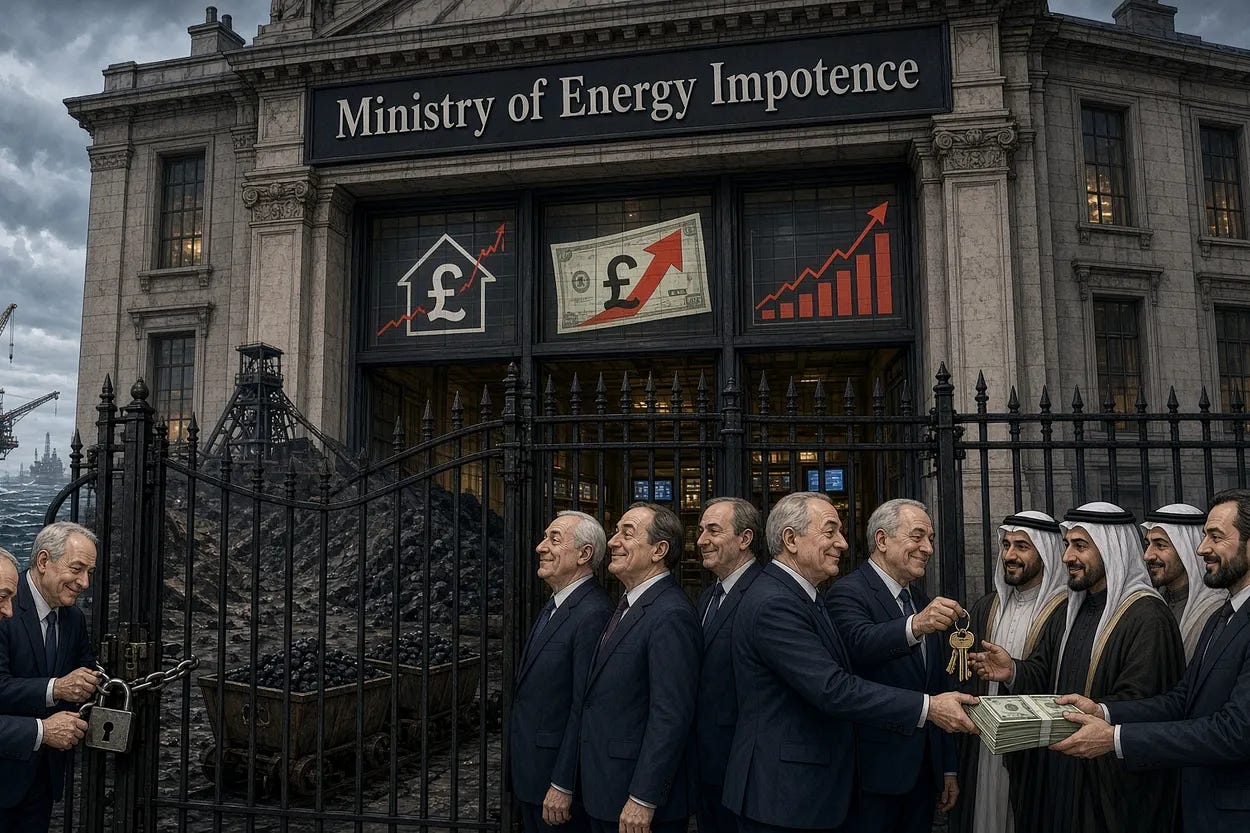
I loved David Turver’s cover for his article. – Some things are just funny.
1. UK Energy Independence Bill & Government Policy Contradictions
The hosts extensively analyze the UK Labour government’s “Energy Independence Bill,” highlighting what they call “Orwellian double-speak.” While claiming to improve energy security and lower bills, the bill actually proposes bans on North Sea oil/gas drilling, onshore fracking, and coal mining—making the UK more dependent on imports. The government simultaneously approved the Jackdaw gas field, contradicting their own policy direction.
2. Offshore Wind Economics & Decommissioning Costs
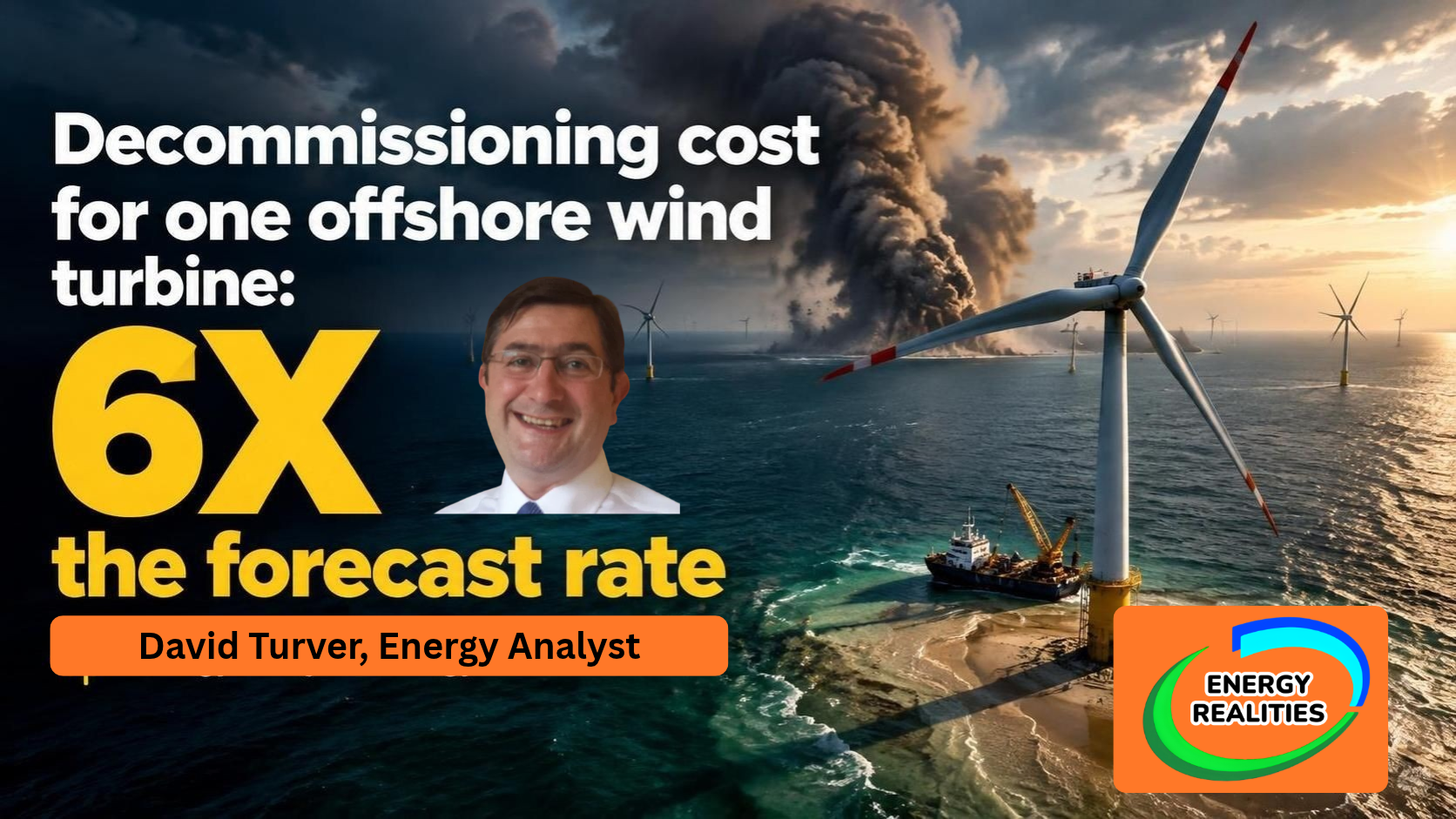
A critical focus is the massive discrepancy between estimated and actual decommissioning costs for offshore wind farms. The Scroby Sands example is particularly striking: one turbine cost £12.5 million to decommission, yet the operator claims the remaining 29 turbines will cost only £58 million total—a mathematical impossibility. Gunfleet Sands shows even more dramatic cost variations, suggesting the industry is vastly underestimating decommissioning liabilities.
3. Wind Turbine Maintenance & Lifespan Reality
The hosts challenge the industry claim that turbines last 20-30 years, citing evidence that maintenance costs escalate exponentially and turbines often fail much sooner. They discuss how subsidies mask true operating costs, and when subsidies expire, many wind farms become unprofitable or insolvent.
4. Grid Infrastructure & Transmission Costs
The bill proposes relaxing planning laws to fast-track transmission line construction, but this will increase electricity bills—the opposite of government promises. Transmission costs are forecast to be the largest driver of bill increases over the next five years.
5. Green Hydrogen as “Unicorn Technology”
The government is legislating for hydrogen-powered power stations despite the technology being prohibitively expensive. Green hydrogen production costs would result in electricity prices 5-8 times higher than current rates—completely uneconomical.
6. Smart Meters & Government Control of Energy
The bill mandates registration of distributed energy resources (EV chargers, heat pumps, solar arrays, batteries) to enable “demand flexibility”—essentially allowing the government to remotely control household energy use, including turning off heating in winter or draining EV batteries.
7. Home Insulation Schemes & Heritage Conflicts
The new “Warm Homes Agency” continues decades-old insulation programs that have created damp and mold problems. Additionally, heritage protection rules prevent upgrading old buildings with double glazing or modern insulation, creating a contradiction with energy efficiency mandates.
8. Renewable Energy Profitability Without Subsidies
The consensus is that without subsidies, carbon taxes, and inflated gas prices, wind and solar are not economically viable. Many existing farms would become insolvent if subsidies were removed.
9. Global Energy Hypocrisy & Wealth Redistribution
Norway’s decision to buy carbon credits from Morocco and Indonesia despite having forests and carbon capture capabilities exemplifies what the hosts call “virtue signaling”—developed nations redistributing wealth while claiming climate action.
10. US Energy Policy Parallels
The discussion draws parallels to US policies like the Inflation Reduction Act, which the hosts argue caused inflation rather than reducing it. They also discuss Texas’s grid challenges and aging wind turbine infrastructure (17,000 of 94,000 US turbines are nearing 20 years old).
For Stu Turley on The Energy News Beat Substack:

For David Blackmon

For Tammy Nemeth