With fertilizer shortages driving up input costs and an ongoing energy crisis squeezing every link in the fuel supply chain, America’s decades-long experiment with corn-based ethanol is under fresh scrutiny. The Renewable Fuel Standard (RFS) still mandates roughly 15 billion gallons of conventional (corn) ethanol blending annually, supported by new tax credits such as the 45Z Clean Fuel Production Credit, which can deliver up to $1 per gallon depending on carbon-intensity scores.
Yet mounting evidence shows these policies are inflating production costs, punishing drivers at the pump, accelerating vehicle wear, and distorting food markets—all while taxpayers foot the bill. Is it finally time to phase them out with a smart transition plan for farmers?
Skyrocketing Costs to Produce Ethanol
Corn ethanol production has never been more expensive. Roughly 5.6 billion bushels of U.S. corn—about 38-40% of the total crop—go into fuel ethanol each year, requiring massive fertilizer and energy inputs.
Corn alone accounts for 60-70% of ethanol’s production cost, and corn farming consumes two-thirds of the nation’s nitrogen fertilizer, much of it derived from natural gas.
Fertilizer prices have surged amid energy volatility, with ammonium nitrate and UAN solutions up sharply year-over-year. Natural-gas-fired distillation adds another heavy layer of cost. The result? Ethanol rack prices hover around $1.80–$1.83 per gallon in recent trading, but margins remain razor-thin or negative for many plants when corn and energy spikes hit.
Meanwhile, the 45Z credit—extended through 2029 and now more accessible to corn ethanol—shifts billions in taxpayer support to prop up an industry that was supposed to be mature decades ago.
Extra Wear on Cars and Trucks
Ethanol is corrosive. It attracts water, swells rubber seals and hoses, and attacks fuel-system components in non-flex-fuel vehicles (the vast majority of the fleet). E15 waivers and higher blends accelerate this damage, especially in older cars, small engines, and marine equipment. Owners report more frequent repairs, clogged injectors, and premature failure of pumps and gaskets. Even without outright breakdowns, ethanol’s lower energy density delivers a clear efficiency penalty. Pure ethanol contains about 33% less energy than gasoline. For the E10 blend used in most U.S. gasoline, the EPA and independent tests confirm a roughly 3% drop in miles per gallon.
Drivers effectively pay for 3% more gallons to travel the same distance—pure waste baked into the fuel.
The Hidden Cost to Consumers
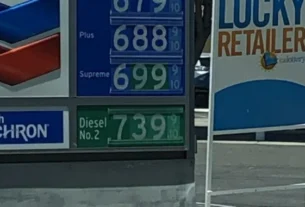
That MPG hit adds up fast. At current national average gasoline prices around $3.14 per gallon, the 3% efficiency loss translates to roughly 9–10 cents per gallon in extra spending for the same mileage.
Across 140+ billion gallons of annual motor gasoline consumption, the RFS-driven ethanol mandate has imposed an estimated $163.8 billion in combined energy-content and RIN compliance costs on consumers from 2014–2023 alone (roughly $16 billion per year on average).
RIN (Renewable Identification Number) prices—passed straight to the pump—can spike dramatically when mandates exceed market demand, adding yet another layer of
cost.Food
Prices Take the Hit
Diverting nearly 30 million acres of prime farmland—roughly the size of New York State—to ethanol instead of food or feed has ripple effects.
Higher corn prices flow into livestock feed, raising costs for beef, pork, poultry, eggs, and dairy. Recent EPA analyses project that current and proposed biofuel mandates add $4.9–$6.8 billion annually to U.S. food expenditures, with additional billions from expanded rules.
Studies consistently show each billion-gallon increase in corn ethanol demand lifts corn prices 2–4% long-term, with measurable pass-through to retail groceries.
A Smarter Path: Phased Transition, Not Cold Turkey
Farmers deserve stability—not a cliff. A responsible phase-out of the corn-ethanol RFS mandate and associated 45Z carve-outs could look like this: Year 1–5 ramp-down: Reduce the conventional biofuel mandate linearly from 15 billion gallons to zero while maintaining or modestly expanding advanced and cellulosic targets where they truly deliver.
Targeted farmer support: Redirect a portion of current subsidy dollars into direct, time-limited transition payments tied to historical ethanol-corn acres. Payments could help growers shift to food-grade corn, soybeans, wheat, or other export-oriented crops. Total cost would likely be far lower than today’s open-ended tax credits and RIN market distortions.
Market incentives: Remove blending mandates so ethanol competes on true economics. Farmers keep distiller’s grains and other co-products as valuable livestock feed.
The Bottom-Line Savings
Per-gallon consumer relief: Eliminating the 3% MPG penalty and RIN-driven price distortion could deliver 10–20 cents per gallon in effective savings at the pump (improved efficiency + lower compliance costs).
Food-cost deflation: Rolling back the mandate could shave $5–7 billion annually off grocery bills nationwide, according to EPA and independent modeling.
Taxpayer relief: Curbing 45Z and RFS compliance spending—projected in the tens of billions over the next decade—frees up federal dollars that could instead fund genuine infrastructure or deficit reduction.
America’s energy security, food security, and fiscal health all point in the same direction. Corn ethanol was sold as a bridge to energy independence and lower emissions. Decades and tens of billions of dollars later, it has become a mature industry propped up by mandates and credits that no longer serve the national interest—especially when fertilizer and energy shocks make every gallon more expensive to produce. A smart, phased transition honors the farmers who built the industry while delivering lower pump prices, cheaper food, reduced vehicle wear, and real taxpayer savings. It’s time to end the corn-dependent subsidies and let the market—and better energy choices—drive the future.
Energy News Beat will continue tracking RFS developments and 45Z implementation. Share your thoughts below.