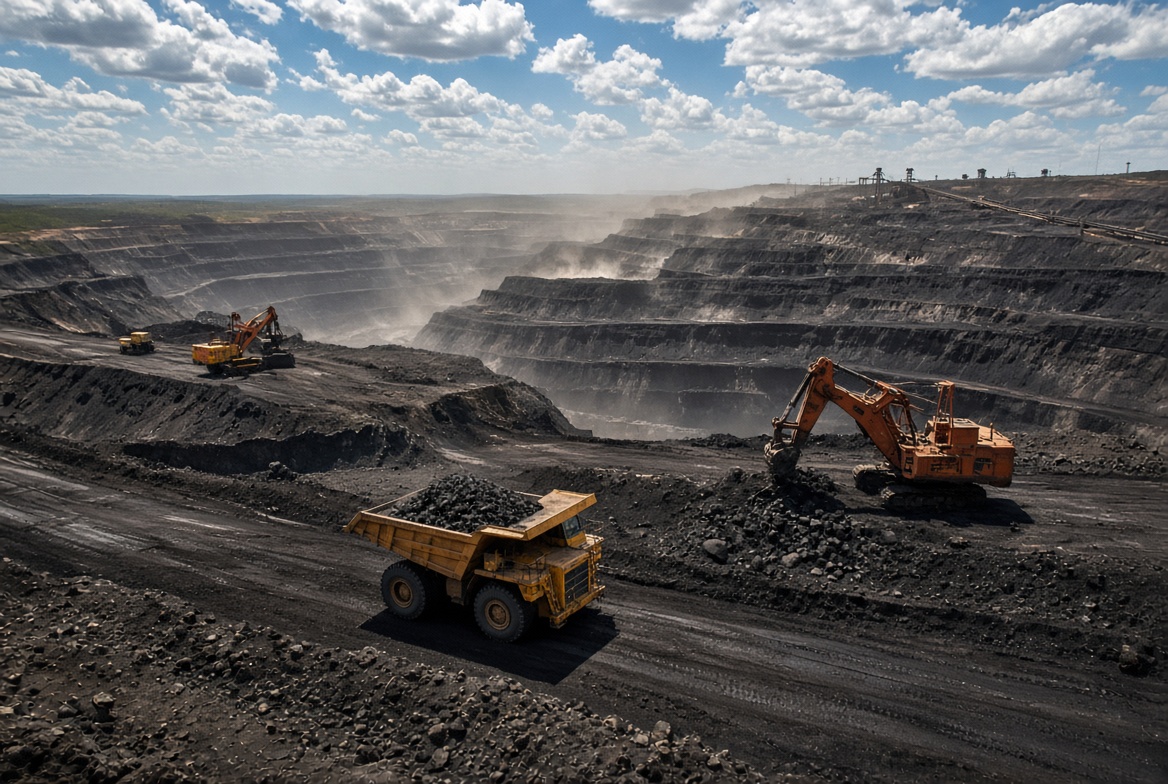
India’s coal demand is projected to climb to approximately 1.6 billion tonnes by 2030, up from around 1.2–1.3 billion tonnes in recent years. This growth is driven by rising electricity needs, industrial expansion (especially steel, cement, and power), and the need to maintain reliable baseload power amid extreme weather events and rapid economic development.
Coal Secretary Vikram Dev Dutt highlighted the outlook at the Global Commodity Conclave 2026, noting that India has shifted from a scarcity to a surplus domestic production scenario. Domestic output crossed 1 billion tonnes in FY 2024-25 and stayed above that level into the following year. Coal still accounts for roughly 60% of India’s power generation, even as renewable capacity expands rapidly. Officials emphasize sustainable use rather than rapid phase-out: “We cannot be subjective about coal. The question is how sustainably we can use it.” Coal is expected to remain a core pillar of the energy system for the next two decades.
Who Does India Buy Its Coal From?
India produces the majority of its thermal coal domestically but remains a major importer, particularly of higher-quality thermal coal and nearly all of its coking (metallurgical) coal for steelmaking. Imports have hovered in the 230–270 million tonne range in recent years, though volumes moderated somewhat in 2024–2025 as domestic production rose.
Key suppliers (based on 2024 and early 2025 data):Indonesia: Dominant source of thermal (non-coking) coal, typically 40–56% of total imports by volume. It supplies lower-cost seaborne thermal coal suited to many Indian power plants.
- Australia: Leading supplier of coking coal (often 40%+ of metallurgical imports) and a significant thermal coal provider. Volumes of
- Australian coking coal have eased as India diversifies.
- South Africa: Important thermal coal supplier (around 12–14% share).
- Russia: Rapidly growing share, especially for both thermal and coking coal (often 8–12%+ recently), driven by competitive pricing and diversion of volumes from traditional markets.
- United States: Rising supplier of high-quality coking coal (around 8–9% or more in recent periods) and some thermal coal.
Other sources include Mozambique (coking and thermal), Colombia, and smaller volumes from various origins.
Indonesia leads overall volume (especially thermal), while Australia, the US, Russia, and Mozambique are critical for coking coal. India continues to diversify sources for energy security and cost reasons.
Global Coal Usage Trends Among the Top 10 Countries
Global coal consumption reached new records in recent years (around 8.8 billion tonnes or ~165 EJ in 2024), driven almost entirely by Asia. China alone accounts for over half of world demand. India is a distant but growing second. Advanced economies (US, Europe, Japan, South Korea) have seen structural declines due to gas switching, renewables, and phase-out policies, though the US saw a rebound in some recent periods due to policy and power demand.
Top consumers (approximate ranking by recent data in energy terms/exajoules or tonnes):
- China
- India
- United States
- Indonesia
- Japan / Russia (close)
- 6–10. South Africa, South Korea, Vietnam, Turkey/Germany (order varies slightly by year and metric)
Trends over the last decade:
- China and India: Steady growth. China has plateaued near record levels while India continues strong increases tied to electrification and industry.
- Indonesia and Vietnam: Rising, linked to power demand and industrial uses (e.g., nickel processing in Indonesia).
- United States, Germany, Japan, South Korea: Long-term declines, though pace has varied.
- Overall, the center of gravity has shifted decisively to Asia. Non-OECD Asia now dominates global coal use.
Chart: Coal Consumption by Top Countries (2015–2024, Exajoules)
The chart below illustrates the divergent paths: China’s massive scale and continued growth, India’s steady climb, and declines or flatlining in many developed economies. Data are approximate, compiled from Energy Institute Statistical Review of World Energy series and related sources (values in exajoules; 1 EJ ≈ energy content of roughly 30–40 million tonnes of coal depending on quality).
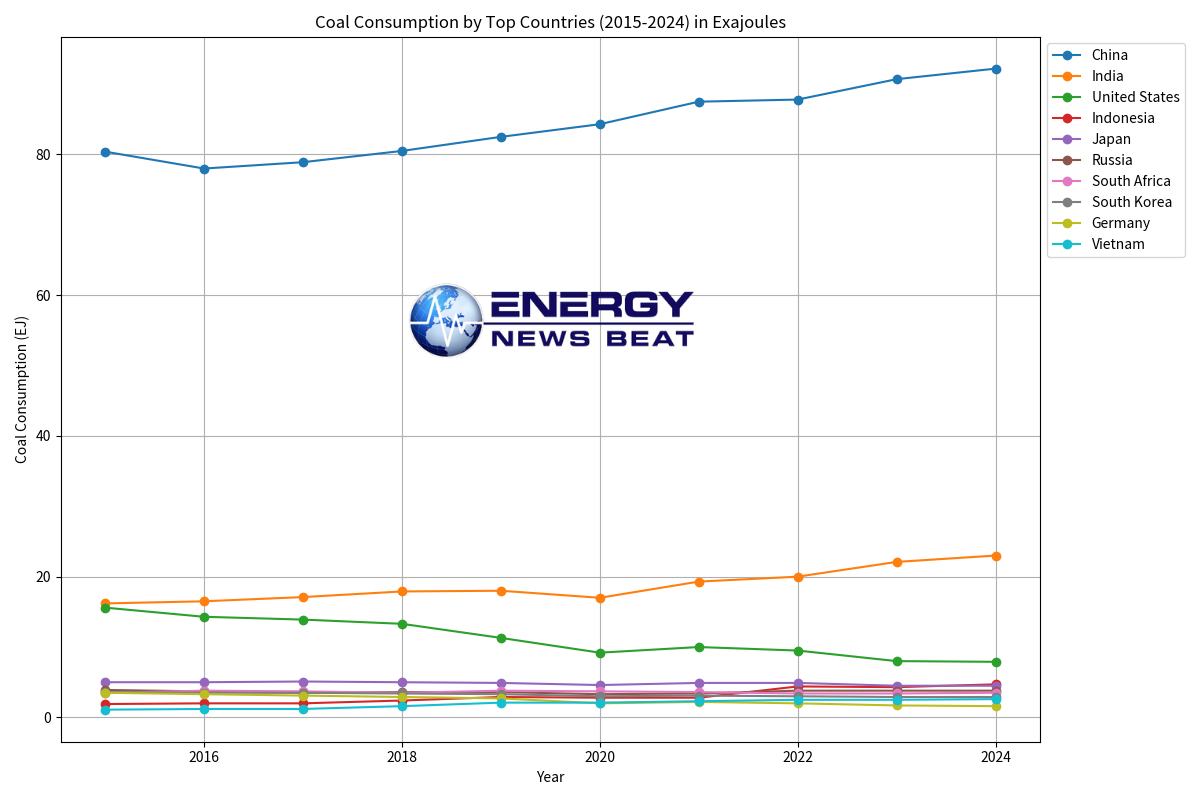
(Note: Exact yearly figures vary slightly by source due to calorific value conversions and revisions; the chart captures the dominant trends.)India’s projected rise to 1.6 billion tonnes by 2030 will further cement Asia’s dominance in global coal markets, even as the world pursues energy transition goals. Domestic production growth and diversified imports will be key to meeting this demand without major supply disruptions.
- Original OilPrice article: https://oilprice.com/Latest-Energy-News/World-News/Indias-Coal-Demand-Set-to-Hit-16-Billion-Tons-by-2030.html
- The Hindu BusinessLine (Coal Secretary remarks): https://www.thehindubusinessline.com/markets/commodities/indias-coal-demand-seen-at-16-billion-tonnes-by-2030-as-govt-pushes-market-driven-trade-coal-secretary/article71344316.ece
- Statista – India coal import share by country 2024: https://www.statista.com/statistics/1237506/coal-import-share-india-by-country/
- The Coal Hub – India’s seaborne coal imports: https://thecoalhub.com/indias-seaborne-coal-imports-map-is-being-redrawn-as-russian-and-south-african-flows-surge.html
- WITS World Bank / trade data on India coal imports: https://wits.worldbank.org/trade/comtrade/en/country/IND/year/2024/tradeflow/Imports/partner/ALL/product/2701
- Energy Institute Statistical Review of World Energy (various editions, coal consumption tables): https://www.energyinst.org/statistical-review
- IEA Coal 2025 / Coal reports: https://www.iea.org/reports/coal-2025
- Worldometer / EIA-based coal consumption rankings: https://www.worldometers.info/coal/coal-consumption-by-country/
- Visual Capitalist / Energy Institute data summaries on top consumers
- Additional import and production data from India’s Ministry of Coal and related reports
Data compiled from public sources as of mid-2026; figures are subject to revision.