As the U.S.-Israeli conflict with Iran disrupts key Middle East energy routes and chokes global liquefied natural gas (LNG) supplies, Asia’s top LNG importers are turning back to coal to keep the lights on. Spot LNG prices have roughly doubled, while Asian LNG imports have fallen sharply—the biggest drop since 2022—prompting utilities across the region to ramp up coal-fired generation. Countries that once championed gas as a “bridge fuel” are now reactivating mothballed coal plants, lifting operating restrictions, and stockpiling coal to protect consumers from skyrocketing electricity bills and potential blackouts.
Japan, South Korea, Taiwan, Thailand, the Philippines, Vietnam, and India—long the world’s biggest LNG buyers—lead the shift. The move underscores a pragmatic focus on energy security and affordability over short-term climate goals amid supply shocks.
Japan Leads the Coal Revival
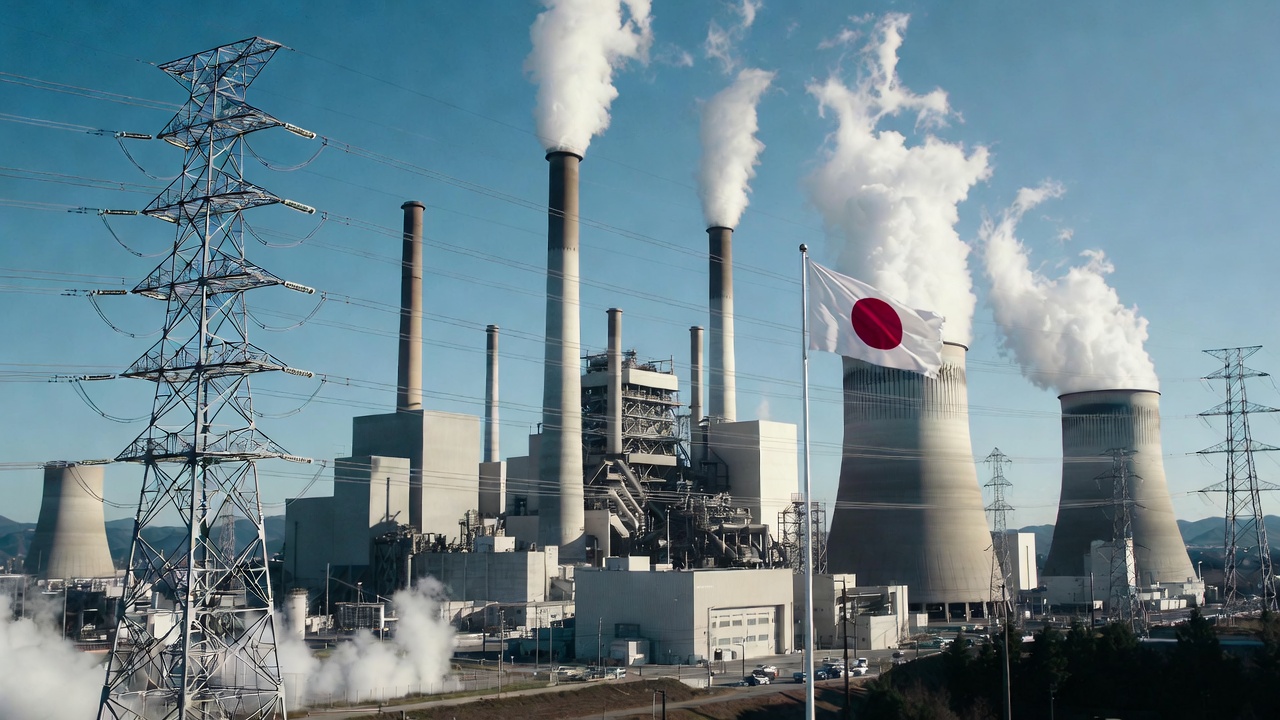
Japan, one of the world’s largest LNG importers, moved quickly. In late March 2026, the Ministry of Economy, Trade and Industry (METI) announced a one-year suspension (April 2026–March 2027) of the 50% capacity-factor cap on inefficient coal plants (those below 42% design efficiency). The emergency measure aims to conserve LNG and ensure stable power supplies. Coal already accounts for about 29% of Japan’s power mix, and utilities are now free to run older plants at higher utilization rates.
Regional utilities are also assessing restarts of mothballed coal units. The policy shift is expected to save around 0.7 billion cubic meters of LNG while providing reliable baseload power.
Other Asian Markets Follow Suit
South Korea: Lifted the 80% capacity limit on coal plants and postponed the retirement of three coal units (1.5 GW total). Seoul is also accelerating nuclear restarts but turning to coal as an immediate bridge.
Taiwan: Restarted two coal-fired units at the Mailiao Power Plant (and is preparing the 2.1 GW Hsinta backup plant) for at least three months, with possible extensions. Taipower cited national energy security and the need to buffer LNG shortfalls.
Thailand: Reactivated two mothballed units at the Mae Moh plant, boosting capacity from 700 MW to 1,300 MW.
Philippines, Vietnam, and India: Utilities are maximizing existing coal capacity, negotiating extra coal supplies, and directing plants to run at full output during peak summer demand. India has ordered imported-coal-based plants to operate at 100% capacity through June.
Coal shipments to Japan, South Korea, and the EU jumped 27% in April 2026 compared with the prior year, even as seasonal demand normally eases.
Where Asia Gets Its Coal
Asian buyers source thermal coal primarily from nearby, reliable suppliers:Australia: Premium-quality thermal coal remains the top choice for Japan and South Korea.
Indonesia: The dominant volume supplier for Southeast Asia, India, and parts of China—offering competitive pricing and shorter shipping routes.
Russia: Rapidly gaining market share with discounted cargoes and reliable deliveries; exports to South Korea and Vietnam have surged.
Smaller volumes come from South Africa, Mongolia (for China), and the United States.
This diversified supply chain—far less vulnerable to Middle East disruptions than LNG tankers transiting the Strait of Hormuz—strengthens Asia’s energy security.
Benefits for Consumers and Energy Security
The coal pivot delivers immediate, tangible gains. Coal-fired power is significantly cheaper than spot LNG at current inflated prices, keeping electricity tariffs stable and protecting households and industries from sharp rate hikes. Existing coal plants provide dispatchable baseload power that intermittent renewables and limited gas storage cannot match during a supply crunch. By using domestic and regional coal infrastructure, Asian nations reduce dependence on volatile global LNG markets and avoid the economic pain of blackouts or forced curtailments. In short, the strategy prioritizes reliable, affordable energy for consumers while buying time to develop longer-term solutions.
Contrast with Germany: Ideology Over Pragmatism
While Asia reactivates and maximizes coal assets for security, Europe’s largest economy has taken the opposite path. Germany’s Energiewende policy has driven an aggressive coal phase-out, legally mandated by 2038 (with some regions targeting 2030). Instead of reopening mothballed plants during crises, Berlin has systematically decommissioned capacity.A striking example is the Moorburg coal-fired power plant in Hamburg—one of Germany’s most modern and efficient facilities, built at a cost of nearly €3 billion and operational for only about six years. It was closed in 2021 under green-energy mandates and deliberately demolished in March 2025 using explosives to bring down boiler houses and structures.
Even more symbolic is Germany’s approach to lignite (brown coal) mines. Major open-pit operations in regions such as Lusatia, the Rhineland (Hambach, Garzweiler), and central Germany are being flooded after closure to create artificial lakes as part of post-mining reclamation. Projects like Cottbuser Ostsee and the planned Hambach lake district permanently remove vast reserves from future use, turning productive mining areas into recreational water bodies over decades-long flooding processes.
This irreversible decommissioning stands in stark contrast to Asia’s flexible, security-first strategy. Even as the Iran war triggers new energy shocks, German policymakers have shown reluctance to reverse course, prioritizing long-term decarbonization targets over immediate consumer costs and supply reliability.
A Tale of Two Approaches
Asia’s rapid return to coal demonstrates a clear-eyed recognition that energy policy must balance climate ambitions with the realities of affordability and security. By leveraging existing infrastructure and diversified coal imports, top LNG markets are shielding consumers and economies from the worst effects of the Iran war. Germany’s path—demolishing modern plants and flooding mines—illustrates the risks of rigid ideology when geopolitics upends energy markets. As the crisis unfolds, Asia’s pragmatic playbook may prove the more resilient model for the region’s growth.
- NPR: “Asia boosts coal use as Iran war squeezes global LNG supplies” (Mar 24, 2026) – https://www.npr.org/2026/03/24/g-s1-114940/asia-boosts-coal-use-as-iran-war-squeezes-global-lng-supplies
- Reuters: “Asia pivots to coal as Middle East conflict chokes LNG supply” (Mar 17, 2026) – https://www.reuters.com/sustainability/boards-policy-regulation/asia-pivots-coal-middle-east-conflict-chokes-lng-supply-2026-03-17/
- The New York Times: “Asia Turns Back to Coal as War Chokes Off Natural Gas” (Mar 18, 2026) – https://www.nytimes.com/2026/03/18/business/iran-war-lng-asia-japan.html
- Argus Media: “Japan plans temporary ease of coal power restriction” (Mar 27, 2026) – https://www.argusmedia.com/en/news-and-insights/latest-market-news/2806874-japan-plans-temporary-ease-of-coal-power-restriction
- Reuters: “Japan to relax rules from April to boost coal-fired power” (Mar 27, 2026) – https://www.reuters.com/business/energy/japan-considers-increasing-coal-fired-power-war-disrupts-lng-imports-2026-03-27/
- POWER Magazine: “Taiwan Joins Others in Asia Restarting Coal-Fired Units Due to Iran War” (Apr 7, 2026) – https://www.powermag.com/taiwan-joins-others-in-asia-restarting-coal-fired-units-due-to-iran-war/
- EADaily: “In Germany, a coal-fired power plant was blown up for three billion” (Mar 26, 2025) – https://www.eadaily.com/en/news/2025/03/26/in-germany-a-coal-fired-power-plant-was-blown-up-for-three-billion-demolition-did-not-go-according-to-plan
- BBC Future: “The end of the world’s capital of brown coal” (Apr 19, 2021, updated context) – https://www.bbc.com/future/article/20210419-the-end-of-the-worlds-capital-of-brown-coal
- Clean Energy Wire: Various reports on Germany’s coal phase-out and mine reclamation (2024–2026).
Additional supporting data drawn from Bloomberg, Japan Times, Energy Policy at Columbia University, and trade reports on coal import flows (2025–2026). All links accessed and verified as of May 2026.