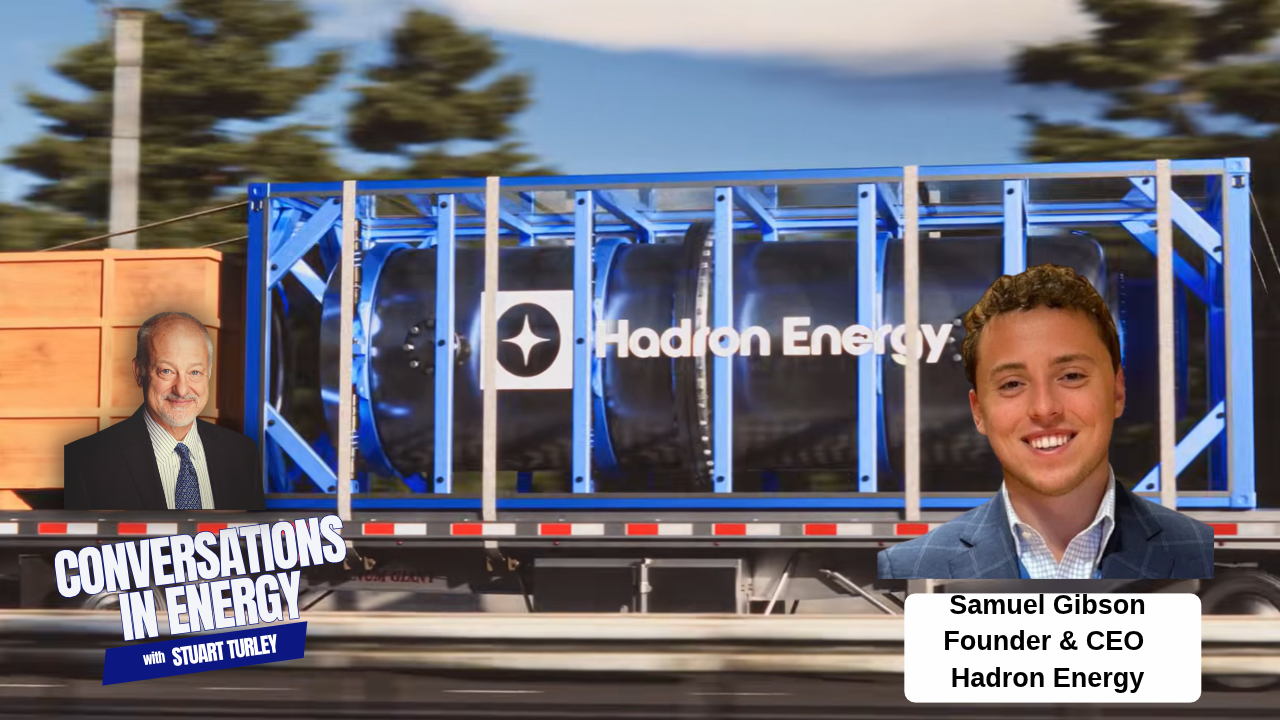
In this episode of the Energy News Beat Podcast, host Stu Turley sits down with Samuel Gibson, CEO and founder of Hadron Energy, to discuss a breakthrough solution to America’s urgent energy crisis. As data centers demand unprecedented power and the electrical grid strains under intermittent renewables, Hadron is developing a game-changing 10-megawatt microreactor designed for rapid, flexible deployment across remote communities, military bases, and data centers.
From securing a complete U.S.-based fuel supply chain to going public on NASDAQ in record time, Gibson shares how Hadron is positioning itself to bring the first commercially operating microreactor to market by 2031-2032—and why nuclear energy is essential to ending energy poverty while strengthening America’s energy independence.
Connect with Samuel on his LinkedIn: https://www.linkedin.com/in/sam-gibson/
Here is Hadron’s website: https://www.hadronenergy.com/

1. Hadron Energy’s Microreactor Technology
Samuel Gibson introduces Hadron Energy’s 10-megawatt electric microreactor design, which uses light water technology with low-enriched uranium. The reactor is designed to be transportable on semi-trucks and deployable in modular configurations (one-pack, six-pack, and 12-pack setups). The company was founded in July 2024 and went public on NASDAQ in May 2025—a remarkably fast trajectory from inception to public listing.
2. Market Demand & Target Applications
Hadron has identified three primary markets: remote communities, military bases, and data centers. The company has already secured over 5 gigawatts of signed MOUs and LOIs, with the vast majority from data centers. The discussion emphasizes the urgent need for reliable power as data center demand skyrockets due to AI and computing infrastructure expansion.
3. Supply Chain & Manufacturing
A key differentiator for Hadron is that they’ve already secured the complete U.S.-based fuel supply chain (uranium ore, conversion, enrichment, and fuel fabrication). The company is partnering with an established manufacturer for the first ~10 reactors, with plans to build their own manufacturing facility as production scales up.
4. Timeline & Regulatory Path
Hadron has submitted pre-application materials to the Nuclear Regulatory Commission and projects their first commercial reactor to come online in 2031-2032. The company is proactively engaging with suppliers to manage lead times, with the longest lead item being approximately two years.
5. Business Model: Build-Own-Operate
Rather than just selling reactors, Hadron operates on a build-own-operate model with power purchase agreements that include construction, maintenance, refueling, and operations. This creates recurring revenue streams and positions Hadron as a utility-like operator.
6. Grid Resilience & Energy Infrastructure Challenges
The conversation highlights critical issues with the current U.S. electrical grid:
- Grid fragility due to intermittent renewable energy (solar/wind)
- Transmission and distribution bottlenecks (5-year lead times for new T&D infrastructure)
- Data center power demands straining regional grids (PJM needs 67 GW; Texas ERCOT nearly failed during peak demand)
- Consumers paying premium rates due to grid constraints
7. Decentralized Energy & Behind-the-Meter Solutions
A major advantage of microreactors is deploying power where it’s needed (behind-the-meter), eliminating expensive transmission infrastructure and grid dependency. This is particularly valuable for data centers, remote communities, and military bases.
8. Energy Poverty & Global Impact
The discussion connects nuclear energy to ending energy poverty worldwide. Access to reliable, affordable power has a direct relationship with GDP and economic prosperity. Nuclear’s high capacity factor (94%) versus renewables (21-30%) makes it superior for reliable baseload power.
9. Military & Defense Applications
Project Janice aims to deploy microreactors at 19 U.S. military bases. Hadron is actively exploring partnerships with the Department of Defense to replace diesel generation with clean, reliable nuclear power.
10. Repurposing Existing Infrastructure
The conversation explores opportunities to deploy microreactors at decommissioned coal plants (which already have transmission infrastructure) or alongside existing nuclear facilities to provide auxiliary power.
This is a huge discussion, and they are rolling. I look forward to being a resource and news outlet for them as they bring their product to market. We need their nuclear power yesterday, and I look forward to more discussions as they make a huge impact on the U.S. energy market. – Stu
We would also like to give our sponsors a shout-out.
Check out the World’s Greatest Podcast Show Notes at EnergyNewsBeat.co or EnergyNewsBeat.com, and the Energy News Beat Substack at:
 Energy News Beat
At The Intersection of Energy and Finance – By Sandstone Group
A shout-out to Steve Reese and the Reese Energy Consulting group for sponsoring the Podcast https://reeseenergyconsulting.com/.
Data2 if you have any business systems, can you trust A? Well, they have the patent on validation. . https://data2.zoholandingpage.com/energy
And we have WellDatabase rolling, and we use their tools for the Energy News Beat weekly Rig Reports: https://welldatabase.com/
Also entering Sponsor Rey Trevino, Pecos Operating https://pecos.energy/