German Energy Policy Meets the Real World: Evonik CEO Christian Kullmann Says the Energy Transition Has No Value Whatsoever

Evonik CEO Christian Kullmann has delivered a blunt verdict on Germany’s Energiewende. In July 2026 interviews with the Rheinische Post and others, the head of one of Germany’s largest specialty chemicals companies stated that the energy transition has cost around €1,000 billion—and delivered “nothing.” “Wir haben nicht genug Gaskraftwerke. Wir haben eine Netzinfrastruktur wie in […]

Continue Reading

Global Energy Market In Flux with Russia, Strait of Hormuz, Bab el-Mandab Strait and drought in the EU all in play

The global energy landscape remains highly volatile in early August 2026, shaped by overlapping geopolitical, security, and climate pressures. Disruptions centered on Russia’s refined product exports, ongoing uncertainty over the Strait of Hormuz, escalating risks in the Bab el-Mandab Strait, and a severe drought across Europe are tightening supplies of crude oil, petroleum products, LNG, […]

Continue Reading

China Approves Eight New Nuclear Plants, Including Four With Hualong One 2.0 Tech

China’s State Council approved the construction of eight new nuclear reactor units on July 31, 2026, during an executive meeting chaired by Premier Li Qiang. The projects, spanning four provinces, represent a total investment exceeding 170 billion yuan (approximately $25 billion) and continue the country’s aggressive expansion of nuclear capacity as a cornerstone of its […]

Continue Reading

Qatar, Bessent Signal Progress on Short-Term US-Iran Deal — With Mixed Signals from Iran

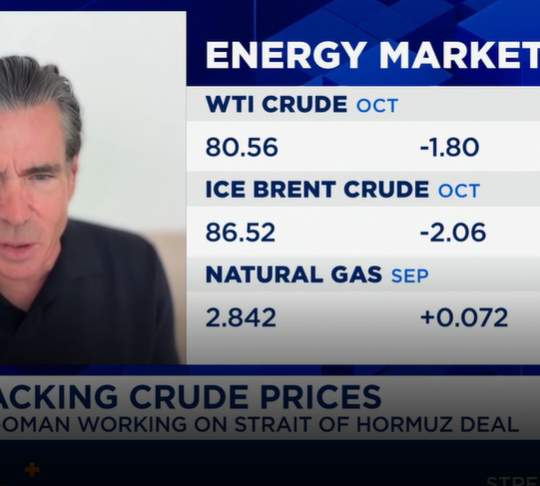
Oil markets swung lower on Tuesday as Qatar and U.S. Treasury Secretary Scott Bessent pointed to advancing mediation efforts aimed at a short-term arrangement between the United States and Iran, centered on reopening the Strait of Hormuz. The chokepoint, which normally handles roughly one-fifth of global oil and LNG supplies, has been heavily disrupted since […]

Continue Reading

Net Zero has hit the Bank of England, and they cut all support for coal. But the rest of the world increases use of coal and low-cost energy.

The Bank of England is moving further away from thermal coal. From October 2026, it will no longer accept bonds issued by companies deriving revenue from thermal coal mining as eligible collateral in its lending operations. Commercial banks borrowing from the Bank (including major UK institutions) will not be able to post those bonds. The […]

Continue Reading