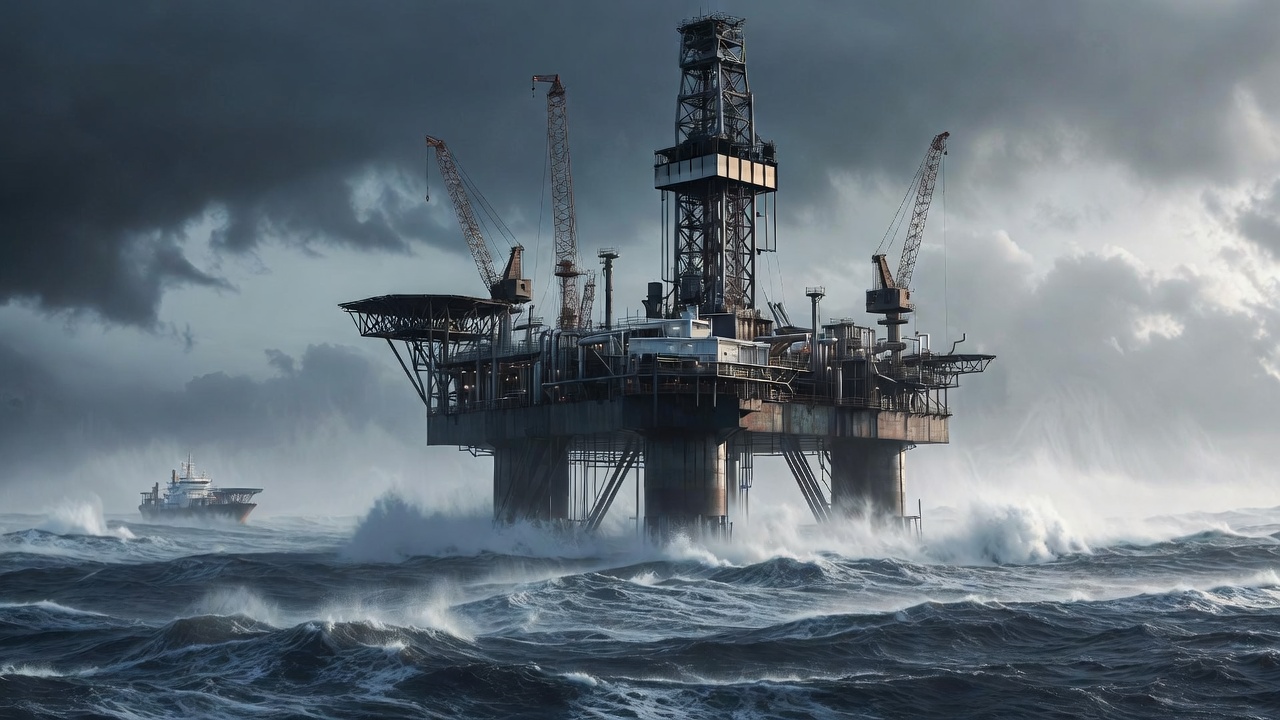
The UK government has confirmed it will introduce legislation to permanently ban new North Sea oil and gas exploration licenses, embedding Energy Secretary Ed Miliband’s existing moratorium into law through the Energy Independence Bill. The move, announced in the King’s Speech on 13 May 2026, fulfills a core Labour Party manifesto pledge to position Britain as a “clean energy superpower” by 2030 and to stop issuing licenses for new oil and gas fields.
According to reporting from OilPrice.com (via City A.M.), oil and gas still make up three-quarters of the UK’s energy mix, yet the majority is now imported. Critics argue the permanent ban will accelerate reliance on foreign supplies, strip billions in potential tax receipts from the Treasury, damage Scotland’s oil and gas sector, and fail to deliver meaningful environmental gains while exposing the economy to global price shocks.
Ed Miliband’s Vision: Wind, Solar, and the “End of Fossil Fuel Security”
Ed Miliband, Secretary of State for Energy Security and Net Zero, has been the driving force behind this policy. In speeches and statements throughout 2025–2026, Miliband has repeatedly argued that the era of fossil fuel security is over. Following global energy price spikes linked to the Russia-Ukraine conflict and, more recently, the Iran conflict and disruptions in the Strait of Hormuz, he declared: “The era of fossil fuel security is over, and the era of clean energy security must come of age.”
His strategy centers on rapid deployment of renewables—doubling onshore wind, tripling solar, and quadrupling offshore wind by 2030—alongside nuclear (including small modular reactors), hydrogen, and grid reforms to “break the link” between volatile global gas prices and UK electricity bills. Miliband has defended the North Sea ban by noting that the basin is mature, with new licenses offering only marginal additional production that would not meaningfully affect bills or security. Existing fields will continue operating for their full lifespan under “Transitional Energy Certificates,” but no new exploration will be permitted.
Recent political moves underscore his determination:
The Energy Independence Bill not only cements the ban but also includes measures to accelerate clean power projects, reform planning for onshore wind and solar, and give ministers greater control over grid connections.
Miliband has pushed solar on public estates, electric vehicle incentives, and electricity market reforms to delink prices from gas.
He has resisted calls from industry, unions, the Conservatives, Reform UK, and even the US ambassador to the UK to reopen licensing rounds, framing new drilling as incompatible with long-term energy independence and climate goals.
Miliband’s position aligns with Labor’s 2024 manifesto and green lobby support, which views the policy as essential to meeting net-zero targets and avoiding “virtue-signaling” accusations while prioritizing homegrown renewables.
Economic and Energy Security Risks: A Path to Collapse?
The North Sea is undeniably a mature basin. Production peaked in 1999 and has fallen sharply—oil and gas output dropped roughly 70–75% by 2025. Government projections from the North Sea Transition Authority show further steep declines even with new drilling: gas output could fall 97% and oil 91% by 2050. Around 90%+ of recoverable resources have already been extracted, and new licenses would add only about 1–2% to historical totals.
Yet the UK remains heavily dependent on oil and gas for heating, transport, and industry. Domestic production still supplies over half of UK gas needs in some analyses and supports 30,000–60,000 direct jobs plus a larger supply chain. Recent tax revenues (including the Energy Profits Levy) have ranged from £2.9bn to £5.4bn annually.
Critics—including Shadow Energy Secretary Claire Coutinho, who called Miliband “utterly deluded”—argue the ban will:Increase reliance on imports (often from Norway or LNG markets), sending tax revenue and jobs abroad.
Heighten vulnerability to geopolitical shocks, as seen with recent oil price spikes.
Accelerate economic decline in oil-dependent regions like Scotland without a ready replacement in renewables for non-electric energy needs.
Opposition parties (Conservatives and Reform UK) have vowed to reverse the ban if elected, citing lost billions in tax take and the need for an “all-of-the-above” approach during the transition.
Does this spell more economic collapse and lack of energy security?
The evidence suggests real near-term risks. While renewables are growing strongly in the electricity sector and offer stable long-term pricing, the UK’s overall energy system remains fossil-fuel dominant for decades (heat pumps alone will take decades to roll out). Banning new licenses removes any buffer against faster-than-expected decline, potentially raising import dependence precisely when global instability is rising. Renewables’ intermittency requires backup (often gas), and grid upgrades face delays and costs. Historical job losses in the sector have already been significant, and further contraction could hit regional economies hard without guaranteed “green jobs” materializing at scale quickly enough.
Supporters counter that new drilling would not lower bills (oil/gas sold on global markets) or deliver security, and that accelerating clean power is the only reliable path forward. However, with demand for hydrocarbons persisting and the North Sea’s remaining potential sidelined, the policy risks trading short-term vulnerability for a long-term green vision that may prove more expensive and less reliable in practice.
Ed Miliband is the most dangerous Eco Zealot – This is the person who believes the UN and Climate Crisis, and has the back-stabbing ethics to rise to power. He does not look at the facts, and that makes his decisions questionable.
Appendix: All Sources and Links
- Original article referenced: “UK Moves to Ban New North Sea Oil and Gas Licences Permanently,” OilPrice.com (City A.M.), 15 May 2026. https://oilprice.com/Energy/Energy-General/UK-Moves-to-Ban-New-North-Sea-Oil-and-Gas-Licences-Permanently.html
oilprice.com
- Telegraph: “Ed Miliband vows permanent shutdown of the North Sea,” 13 May 2026. https://www.telegraph.co.uk/business/2026/05/13/miliband-vows-permanent-shutdown-of-the-north-sea/
telegraph.co.uk
- GB News: “Ed Miliband branded ‘deluded’ as Labour expected to BAN all new North Sea oil licences,” ~14–16 May 2026. https://www.gbnews.com/money/ed-miliband-deluded-oil-licences
gbnews.com
- CBS News: Miliband statement on fossil fuel era, April 2026. https://www.cbsnews.com/news/iran-war-era-fossil-fuel-security-over-uk-trump-north-sea-drilling/
cbsnews.com
- Carbon Brief fact-checks on North Sea myths and production data (March 2026). https://www.carbonbrief.org/factcheck-nine-false-or-misleading-myths-about-north-sea-oil-and-gas/
carbonbrief.org
- Labour manifesto / clean power mission: https://labour.org.uk/change/make-britain-a-clean-energy-superpower/
labour.org.uk
- NSTA / government data on production decline, reserves, jobs, and tax (various 2025–2026 reports). https://www.nstauthority.co.uk/data-and-insights/insights-and-analysis/production-and-expenditure-projections/
carbonbrief.org
- Additional context from BBC, Guardian, OEUK, and parliamentary briefings on economic impacts (2025–2026).
This article draws exclusively from publicly available reporting and official statements as of 16 May 2026. Energy News Beat will continue monitoring developments in the Energy Independence Bill and their real-world impacts on UK households and industry.