

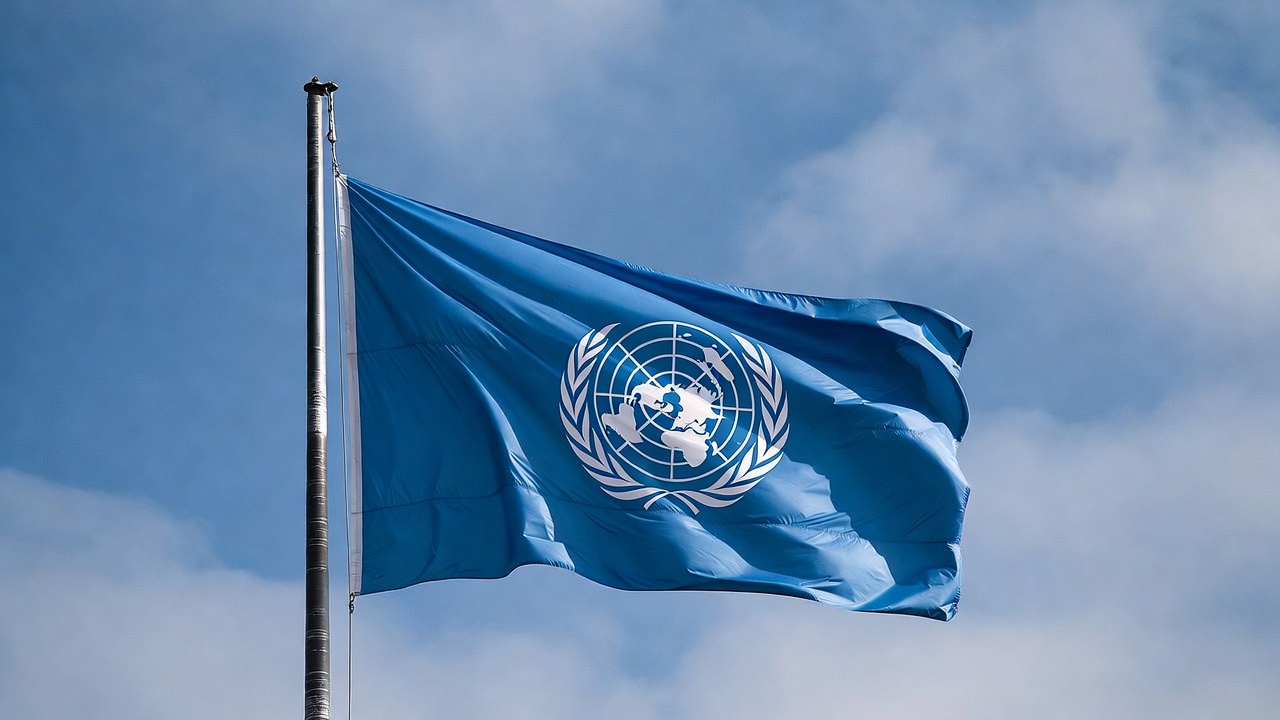
The United Nations’ Intergovernmental Panel on Climate Change (IPCC) has quietly conceded that the extreme “doomsday” climate scenarios that have driven global energy policy, media headlines, and trillions in spending for more than a decade were never realistic.
In a major update to its modeling framework for the upcoming Seventh Assessment Report (CMIP7), the IPCC has demoted the high-end “exploratory” scenarios — including the notorious RCP8.5 and SSP5-8.5 pathways — as implausible. These scenarios, which assumed massive coal expansion far beyond recoverable reserves and projected up to 4–5°C of warming by 2100, dominated climate research, policy, and public discourse for years.
As climate policy expert Roger Pielke Jr. noted: “The IPCC and broader research community have now admitted that the scenarios that have dominated climate research, assessment, and policy during the past two cycles of the IPCC assessment process are implausible. They describe impossible futures.”
The admission, buried in technical guidelines published earlier this year and only recently gaining attention, confirms what energy realists have argued for years: policies rushed toward Net Zero were built on exaggerated worst-case assumptions rather than sound science or economics.
Trillions Wasted on Fearmongering and Failed Policies
For over two decades, governments, corporations, and international institutions poured resources into wind, solar, hydrogen, and related “green” infrastructure — all justified by these now-discredited doomsday projections. The world was told that without immediate, drastic action, civilization faced imminent collapse. Politicians and activists amplified the panic: Alexandria Ocasio-Cortez warned the world had only 12 years left; others labeled climate change an “existential threat.”
According to BloombergNEF and IEA data, global energy transition investment hit a record $2.3 trillion in 2025, with roughly $690 billion going directly to renewable energy (primarily wind and solar). Clean energy spending overall reached $2.2 trillion that year.
Over the past 20 years, the world has spent approximately $10 trillion on green energy initiatives — much of it driven by subsidies, mandates, and regulations rooted in the now-admitted implausible scenarios.
The Energy Realities Podcast will be covering this Live on Monday at 8:00 Eastern.

Breakdown highlights include:
Solar PV: Record $554 billion invested in 2024 alone, up 49% from prior averages.
Wind: Hundreds of billions annually, yet still struggling with intermittency, grid upgrades, and disposal costs for blades and turbines.
Hydrogen: A perennial policy favorite, but investments remain tiny — just $7–8 billion globally in recent years — despite massive hype and taxpayer-backed projects.
What did humanity get in return? According to U.S. Energy Secretary Chris Wright and multiple analyses, wind and solar together still provide only about 3% of global primary energy — the energy that actually powers factories, transportation, heating, and daily life.
While renewables (including hydro) have grown to ~32% of global electricity generation, they remain a minor player in the full energy mix. Fossil fuels continue to meet the vast majority of primary energy demand, and absolute emissions have not plummeted as promised. Clean technologies have avoided some emissions growth (IEA estimates ~7% of global energy-related CO₂), but global CO₂ emissions still rose in 2024.
The Hidden Costs: Programs, Education, and Policy Overreach
The direct spending on hardware is only part of the story. Trillions more have flowed into climate programs, research grants, education campaigns, subsidies, and regulatory bureaucracies worldwide.
Global climate finance flows surpassed $1 trillion annually for the first time around 2022–2023 and continue climbing, with much directed toward policy implementation, awareness programs, and “capacity building.”
Public energy R&D spending (much of it climate-focused) hit tens of billions yearly, with corporate R&D adding another ~$160 billion.
Governments have funded school curricula changes, media campaigns, NGO grants, and “green jobs” training programs — all to build public support for Net Zero. Exact global totals for education/awareness are opaque, but they run into the hundreds of billions when combined with broader climate policy enforcement costs.
Net Zero pathways themselves were projected to require $3.5–9 trillion extra per year globally through 2050, according to McKinsey and other analyses — money diverted from other priorities like infrastructure, healthcare, or poverty reduction.
The result? Higher energy prices in many regions, grid instability, forced retirements of reliable baseload power, and opportunity costs measured in the trillions. All based on scenarios the IPCC itself now labels implausible.
Time for Reality-Based Energy Policy
The IPCC’s quiet admission is a watershed moment. It exposes how fearmongering and flawed modeling justified an unprecedented transfer of wealth and control under the banner of “climate emergency.” Energy policy must now pivot to pragmatic, affordable solutions: all-of-the-above energy (including nuclear, natural gas, and yes, realistic renewables where they make economic sense), technological innovation without mandates, and honest cost-benefit analysis.
The world cannot afford to keep repeating the mistakes of the past decade. The doomsday scenarios were never plausible — and the trillions spent chasing them delivered far less than promised.
It is time to defund the UN and let them move to Switzerland or the EU. Let the UK and the EU deal with their budget and malfeasance.
Appendix: Sources and Links
- ZeroHedge article referenced: https://green.zh.dev.favish.com/weather/un-climate-panel-quietly-admits-its-doomsday-climate-scenarios-were-implausible (mirrors original reporting on Pielke Jr. analysis).
- Roger Pielke Jr. Substack: “RCP8.5 Is Officially Dead” (April 2026) – https://rogerpielkejr.substack.com/p/rcp85-is-officially-dead.
- IPCC/CMIP7 scenarios guidelines: https://gmd.copernicus.org/articles/19/2627/2026/.
- BloombergNEF Energy Transition Investment Trends 2025: Record $2.3T total.
- IEA World Energy Investment 2025: $3.3T total energy investment, $2.2T clean.
- IRENA Global Landscape of Energy Transition Finance 2025: $807B renewables in 2024.
- EIA / analyses on wind/solar ~3% of global primary energy: Multiple confirmations including PolitiFact review of Energy Secretary statements.
- McKinsey Net Zero cost estimates: https://www.mckinsey.com/business-functions/sustainability/our-insights/the-net-zero-transition-what-it-would-cost-what-it-could-bring.
- Climate Policy Initiative reports on global climate finance flows.
Energy News Beat will continue tracking the real-world impacts of these policy shifts. Reliable, affordable energy for all remains our priority.