

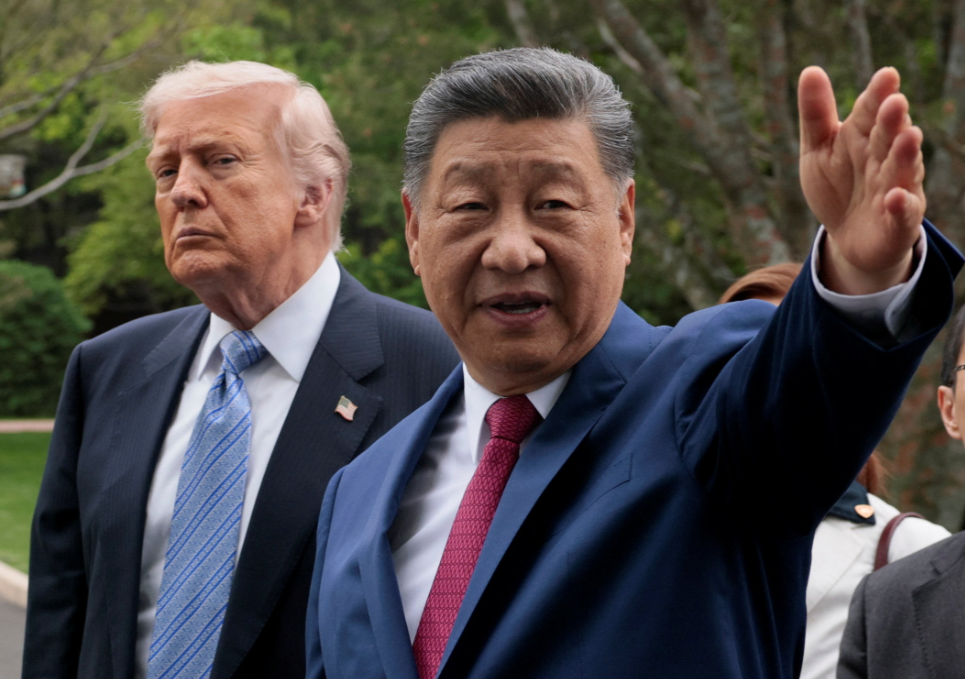
Energy News Beat — President Donald Trump and President Xi Jinping meet in Washington on Thursday, September 24. The agenda is broader than energy. For the U.S. LNG industry, the meeting is still one of the most important political events of the year.
China is the world’s largest LNG importer. The United States is the world’s largest LNG exporter. That pairing should be a natural commercial relationship. Since February 2025, it has not been. Beijing’s 15% retaliatory tariff on U.S. LNG effectively froze a trade that once moved dozens of cargoes a year and was worth about $6 billion on existing long-term contracts alone.
Bloomberg’s Energy Daily framed the week clearly: U.S. LNG producers are watching for any sign that Beijing will ease those duties. If it does, the industry sees a path back to Chinese offtake just as a new wave of Gulf Coast capacity is coming online.
That is the political-market story investors need to understand this week.atlanticcouncil.org
Why LNG Is on the Table
The tariff war that began in early 2025 hit energy quickly. China answered U.S. duties with levies on U.S. coal, crude, autos, and LNG. Direct U.S. LNG shipments to China collapsed from 64 vessels in 2024 to effectively zero in 2025. In earlier peak years, the trade had been far larger — 131 vessels in 2021.
The freeze never fully killed commercial interest. Chinese buyers still hold long-term U.S. contracts totaling roughly 14 million tonnes per year, worth about $6 billion at typical long-term prices. Spot purchases would add more. Those contracts did not disappear. They were rerouted, delayed, or sat uneconomic behind the 15% levy.
Reuters reported last week that Washington and Beijing have discussed reducing or eliminating China’s LNG tariff as part of a wider energy and agriculture package. Sources described a possible reciprocal cut covering about $30 billion of goods on each side. Officials on both sides have not confirmed the talks. The proposals are not final. That is exactly why the market is watching Thursday.
A separate political clock is running. A fragile trade truce is due to expire in November. Analysts generally expect modest outcomes from the summit — an extension of that truce, limited commercial announcements, and no grand reset. LNG is one of the few items that could produce a visible, multi-year number.
Jane Nakano, a senior fellow at the Center for Strategic and International Studies, put it in commercial terms: “LNG is an apparent area of mutual gain. The value of restored LNG ties with China would go beyond addressing the trade imbalance. Resumed LNG trade would likely underpin the sustained growth of the U.S. LNG industry.”
That is the bull case the export market is pricing as optionality, not as a done deal.
The Industry’s Timing Problem — and Opportunity
U.S. producers do not need China to keep exporting. They need China if they want the next decade of expansion to stay fully contracted at attractive terms.
Export capacity is set to grow by roughly 10 billion cubic feet per day through 2027. First-half 2026 U.S. LNG exports already averaged 17.4 bcf/d, up 23% from a year earlier. Projects tied to Cheniere, Venture Global, Sempra, NextDecade, and ExxonMobil are adding trains along the Gulf Coast. Developers still have tens of millions of tonnes of uncontracted or under-contracted future capacity.
China’s own supply picture has also shifted. Asian prices have been supported by constrained Middle East flows, weaker Chinese domestic gas production at times, and the need to restock. Qatar, normally a pillar of Chinese supply, has faced disruption risk. Russia has increased LNG sales into China, but that does not replace the volume and contract flexibility U.S. cargoes can offer. For Beijing, buying American LNG is a relatively cheap diplomatic concession compared with semiconductors, rare earths, or Taiwan. For Washington, multi-decade gas contracts are an easy “win” number.
The market already showed a small thaw. China Gas Holdings signed a 20-year deal on September 14 with Venture Global for 0.5 million tonnes per year starting in 2030, lifting Venture Global’s long-term commitments to China Gas to 2.5 mtpa. Limited U.S. cargoes have also appeared at Chinese terminals this summer, including through bonded storage that can allow re-export without full import duties. Those are signals, not a restored trade.
What Analysts Are Saying About the Meeting
The LNG-specific commentary is more constructive than the broader geopolitical commentary.
On energy, Bloomberg, Reuters, and trade-focused outlets treat tariff relief as plausible and commercially logical. Existing contracts give both sides a ready-made deliverable. Chinese buyers have already been talking to U.S. exporters at industry conferences. A tariff cut would not create demand from nothing. It would unlock demand that already exists on paper.
On the summit as a whole, expectations are restrained. Brookings’ Jon Czin argued Xi is not hunting a large package so much as time: an extension of the “gentleman’s agreement” while China builds domestic resilience. CSIS’s Scott Kennedy noted that earlier U.S. attempts to force large concessions with unilateral pressure did not work as designed. Inside U.S. Trade summarized the consensus as modest: extend the truce, announce some commercial items, avoid a rupture.
That split matters for investors. A full strategic reset is unlikely. A targeted energy announcement is still possible. Markets can reprice LNG names on the second outcome even if the first never arrives.
The risk case is straightforward. If Thursday produces only photos and a vague commitment to keep talking, Chinese buyers stay cautious, U.S. developers keep chasing Europe and the rest of Asia, and the “China bid” remains a 2027–2030 story rather than a 2026 story. If the meeting fails and the November truce frays, energy tariffs could harden rather than ease.
The Top Five U.S. LNG Export Platforms Investors Watch
Rankings shift with ramp-up schedules, but these five names define the U.S. export stack heading into the Trump-Xi week.
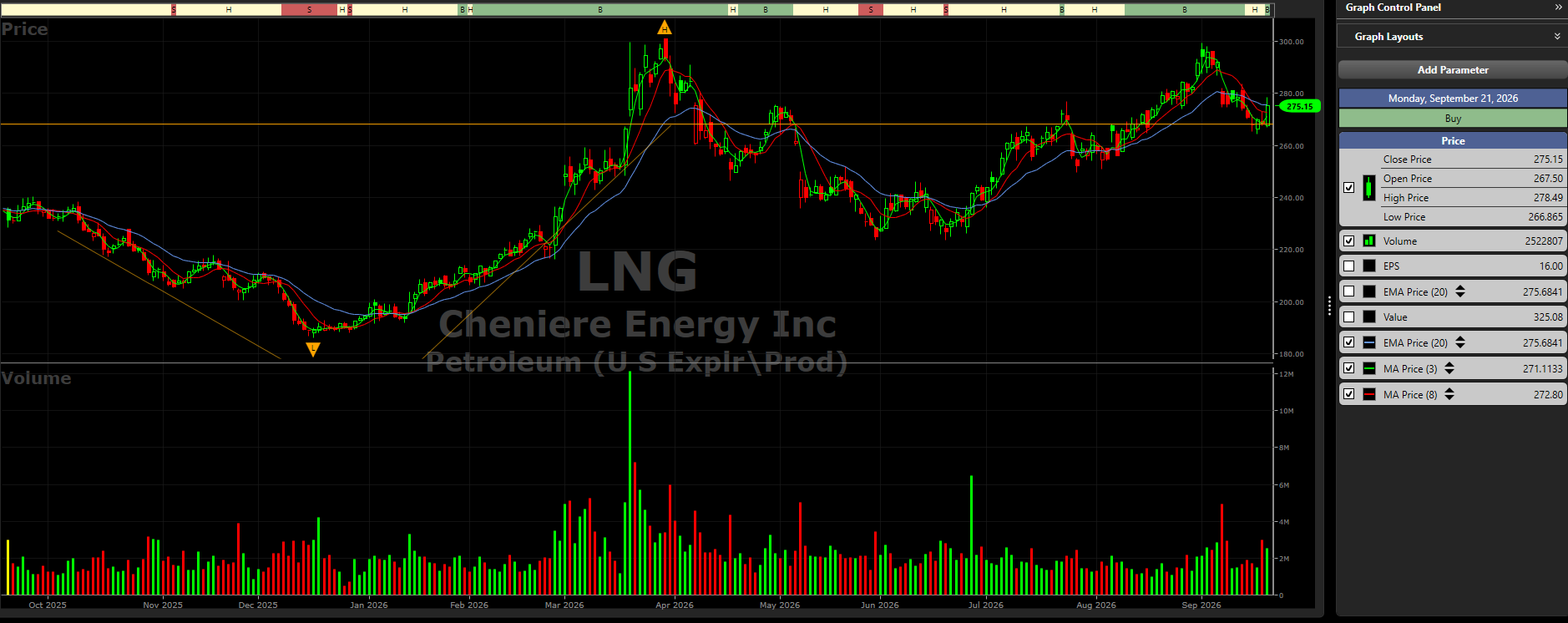
1. Cheniere Energy (NYSE: LNG)
The incumbent. Sabine Pass in Louisiana remains the largest operating U.S. terminal, with Corpus Christi expanding behind it. Cheniere’s model is contracted cash flow, long-term offtake with creditworthy buyers, and incremental expansions rather than a single bet-the-company build. Analysts generally treat it as the quality compounder of the group, with a moderate-buy consensus and a mid-teens implied upside to published price targets. A China reopening would not transform Cheniere overnight. It would support utilization, marketing margins, and the case for the next Sabine Pass and Corpus Christi trains.
2. Venture Global (NYSE: VG)
The growth engine. Calcasieu Pass is operating. Plaquemines is ramping and already a major share of U.S. cargoes. CP2 is under construction. Venture Global is the company that just signed the China Gas SPA. It is also the name most levered to a Chinese return because it is still filling a huge development pipeline and has been more willing to use modular trains and flexible marketing. Higher growth, higher leverage, higher volatility. That is the trade.
3. Sempra (NYSE: SRE)
Sempra’s LNG exposure runs through Cameron LNG and the Port Arthur project now under construction in Texas. Port Arthur is one of the largest sanctioned U.S. projects of this cycle. Sempra is a regulated utility plus infrastructure story, so LNG is a growth overlay rather than the whole company. Investors who want Gulf Coast liquefaction without a pure-play developer’s balance sheet often start here.
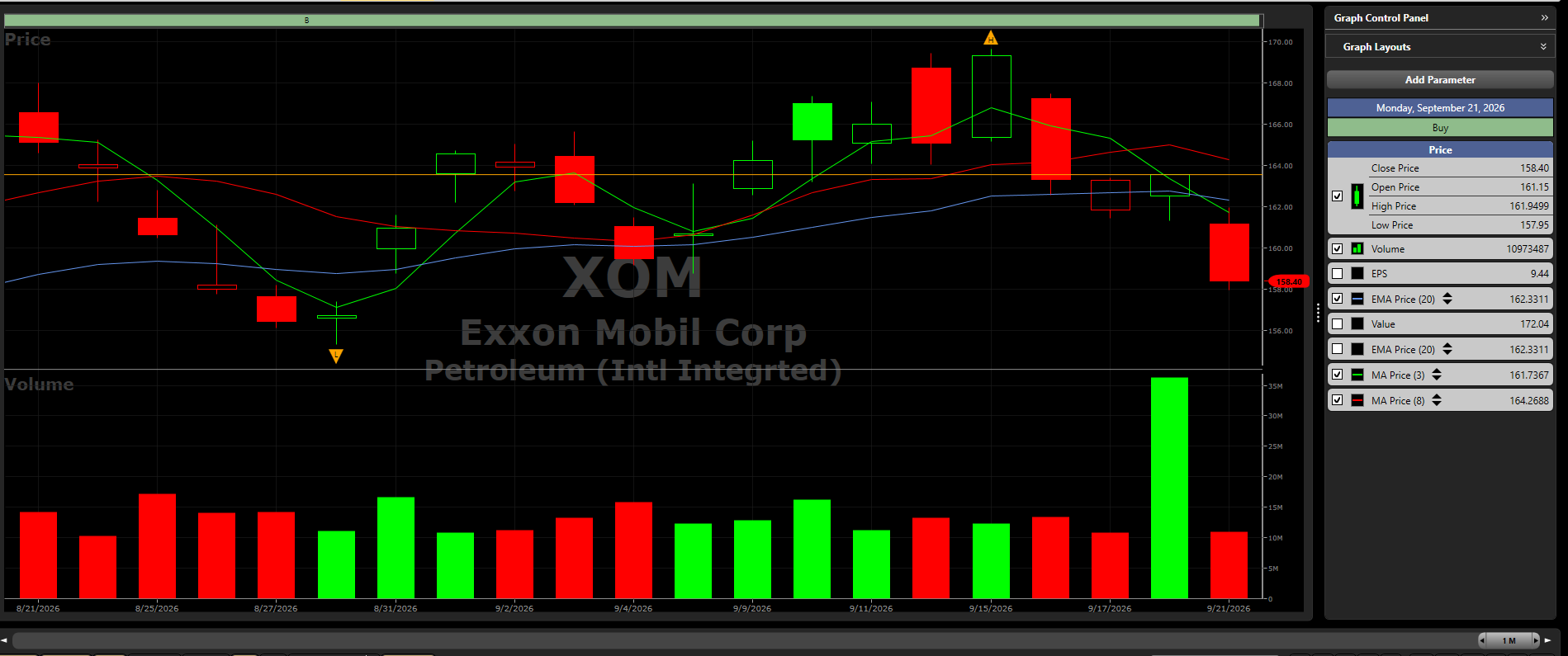
4. ExxonMobil (NYSE: XOM), via Golden Pass
Golden Pass, a joint venture with QatarEnergy, has started exporting from Texas. It is not a pure LNG stock. It is a supermajor with a new 15-plus mtpa export wedge entering the market in 2026–2027. A China opening would matter at the margin for Gulf Coast realizations and for how QatarEnergy trades the 70% offtake it controls. For equity investors, XOM is the conservative way to own the same physical capacity.
5. NextDecade (NASDAQ: NEXT)
Rio Grande LNG in Brownsville is one of the largest projects under construction in the United States. NextDecade is the higher-beta developer: less current cash flow, more construction and financing risk, more torque if long-term Asian offtake improves. EQT has already linked Appalachian supply to planned Rio Grande capacity. A Chinese bid would not finish the project by itself. It would make remaining trains easier to contract.
Freeport LNG remains a major operating terminal, but it is privately held and less useful as a listed single-name vehicle. Berkshire Hathaway’s Cove Point and Kinder Morgan’s Elba Island are smaller, more mature facilities.
The Rest of the Value Chain: Where Else to Look
A China tariff cut would not stop at the liquefaction fence line. It would pull gas from the Haynesville, Permian, and Appalachia, fill pipelines into Louisiana and Texas, and keep LNG carriers employed.
Upstream producers
EQT is the clearest listed Appalachian supplier tied to LNG offtake, including Rio Grande-linked volumes and other cargo arrangements. Range Resources, Expand Energy, Antero, and Coterra sit in the same “feedgas to the coast” thesis. These names benefit if LNG demand stays strong even without China. They benefit more if China returns and keeps Henry Hub better supported than a glut scenario would imply.
Midstream
Kinder Morgan says it already handles about 40% of feedgas deliveries to U.S. LNG plants and sees most incremental U.S. gas demand through 2030 concentrated in Texas and Louisiana. Williams and Energy Transfer are the other core pipes into the same corridor. Energy Transfer also has residual LNG-development optionality, even after pausing Lake Charles. These stocks are less binary than NEXT or VG. They get paid to move molecules whether the cargo goes to Rotterdam or Guangdong.
Shipping and services
Flex LNG and Golar LNG are the listed ways to own carrier leverage if tonne-mile demand rises with longer U.S.-to-Asia voyages. A restored China trade lengthens average haul versus a Europe-heavy book. EPC names such as Technip Energies sit behind Commonwealth and other sanctioned projects, but they are a more indirect bet.
What not to confuse with a China bounce
A one-week diplomatic headline does not change construction schedules, FERC timelines, or 20-year SPA credit. Developers with uncontracted trains have the most upside and the most disappointment risk. Utilities with regulated rate bases will barely move. Shipping rates can spike on sentiment and fade if cargoes stay in the Atlantic Basin.workboat.com
How to Think About Thursday
Treat the meeting as a catalyst, not a thesis.
The structural thesis is already in place: the United States is adding a huge amount of liquefaction, global buyers want non-Middle East supply, and U.S. projects need long-term customers. China is the largest missing customer. Removing a 15% tariff would not create a new industry. It would reopen the industry’s original premium market.
A constructive outcome would look like this: China cuts or suspends the LNG tariff, existing 14 mtpa of contracts start flowing again, and one or two additional long-term SPAs are announced around the visit. That would support utilization at operating plants, marketing margins at Cheniere and Venture Global, and financing conversations for the next trains at Port Arthur, Rio Grande, CP2, and Sabine Pass Stage 5.A neutral outcome would look like this: the truce is extended, energy is mentioned, no tariff schedule is published. Chinese buyers keep talking. Stocks that already rallied on Reuters leaks give some of it back.A negative outcome would look like this: the meeting is frosty, November becomes a cliff again, and energy stays in the retaliation basket. In that world, U.S. LNG still grows. It just grows into Europe, South Asia, and Latin America at a more competitive price.
Investors should size positions for the first scenario without requiring it. The companies that work if China stays closed — Cheniere’s contracted fleet, Kinder Morgan’s Gulf pipes, EQT’s low-cost Appalachian gas — are the core. The companies that work best if China reopens — Venture Global, NextDecade, and to a lesser extent the shipping names — are the torque.
The political meeting lasts a day. LNG contracts last twenty years. That is why the export market is watching Washington this week.
This article is for informational purposes and is not investment advice. LNG developers, midstream operators, and producers carry commodity, construction, regulatory, and geopolitical risk.
Making Appendices Great Again
Check out the World’s Greatest Podcast Show Notes at EnergyNewsBeat.co or EnergyNewsBeat.com.
Subscribe to the Energy News Beat Substack: https://theenergynewsbeat.substack.com/
Appendix: Sources and Links
- Bloomberg, “US LNG Producers Eye Bonanza If Trump and Xi Can Ease Tariffs,” Sept. 21, 2026: https://www.bloomberg.com/news/newsletters/2026-09-21/us-lng-producers-eye-bonanza-if-trump-and-xi-can-ease-tariffs
- Bloomberg / Yahoo Finance, “Trump-Xi Talks Could Mean $6 Billion of US Natural Gas for China,” Sept. 21, 2026: https://finance.yahoo.com/energy/articles/trump-xi-talks-could-mean-010000360.html
- The Business Times, “‘Mutual gain’: Trump-Xi talks could mean US$6 billion of US natural gas for China,” Sept. 21, 2026: https://www.businesstimes.com.sg/international/mutual-gain-trump-xi-talks-could-mean-us6-billion-us-natural-gas-china
- ThePrint, “China’s energy trade-off with America. Why Xi could offer Trump a $6 billion trade win,” Sept. 21, 2026: https://theprint.in/world/chinas-energy-trade-off-with-america-why-xi-could-offer-trump-a-6-billion-trade-win/3048723/
- Reuters, “US, China discuss cutting tariffs on US LNG ahead of Xi visit,” Sept. 18, 2026: https://www.reuters.com/business/energy/us-china-discuss-cutting-tariffs-us-lng-ahead-xi-visit-2026-09-18/
- Reuters, “How Trump and Xi went from tariff war to trade truce,” Sept. 21, 2026: https://www.reuters.com/business/aerospace-defense/how-trump-xi-went-tariff-war-to-trade-truce-2026-09-21/
- Reuters, “China Gas signs 20-year LNG import deal with US-based Venture Global,” Sept. 14, 2026: https://www.reuters.com/business/energy/china-gas-signs-20-year-lng-import-deal-with-us-based-venture-global-2026-09-14/
- Venture Global press release, “Venture Global and China Gas Announce New Long-Term LNG Agreement,” Sept. 14, 2026: https://ventureglobal.com/2026/09/14/venture-global-and-china-gas-announce-new-long-term-lng-agreement/
Summit expectations and political context
- Inside U.S. Trade, “Trump-Xi meeting: Modest expectations, including an extended trade truce,” Sept. 21, 2026: https://insidetrade.com/daily-news/trump-xi-meeting-modest-expectations-including-extended-trade-truce
- U.S. News / Reuters, “Xi Rolls Into Trump Summit With China’s Trade Engine Roaring,” Sept. 20, 2026: https://www.usnews.com/news/world/articles/2026-09-20/xi-rolls-into-trump-summit-with-chinas-trade-engine-roaring
- CryptoBriefing, “Xi Jinping heads to Washington to revive a $6B US liquefied natural gas trade,” Sept. 21, 2026: https://cryptobriefing.com/xi-jinping-washington-us-lng-trade-talks/
- bne IntelliNews, “US and China open talks on scrapping tariffs on American LNG,” Sept. 20, 2026: https://www.intellinews.com/us-and-china-open-talks-on-scrapping-tariffs-on-american-lng-468860/
Capacity, operations, and company context
- U.S. Department of Energy, LNG Snapshot, June 30, 2026: https://www.energy.gov/sites/default/files/2026-06/LNG%20Snapshot%20June%2030%202026.pdf
- EIA, U.S. LNG Exports by Point of Exit: https://www.eia.gov/dnav/ng/NG_MOVE_POE2_A_EPG0_ENG_MMCF_M.htm
- Energy Intelligence, “US LNG Expansions at Full Throttle Amid Market Turmoil”: https://www.energyintel.com/000001a0-394f-d96e-a5a9-f97f085f0000
- Oil & Gas Storage News, “Top 10 LNG Terminals North America 2026”: https://oilgasstoragenews.com/top-10-lng-terminals-north-america/
- Aegis Hedging, LNG Fundamentals and Project Tracker: https://aegis-hedging.com/insights/lng
- S&P Global, “Price and Economic Impacts of an Accelerating Export Industry: US LNG Impact Study – Phase 4”: https://www.spglobal.com/en/research-insights/special-reports/price-and-economic-impacts-of-an-accelerating-export-industry-us-lng-impact-study-phase-4
- U.S. News, “5 Best LNG Stocks to Buy in 2026”: https://money.usnews.com/investing/articles/best-lng-stocks-to-buy
- Seeking Alpha, “A Battle Of The LNG Heavy Weights: Cheniere Vs. Venture Global”: https://seekingalpha.com/article/4914590-a-battle-of-the-lng-heavy-weights-cheniere-vs-venture-global
- Kinder Morgan / Rextag, “How Kinder Morgan’s Network Lines Up With LNG and Power Demand Growth”: https://rextag.com/blogs/blog/how-kinder-morgan-s-network-lines-up-with-lng-and-power-demand-growth
- Rextag, “EQT Links Appalachian Gas to Gulf Coast LNG”: https://rextag.com/blogs/blog/eqt-links-appalachian-gas-to-gulf-coast-lng
- CSIS, “U.S.-China Trade War and the Future of U.S. LNG”: https://csis.org/analysis/us-china-trade-war-and-future-us-lng
Cargo and market color
- World Energy News / Oil & Gas 360, first direct U.S. cargo to China since the tariff dispute (July 2026 reporting): https://www.oilandgas360.com/first-u-s-lng-cargo-since-tariff-dispute-reaches-china-may-be-re-exported/
- Kpler, “Global LNG prices climb as Hormuz transits stay constrained,” Aug. 27, 2026: https://www.kpler.com/blog/restocking-demand-lower-chinese-domestic-gas-production-to-push-global-lng-prices-higher-as-hormuz-transits-remain-constrained