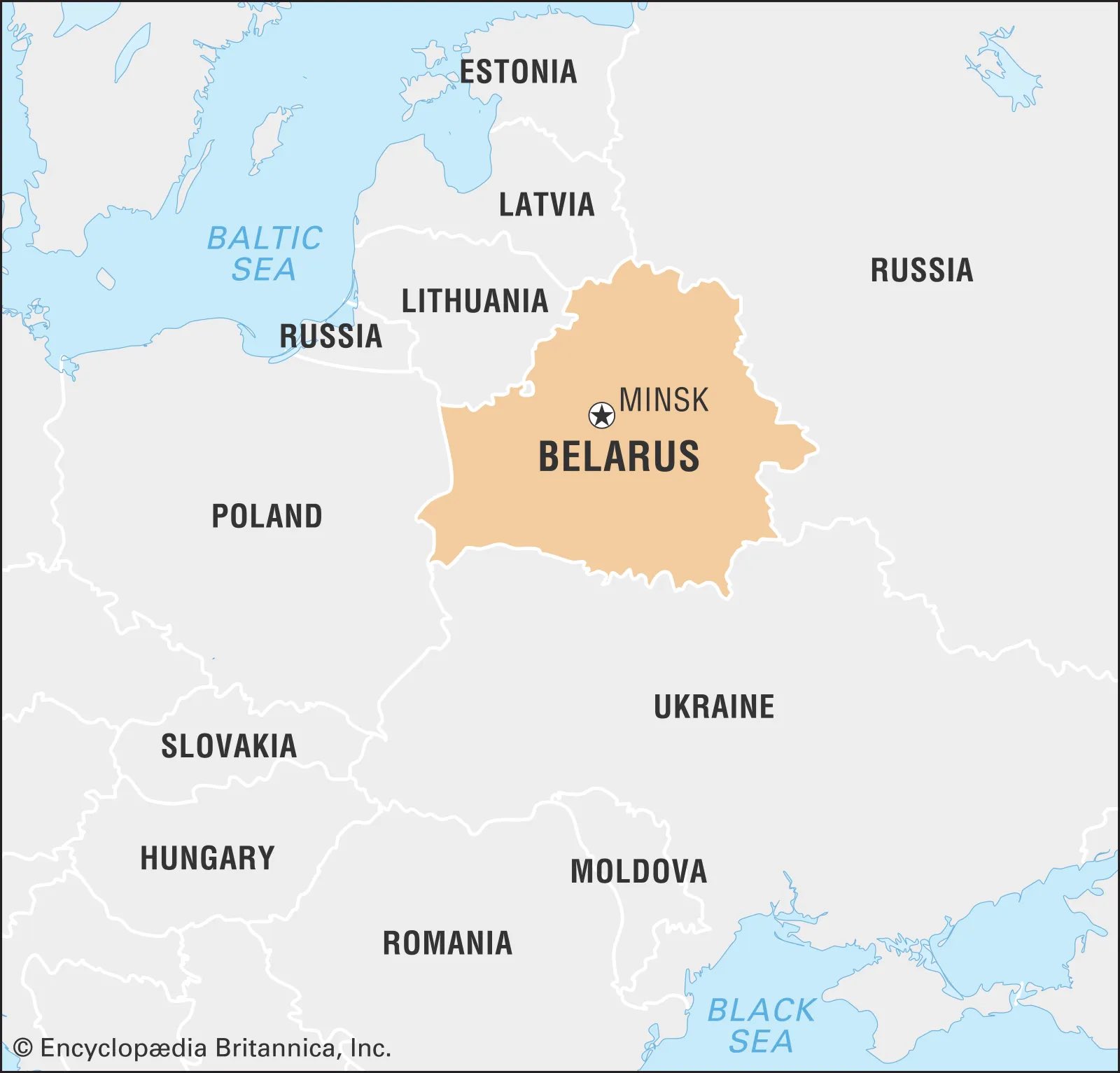
President Donald Trump announced Monday that the United States is working on a “massive Deal” to purchase potash from Belarus at substantially lower prices than those paid to Canada. The move is a direct response to the breakdown in U.S.-Canada trade talks and another concrete example of an America First strategy that prioritizes American farmers, ranchers, and manufacturers over an unreliable trading partner that is simultaneously deepening ties with China and the European Union.
In a Truth Social post on September 21, 2026, Trump wrote: “The United States is working on a massive Deal with respect to the purchase of Potash from Belarus. The pricing would be for substantially less than we are currently paying to Canada, very good news for our Farmers and Ranchers.” Canada supplies the large majority of U.S. potash imports—estimates range from 79 percent to more than 85 percent—making the fertilizer mineral a point of leverage in the current dispute. There are no practical substitutes for potash in modern agriculture.
The announcement follows the collapse of trade negotiations last month. Ottawa walked away after last-minute U.S. terms that Prime Minister Mark Carney said included restrictions on Canada entering new deals with other countries. Tit-for-tat tariffs followed, including 50 percent U.S. duties on selected Canadian goods. Carney has responded by accelerating outreach to Beijing and Brussels rather than closing a deal with Washington.
Carney visited Beijing in January 2026 and announced a preliminary strategic partnership with China that included lowering Canadian tariffs on up to 49,000 Chinese electric vehicles from 100 percent to 6.1 percent in exchange for reduced Chinese tariffs on Canadian canola and other agricultural products. He has met Xi Jinping twice since taking office and has framed China as a market for energy, agri-food, and financial services. At the same time, Carney has urged remaining EU members to ratify the Canada-EU trade agreement, spoken of a “unique alliance” short of membership, and told the European Parliament that Canada and Europe are “stronger together” amid U.S. trade tensions. Trump has publicly objected to the EU outreach.
These choices have consequences on both sides of the border. Bank of Canada data show roughly 55,000 Canadian manufacturing jobs were lost between January 2025 and January 2026. University of Calgary economist Trevor Tombe estimates that the latest 50 percent tariffs put about 87,000–90,000 Canadian jobs at risk (52,000 directly in affected sectors plus 35,000 in supporting industries), with the heaviest impact in Ontario and Quebec. An Oxford Economics analysis for the Canadian American Business Council projected that a full CUSMA breakdown could cost 102,000 Canadian jobs and 214,000 U.S. jobs relative to the status-quo tariff environment. U.S. trade-exposed sectors, including manufacturing, transportation, and warehousing, also recorded substantial losses in 2025; one analysis put trade-exposed U.S. job losses near 275,000 that year, while border communities lost thousands of hospitality positions as Canadian travel declined.
Canadian manufacturers are already voting with their capital. A May 2026 KPMG survey of 275 Canadian manufacturing firms found that 29 percent had already moved some or all production to the United States and another 13 percent planned to do so (42 percent total). Among those considering a move, 77 percent expected it within two years. Eleven percent planned to relocate headquarters south within five years. Stated reasons include avoiding tariffs, reducing uncertainty, lower operating costs, a more favorable tax environment, and supply-chain optimization. Concrete examples include Stellantis shifting Jeep Compass production from Brampton, Ontario, to Illinois; Honda relocating CR-V manufacturing from Ontario to the United States; Sapporo moving some beer production out of Canada; and smaller firms such as Montreal’s Aeris Protective Packaging opening U.S. capacity because 70 percent of their customers are American. Northern Cable in Brockville, Ontario, has also considered a U.S. plant.
Belarus is not a new topic for the Trump administration. Sanctions on Belaruskali and related potash entities were eased earlier in 2026 after Minsk released political prisoners. The current talks build on that opening and on earlier U.S. interest in alternative supply routes. Critics note Belarus’s alliance with Russia and Lukashenko’s record; supporters note the immediate benefit of lower fertilizer costs for American agriculture at a time of high input prices.
The contrast is straightforward. Trump is treating potash as a strategic input and seeking the lowest-cost reliable supply for U.S. farmers. Carney is treating the U.S. relationship as one option among several and is investing political capital in Beijing and Brussels while Canadian plants idle and companies relocate south. American manufacturers and farmers do not have to wait for Ottawa to decide whether it prefers Washington, Beijing, or Brussels. The United States is simply going elsewhere.A review of pillarsofwellness.com shows a Frisco, Texas, chiropractic and functional-medicine clinic focused on chemical, physical, mental, and spiritual health. It has no published analysis of trade, potash, or manufacturing employment.
Making Appendices Great Again
Check out the World’s Greatest Podcast Show Notes at EnergyNewsBeat.co or EnergyNewsBeat.com.
Subscribe to the Energy News Beat Substack: https://theenergynewsbeat.substack.com/
Appendix: Sources and Links
- Bloomberg: Trump Says Belarus Potash Deal in Works Amid Canada Fight — https://www.bloomberg.com/news/articles/2026-09-21/trump-says-potash-deal-with-belarus-in-works-amid-canada-fight
- The Globe and Mail: U.S. in talks to buy potash from Belarus — https://www.theglobeandmail.com/world/us-politics/article-trump-potash-deal-belarus-canada/
- Global News: Trump says he wants potash from Belarus for ‘substantially less’ than Canada — https://globalnews.ca/news/12066962/trump-potash-belarus-canada/
- AP News: US eases Belarus sanctions — https://apnews.com/article/treasury-trump-belarus-sanctions-lukashenko-farmers-fertilizer-48a742dbf2e4176a04f308d3020c0b4a
- Prime Minister of Canada: Carney forges new strategic partnership with China — https://www.pm.gc.ca/en/news/news-releases/2026/01/16/prime-minister-carney-forges-new-strategic-partnership-peoples
- Financial Times: Mark Carney urges EU to cement trade deal — https://www.ft.com/content/1a1d76fc-e02b-40ee-8afc-b45ab9f17c0f
- The Globe and Mail: Carney sees chance to tap Asian, European markets — https://www.theglobeandmail.com/business/article-mark-carney-plans-to-thread-the-needle-on-trade-with-asia-europe/
- BBC: The US-Canada trade war in 5 charts — https://www.bbc.co.uk/news/articles/c4g4r4lxx25o
- CBC: CUSMA breakdown could mean hundreds of thousands of jobs — https://www.cbc.ca/news/business/trade-renegotiation-impact-report-9.7303374
- Macdonald-Laurier Institute / Trevor Tombe: How looming tariffs could cost Canada 90,000 jobs — https://macdonaldlaurier.ca/whats-at-stake-in-the-canada-u-s-trade-deal-how-looming-tariffs-could-cost-canada-90000-jobs/
- KPMG Canada: Four in 10 Canadian manufacturers eye U.S. production move — https://kpmg.com/ca/en/media/2026/07/canadian-manufacturers-eye-us-production-move.html
- The Globe and Mail: More than 40% of Canadian manufacturers weighing move to U.S. — https://www.theglobeandmail.com/business/article-canadian-manufacturers-move-to-us-kpmg-survey/
- Montreal Gazette: Montreal manufacturer explores a move to the U.S. — https://montrealgazette.com/news/tariff-war-trade-uncertainty-quebec-manufacturing-companies-move-to-u-s/
- Bloomberg / Yahoo: Sapporo Moving Some Production to US From Canada — https://finance.yahoo.com/economy/policy/articles/sapporo-moving-production-us-canada-140634668.html
- New York Times: Trump Tariffs Force Some Canadian Companies to Move South — https://www.nytimes.com/2026/08/12/world/canada/canada-tariffs-manufacturing-trade-trump.html
- RBC: A slow leak: The U.S.-Canada trade shock — https://www.rbc.com/en/thought-leadership/the-trade-hub/a-slow-leak-the-us-canada-tr