On October 19, 2026, the U.S. Department of Energy announced it will use up to $42 million in Defense Production Act (DPA) Title III funding to advance the long-stalled Constitution Pipeline. The 125-mile natural gas line would move up to 650,000 dekatherms per day of Marcellus Shale gas from northeastern Pennsylvania into New York, connecting to existing systems serving New York and New England markets that have faced constrained access to low-cost supply.Energy
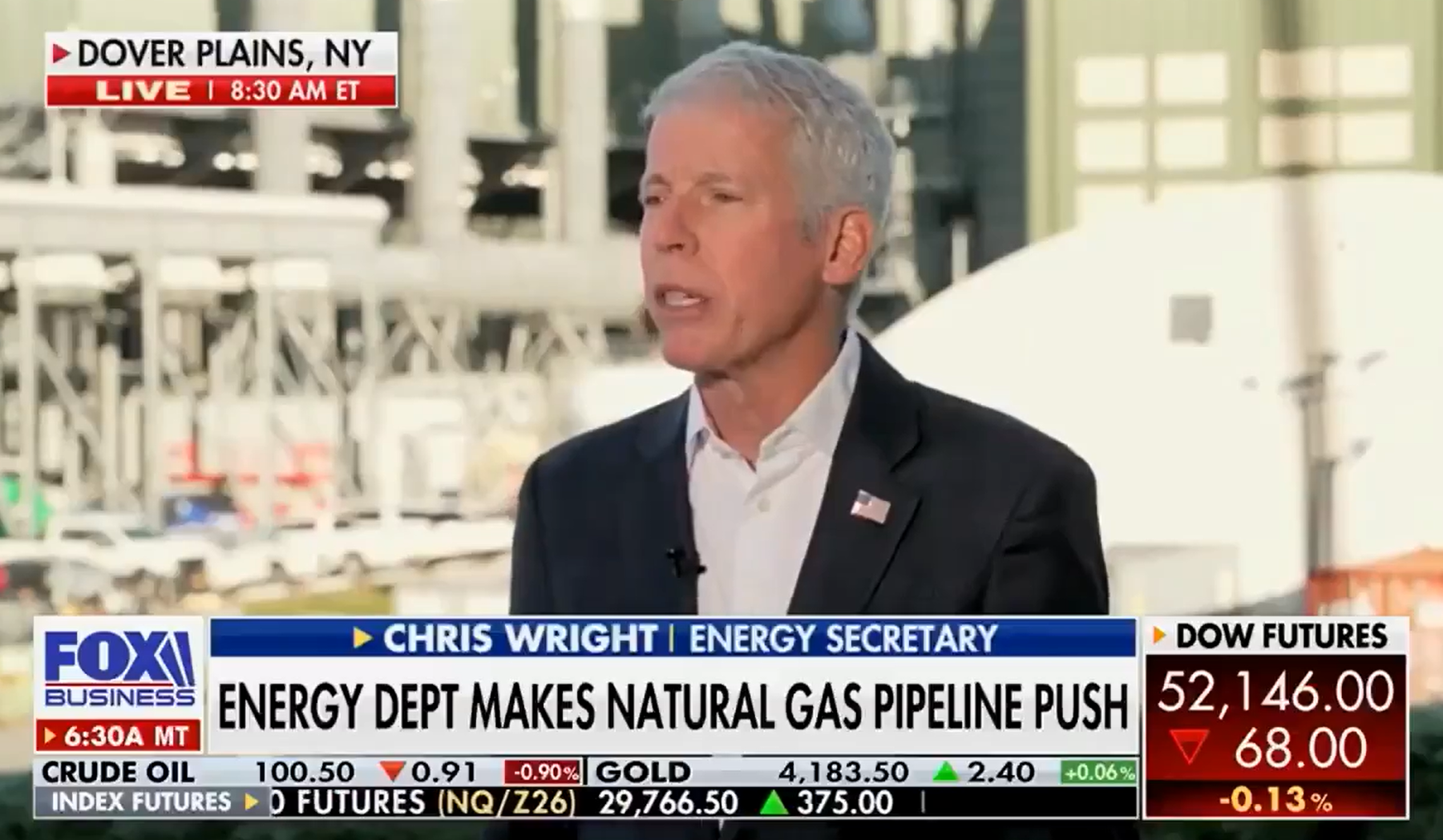
Energy Secretary Chris Wright framed the move as a direct response to years of restricted infrastructure. In comments on Fox Business and in the official announcement, he stated that the funding supports critical pre-construction and permitting work—including environmental reviews, engineering, and site preparation—before groundbreaking. He highlighted national security needs, noting submarine manufacturing in Groton, Connecticut, military bases across New England, and an electric grid “on the ragged edge of surviving at peak demand times, particularly in the winter.” Wright added: “The answer to high prices is more supply to push prices down. The answer to getting to the ragged edge of blackouts is more electric generation, more energy for home heating as well.”Foxbusiness
President Trump’s administration has positioned the project as part of an “energy addition” agenda to reverse what officials describe as prior “energy subtraction” policies. Interior Secretary and National Energy Dominance Council Chairman Doug Burgum noted that families and businesses in New York and other states “have paid the price for anti-energy policies that kneecap production, block critical infrastructure and drive up costs,” and that the investment aims to deliver reliable energy while saving Northeast families billions.Energy
A Decade-Plus of Blocks and Delays
The Constitution Pipeline has faced repeated obstacles since its early proposals around 2012–2013. The Federal Energy Regulatory Commission (FERC) granted a certificate of public convenience and necessity in 2014. In 2016, under then-Governor Andrew Cuomo, New York’s Department of Environmental Conservation denied the required Clean Water Act Section 401 water quality certification, citing stream crossings, wetlands, and a broader policy stance against new fossil fuel pipelines. The Second Circuit Court of Appeals upheld the denial in 2017; the U.S. Supreme Court declined to review the case in 2018.Realclearenergy
Developers pursued FERC waivers and further litigation, but years of delays, rising costs (from an initial estimate under $700 million toward $1 billion), and uncertainty led Williams Companies and partners to abandon the project in February 2020, citing changed economics. Environmental groups and state actions played central roles in the challenges. The project was effectively blocked or stalled multiple times through state permit denials, court rulings, and the resulting economic cancellation—spanning from the 2016 denial through the 2020 abandonment, with additional FERC and litigation steps in between.AP News
Under the current administration, the project has been revived. Constitution Pipeline Company petitioned FERC in December 2025 to reissue the certificate and reaffirm prior waiver findings. New York has continued opposing it through protests, incomplete application notices, and federal lawsuits arguing against federal preemption of state authority. FERC has advanced an environmental assessment, with further review steps ongoing into late 2026. Williams has targeted fourth-quarter 2028 in-service, and Wright has expressed hope for construction starting next spring so the line can serve by the winter of 2028.Foxbusiness
Impacts on Consumer Prices and Reliability
The prolonged constraints have contributed to higher energy costs and reliability stresses in the region. New England and New York have limited pipeline capacity into high-demand areas, leading to reliance on more expensive fuels (including oil) during cold snaps. During one recent winter event, petroleum briefly surpassed natural gas as New England’s top electricity generation source due to tight gas supplies. Residential gas price premiums in states like Massachusetts relative to Pennsylvania have widened at times to 80–100% in winter months. Northeast states rank among the highest in the lower 48 for retail electricity prices, with pipeline bottlenecks cited as a driver of spikes that can reach many times average levels.Bostonglobe
Independent analyses project substantial consumer benefits from the pipeline. A Daymark Energy Advisors study estimated roughly $5.8 billion in wholesale electricity cost savings across New York and New England over 20 years ($3.0 billion in New York, $2.8 billion in New England), plus incremental savings and reduced oil-fired generation (and associated emissions) in extreme winters. An S&P Global analysis projected up to $11.6 billion in total energy savings (gas and power) over a 15-year period—or about $8.5 billion net after cost of service—along with peak-month gas price reductions of up to 6%, nearly 2,000 average annual jobs supported, and additional gross state product and tax revenue. Williams materials have cited similar order-of-magnitude savings and noted Appalachian gas can be far less expensive than alternatives like heating oil for heating.Daymarkea
EIA forecasts have highlighted elevated heating oil costs this winter (projected 34% higher on average), with Northeast households relying on it expected to spend more despite milder weather expectations. Officials argue that added supply addresses both cost and blackout risks tied to constrained infrastructure.
The $42 million DPA funding—supported by a presidential determination identifying natural gas pipelines as essential to national defense and broader appropriations for critical energy projects—covers early-stage activities to help the project move forward amid remaining regulatory hurdles. It does not fund full construction but aims to clear the path for private investment and eventual consumer relief through greater access to abundant domestic gas.
This step aligns with the administration’s stated priority of expanding supply to lower prices, improve grid stability for military and civilian needs, and reverse the effects of prior infrastructure blocks. For consumers in New York and New England, the measure is presented as a practical effort to restore affordable, reliable energy after more than a decade of delays.
Appendix: Sources and Links
- U.S. Department of Energy announcement (Oct. 19, 2026): https://www.energy.gov/articles/energy-department-advances-constitution-pipeline-project-42-million-defense-production-act
- Fox Business coverage of the funding and Wright interview: https://www.foxbusiness.com/energy/trump-administration-commits-42m-revive-stalled-northeast-natural-gas-pipeline
- X post by @EnergyAbsurdity sharing Wright’s Fox Business remarks: https://x.com/EnergyAbsurdity/status/2112233324299374994
- Secretary Wright’s related X post: https://x.com/SecretaryWright/status/2112264009118314511
- Boston Globe opinion on price impacts of prior blocks: https://www.bostonglobe.com/2026/06/04/opinion/andrew-cuomo-pipeline-new-england/
- Daymark Energy Advisors analysis ($5.8B savings): https://www.daymarkea.com/blog-and-news/Daymark-Energy-News and Empire Report summary
- S&P Global analysis (up to $11.6B savings): https://press.spglobal.com/2025-11-04-Constitution-Pipeline-Could-Generate-Up-to-11-6-Billion-in-Total-Savings-by-Lowering-Natural-Gas-Prices-in-Energy-Tight-US-Northeast,-S-P-Global-Analysis-Finds
- AP News on 2020 cancellation: https://apnews.com/general-news-468d090d04e702a32be11e33ecc26fa4
- Forbes on continued New York opposition: https://www.forbes.com/sites/danielmarkind/2026/02/10/new-york-again-tries-to-block-constitution-pipeline/
- Washington Examiner coverage of the DPA funding and history: https://www.washingtonexaminer.com/daily-on-energy/4771156/daily-on-energy-the-constitution-pipeline-gets-a-national-security-boost/
- Additional project history and FERC context: Global Energy Monitor, Stop the Constitution Pipeline site, and Westside Construction Group reporting on current FERC review.