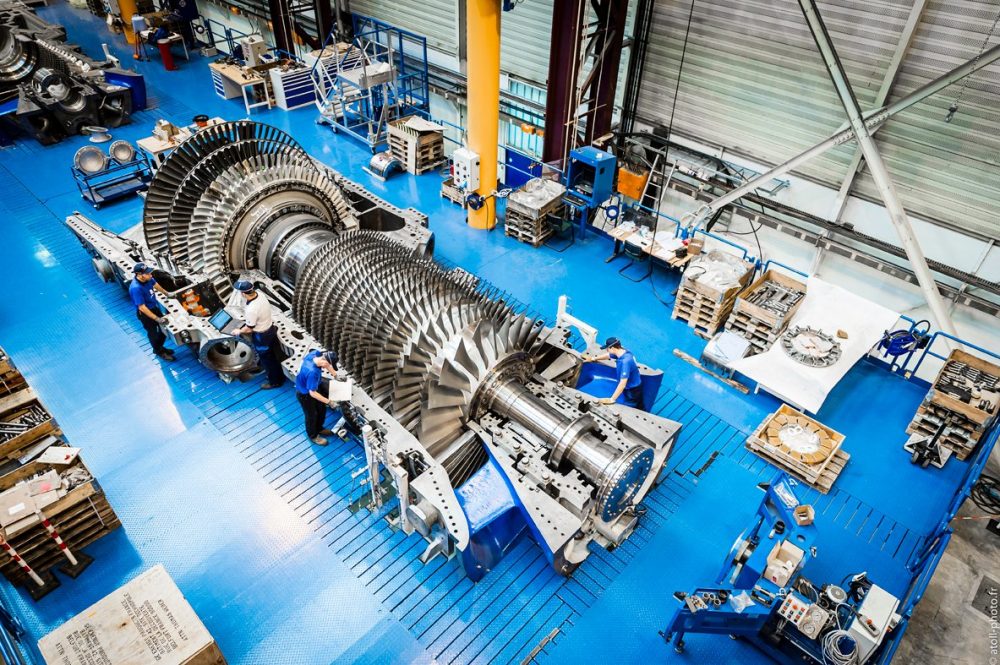
Demand for natural gas turbines is outpacing manufacturing capacity, with Mitsubishi Power telling attendees at Singapore International Energy Week that new large-frame units ordered now face delivery around 2031.
Akihiro Ondo, chief executive officer of Mitsubishi Power Asia Pacific, made the comment on the sidelines of the event on October 27, 2026. “We’re talking about delivery at around 2031,” he said, according to Bloomberg. The statement underscores a market-wide constraint that is delaying gas-fired power projects for both traditional utilities and the surge of AI-driven data center load.Bloomberg
Mitsubishi’s large-frame gas turbine backlog has reached 35 GW, up from 23 GW a year earlier. The company sold 35 large-frame units totaling 16 GW in fiscal 2025 and booked another 10 in the first quarter of fiscal 2026 (four for the United States and six for Japan). Recent orders are scheduled for delivery between 2028 and 2030; the company is being selective, particularly with core U.S. utility customers. Parent Mitsubishi Heavy Industries plans to double gas turbine manufacturing capacity relative to 2024 levels. In the United States, Mitsubishi Power is investing $490 million to expand its Savannah Machinery Works facility in Pooler, Georgia, adding 450,000 square feet and more than 220 jobs, with the expansion expected to come online around early 2029.Utilitydive
Earlier this year, Mitsubishi Power’s head of EMEA, Javier Cavada, told S&P Global that annual demand for gas-fired power capacity has surged past 100 GW—more than triple the pre-COVID average of about 30 GW. Lead times have stretched from roughly two years post-pandemic to five years or more, with the company signing contracts for deliveries in 2031–2034. Drivers include AI data centers, energy security concerns, and the need for flexible generation to balance high renewable penetration. Newbuilds are routinely hydrogen-ready.Spglobal
Market-Wide Constraint Across the Big Three
The shortage is not limited to Mitsubishi. The three dominant suppliers of large-frame gas turbines—GE Vernova, Siemens Energy, and Mitsubishi Power—are effectively sold out years ahead.
- GE Vernova reported 116 GW of gas power equipment under contract at the end of Q2 2026 (53 GW firm backlog and 63 GW slot reservations), up from 100 GW the prior quarter. It expects at least 125 GW by year-end 2026. The company is taking reservations for 2031 delivery and aims to be more than halfway contracted for that year by the end of 2026. Annual output is targeted at roughly 20 GW in the near term, rising to 24 GW by 2028 and toward 30 GW by 2030. About 20% of its gas turbine demand is tied to data centers, with the balance largely traditional utility and power-sector customers across roughly 100 entities in 26 countries.Utilitydive
- Siemens Energy has reported turbine backlogs in the 60–69 GW range, with slots booked through 2028 and 2029–30 filling rapidly. A significant share of recent orders has been linked to data center projects.
- Combined, the majors hold well over 200 GW of firm and reserved capacity against historical annual manufacturing capacity in the 60–70 GW range.
Wood Mackenzie and others have noted turbine price increases of nearly 200% since 2019 in some analyses, along with reservation deposits to hold queue positions. Labor shortages, specialized components (hot-section blades, superalloys, castings), and cautious capacity expansions after prior boom-bust cycles are limiting how quickly OEMs can ramp. Projects that failed to secure equipment early—such as certain Texas Energy Fund proposals—have faced delays or withdrawal.
Data Center and Utility Responses and Alternatives
Hyperscale data centers and utilities are adapting because grid interconnection queues and large-frame turbine lead times of four to seven years cannot match AI-driven load growth. Goldman Sachs and others have projected U.S. data center power demand rising from around 31 GW in 2025 toward 66 GW by 2027.
Behind-the-meter (BTM) generation has become a near-term bridge. Developers are turning to:
- Aeroderivative turbines (derived from aircraft engines, such as GE Vernova LM2500XPRESS units): Modular, faster to deploy (often 12–24 months), and suitable for phased campus builds. Crusoe and others have ordered large numbers for AI sites.
- Reciprocating (piston) gas engines from Caterpillar, Wärtsilä, Jenbacher (Innio), and others: Readily available with 12–24 month lead times, modular, and pairable with batteries to handle AI load swings. Examples include multi-gigawatt Caterpillar orders for West Virginia campuses and engine fleets at various Texas and other U.S. sites. Efficiency is lower than combined-cycle plants, and maintenance is more frequent, but speed-to-power is the priority.
- Solid oxide fuel cells (Bloom Energy and others): Extremely fast deployment in some cases (systems delivered in weeks to months). Oracle has expanded deals toward multi-gigawatt scale, including replacing planned turbines at certain campuses. They run on natural gas (or hydrogen blends) and avoid some permitting hurdles of combustion turbines.
- Packaged boiler + steam turbine combinations: Lead times of roughly 12–15 months in some cases, offering a faster path than waiting for large-frame gas turbines.
Analysts at Jefferies and Wood Mackenzie describe BTM solutions as the near-term winner for speed-to-market, even if they are often less efficient and higher-emitting per MWh than large combined-cycle plants. Some forecasts suggest substantial BTM gas capacity additions through 2030, with data centers accounting for the large majority. Batteries are also playing a larger role for peak management, backup, and enabling grid connections that would otherwise be delayed; studies have found lifecycle costs for battery systems competitive with or better than diesel or gas peakers in certain configurations.
Utilities are being more selective or prioritizing projects that already hold equipment slots. Some are leaning on existing fleet upgrades, grid-enhancing technologies, demand flexibility, and longer-term renewable-plus-storage portfolios. Capacity expansions by the OEMs are expected to improve availability later in the decade (Jefferies has pointed to rising available equipment capacity by 2028–2030), but they are unlikely to eliminate multi-year waits in the near term. East Daley and others note that the constraint will slow and unevenly distribute new gas demand, with some projects slipping past 2030 and others shifting to alternatives or existing generation.
Hydrogen-ready designs are becoming standard on new large-frame orders, positioning the fleet for future co-firing or 100% hydrogen as supplies scale. In the interim, the turbine bottleneck is functioning as a hard physical constraint on both AI infrastructure build-out and utility resource plans—pushing capital toward modular, faster-deployable technologies even as manufacturers race to expand factories in Georgia, elsewhere in the U.S., Europe, and Japan.
Check out the World’s Greatest Podcast Show Notes at EnergyNewsBeat.co or EnergyNewsBeat.com. And subscribe to: The Energy News Beat Substack.
Appendix: Sources and Links
- Bloomberg: High Demand for Gas Turbines Is Pushing Out Deliveries to 2031, Mitsubishi Power Says (Oct. 27, 2026) — https://www.bloomberg.com/news/articles/2026-10-27/mitsubishi-power-high-gas-turbine-demand-is-pushing-out-deliveries-to-2031
- S&P Global / Platts: INTERVIEW: Mitsubishi Power gas turbine orders stretch to 2030 amid AI, security demand (July 3, 2026) — https://www.spglobal.com/energy/en/news-research/latest-news/energy-transition/070326-interview-mitsubishi-power-gas-turbine-orders-stretch-to-2030-amid-ai-security-demand
- Utility Dive: Mitsubishi’s large-frame gas turbine backlog reaches 35 GW — https://www.utilitydive.com/news/mitsubishi-gas-turbine-backlog-earnings/827761/
- Power Engineering / related coverage on Savannah expansion: Mitsubishi Power bets $490M on gas turbine boom — https://www.power-eng.com/gas/turbines/mitsubishi-power-gas-turbine-savannah-georgia/
- Mitsubishi Power Americas announcement and Georgia Governor’s office on $490M Savannah expansion (Oct. 2026) — https://power.mhi.com/regions/amer/news/261022 and https://gov.georgia.gov/press-releases/2026-10-23/gov-kemp-mitsubishi-power-doubles-footprint-chatham-county
- Utility Dive / GE Vernova coverage: GE Vernova gas turbine backlog climbs to 116 GW (July 2026) — https://www.utilitydive.com/news/ge-vernova-gas-turbine-backlog-climbs-to-116-gw/826039/
- East Daley Analytics: Get in Line: Turbine Delays Stall Demand Growth in Gas Market — https://eastdaley.com/daley-note/get-in-line-turbine-delays-stall-demand-growth-in-gas-market
- Utility Dive: Natural gas equipment bottleneck is easing: Jefferies — https://www.utilitydive.com/news/natural-gas-equipment-generation-bottleneck-data-centers/812931/
- Coverage of alternatives (reciprocating engines, aeroderivatives, fuel cells, steam): Reuters Events, Data Center Frontier, Strategic Revenue Insights, WSJ, RMI, S&P Global/Fluence studies, and Wood Mackenzie analyses on storage vs. peakers (various 2026 reports).
- Additional market context: Nikkei Asia, Yomiuri, Power Magazine, BloombergNEF commentary, Wood Mackenzie turbine market notes, and Goldman Sachs data center demand projections referenced across industry reporting.
This overview is based on public statements, company earnings, and independent analyst reporting available as of late October 2026. Delivery timelines and capacity plans remain subject to supply-chain execution, labor availability, and further order conversion.