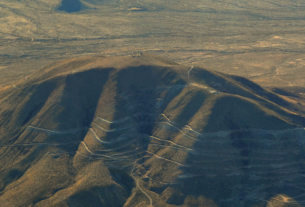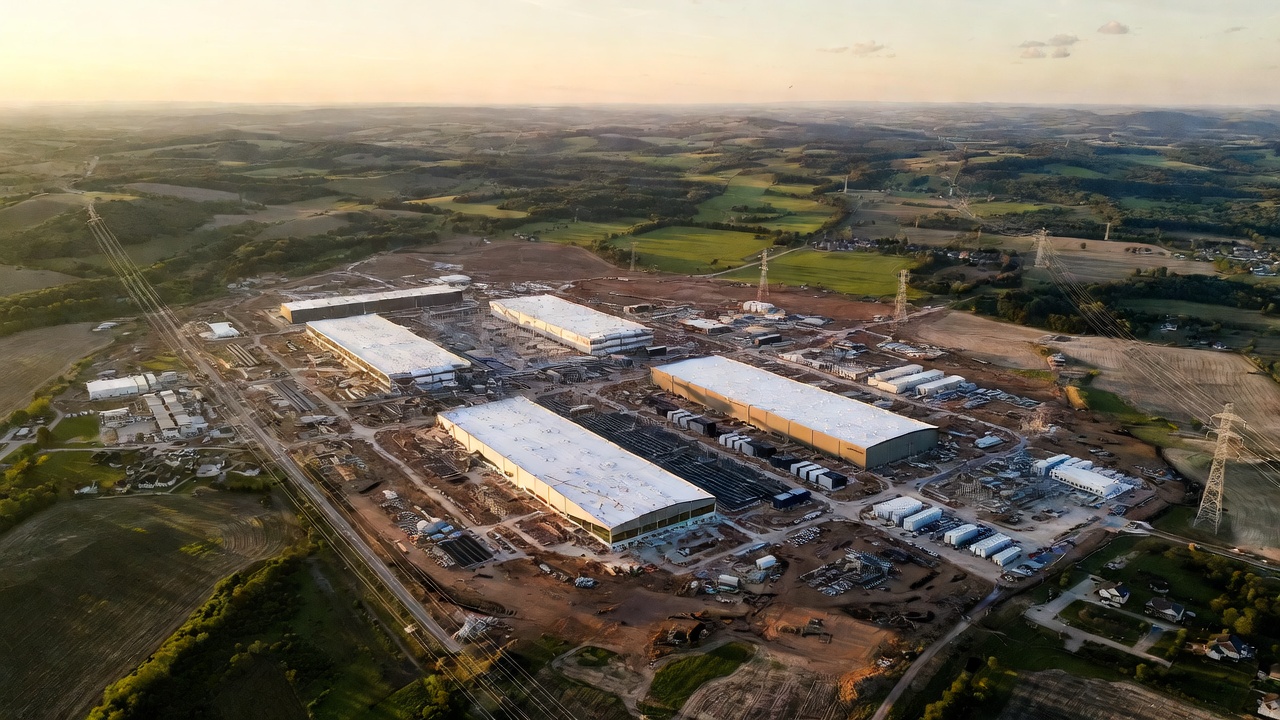
A viral X post from @WallStreetApes on May 11, 2026, has spotlighted a growing tension in rural Georgia: the use of eminent domain by Georgia Power to acquire land and easements for high-voltage transmission lines. The lines are needed to support surging electricity demand, much of it from new hyperscale data centers driven by the AI boom. The post features a resident whose childhood home in Coweta County is at risk, with over 330 private properties affected. Georgia Power states it will first negotiate purchases and easements, but will pursue eminent domain if necessary to “strengthen the grid” for the state’s growing energy needs.
The controversy centers on Project Sail, a proposed 829-acre hyperscale data center campus (reportedly involving Prologis/Atlas, with plans for up to 9 buildings and hundreds of megawatts of capacity). Local residents rezoned the rural conservation land to industrial use in a narrow 3-2 county vote and are now suing, citing concerns over property rights, water use, and long-term impacts. Similar disputes have arisen nearby, including in Fayette County, where high-tension power poles have been proposed near homes.
Country music star John Rich (@johnrich) quickly got involved. On May 12, he publicly called on Rep. Brian Jack (R-GA), who represents the affected area, to address the situation in Newnan/Coweta County. Rich highlighted the irony in the Newnan mayor’s bio, which emphasizes protecting neighborhoods, and urged direct outreach. Rich has a track record of advocating for landowners against what he sees as overreach by energy companies and government entities, previously encouraging reports of land grabs to the USDA. Locals had tagged him directly, referencing his past help in Tennessee against a TVA methane plant.
Georgia Power’s Big Bet on Data Centers
This isn’t an isolated incident. In December 2025, the Georgia Public Service Commission (PSC) unanimously approved Georgia Power’s plan to add nearly 10 gigawatts (GW) of new generating capacity—mostly natural gas combined-cycle plants, battery storage, solar pairings, and power purchase agreements—at an estimated cost of $16 billion over the next five years. Georgia Power says ~90% of the new power is earmarked for data centers. Environmental groups, including the Southern Environmental Law Center, Sierra Club, and Georgia Interfaith Power & Light, have sued the PSC, arguing the approval lacked a proper demonstration of need and could saddle residential customers with massive costs if data center demand doesn’t fully materialize.
Georgia already hosts dozens of data centers, with the pipeline exploding in recent years thanks to land availability, tax incentives (now under review), and relatively competitive power rates. Recent deals include major Amazon investments. Georgia Power has also rolled out programs allowing large customers like data centers to procure their own clean energy additions to the grid.
The National Data Center Boom: Power, Water, and Local Impacts
The Georgia story is part of a nationwide surge. The U.S. leads globally with over 3,000–4,000 operational data centers and hundreds more under construction or in advanced planning stages (e.g., 302 under construction as of early 2026 data, with major pipelines in Texas, Virginia, and emerging “frontier” markets).
Power Consumption: U.S. data centers consumed about 176 terawatt-hours (TWh) in 2023—roughly 4.4% of total U.S. electricity. Projections show this nearly doubling to 150 GW of demand by 2028 (or higher in some forecasts), potentially reaching 6.7–12% of national electricity use. Hyperscale facilities can draw as much continuous power as tens or hundreds of thousands of homes. Data centers drove about half of U.S. electricity demand growth in 2025.
Water Usage: Cooling is the hidden thirst. A typical mid-sized data center uses 300,000 gallons per day; large hyperscale ones can consume 1–5 million gallons daily (equivalent to a small town). North American data centers used nearly 1 trillion liters (264 billion gallons) in 2025. By 2028–2030, projections show annual water demand comparable to major cities, with two-thirds of recent builds in high water-stress areas. This includes direct evaporative cooling and indirect use from power generation. Many facilities claim “closed-loop” systems, but real-world losses and peak demands still strain local rivers, aquifers, and treatment plants.
Patterns of Disruption to Homes and Water Sources:
Land & Homes: Rural and suburban areas see farmland or residential properties rezoned or taken via eminent domain for data centers, substations, or transmission lines. Residents report construction traffic, noise, visual blight (giant poles in yards), and fears of declining property values.
Water Sources: Competition with households, agriculture, and ecosystems leads to well pressure drops, higher bills, or drought exacerbation in stressed regions (e.g., Southwest, parts of the Southeast). Contamination or discharge concerns have surfaced in some Georgia cases.
Grid & Rates: Utilities build new plants and lines; costs may be socialized if forecasts miss. Environmental groups warn that fossil-fuel reliance is increasing emissions.
Broader Backlash: At least 16 major projects were blocked or delayed in 2025 due to community opposition. States are considering moratoriums, transparency rules, and water-use caps.
What Can Consumers and the Administration Do?
Consumers and Local Residents: Attend and comment at PSC/utility hearings.
Support or file lawsuits challenging eminent domain (must prove “public use” and just compensation) or inadequate environmental review.
Contact state legislators for stronger data-center siting rules, rate protections, and water disclosure requirements.
Report land issues via channels like the USDA land-use reporting portal (as John Rich has promoted).
Push for data centers to fund their own dedicated power and water infrastructure rather than relying on public grids.
The Administration (Federal and State): Increase transparency: The U.S. Energy Information Administration is piloting mandatory data-center power-use surveys in high-impact states—expanding this nationwide would help.
Balance incentives: Review tax breaks against infrastructure costs; require or incentivize on-site renewables, advanced cooling (dry or recycled water), and co-location with clean power sources.
Protect ratepayers: Ensure data-center contracts include firm commitments that shield existing customers from stranded costs.
Coordinate on water: Federal agencies could tie permitting to sustainable water plans in stressed basins.
Data centers power the AI economy and bring jobs/tax revenue, but the rapid buildout is testing local infrastructure, property rights, and resources. The Georgia Power/Coweta case is a flashpoint: whether grid expansion for private hyperscale projects justifies overriding longstanding homeowners’ rights. As AI demand accelerates, the debate is only intensifying.
- Original X Post (WallStreetApes): https://x.com/WallStreetApes/status/2053887249801244737
- John Rich posts on the issue:
https://x.com/johnrich
(May 12, 2026 threads)
- Georgia Recorder on environmental lawsuit: https://georgiarecorder.com/briefs/environmental-groups-sue-over-georgia-powers-energy-expansion-for-data-centers/
- Southern Environmental Law Center on PSC approval: https://www.selc.org/press-release/psc-unanimously-votes-to-approve-georgia-powers-data-center-plan-without-sufficient-customer-protections/
- Georgia Power data center expansion coverage (AJC, etc.): Multiple reports on 10 GW plan and eminent domain disputes.
- National stats: Lawrence Berkeley National Lab 2024 Data Center Energy Report; IEA Energy and AI; Data Center Map; Consumer Reports (March 2026).
- Water impacts: ELI Data Centers and Water Fact Sheet; Bloomberg Graphics; Reuters investor pressure reports.
- Additional context: Fortune, Wired, and state-level legislative tracking on data-center moratoriums and regulations (2025–2026).
All information is based on publicly available reports, news, and social media as of May 12, 2026. Energy News Beat will continue monitoring developments in Georgia and nationally.