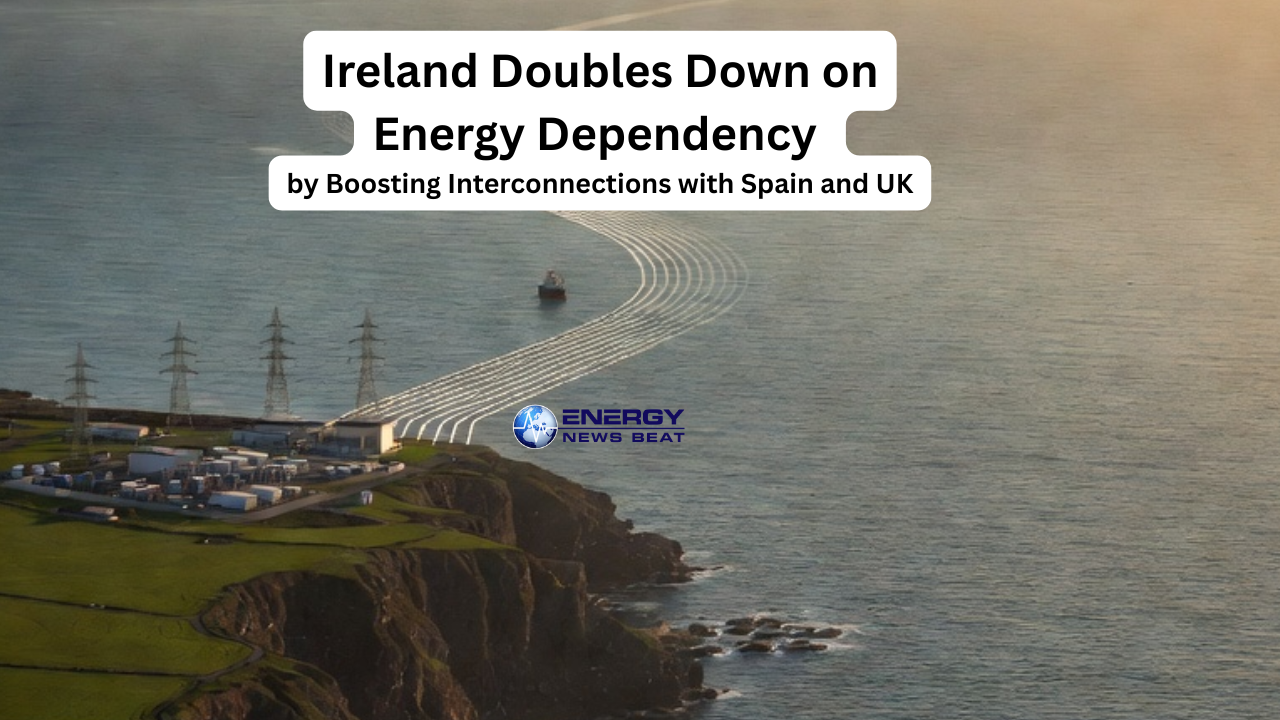
Ireland has taken another step toward deeper integration with its European neighbors’ electricity grids, signing memorandums of understanding (MoUs) with Spain and the UK to expand interconnection capacity. While officials frame these deals as advances in “energy security” and renewable integration, a closer look at the data reveals a different story: Ireland is doubling down on energy dependency, outsourcing reliability to foreign grids rather than building genuine domestic resilience.
The agreements, signed at WindEurope in Madrid, include a framework with Spain to explore a new undersea electricity interconnector and an extension of energy cooperation with the UK (set to expire in June 2026). Proponents claim these will reduce curtailment of Irish wind power, share renewables, stabilize supply, and align with EU decarbonization goals.
Yet Ireland’s existing reliance on imports—already at record levels—highlights the risks. True energy security comes from domestic production and firm capacity, not betting on neighbors’ surplus during calm winds or policy shifts.
Ireland’s Energy Mix: Renewables on Paper, Gas and Imports in Reality
Ireland’s electricity generation in 2024–2025 shows significant progress in renewables but persistent vulnerabilities:Wind: ~33% (a major success, but highly intermittent).
Gas: 39–42% (the backbone for dispatchable power).
Solar and other renewables: ~3–6%.
Net imports: 14–17% (via existing UK interconnectors).
Fossil fuels overall: ~45% of supply.
Ireland remains heavily import-dependent for primary energy (oil ~48%, gas ~30%, with overall import reliance around 70–80%). Renewables in electricity hit ~40–41% in 2024, but the system still leans on gas-fired plants and cross-border flows when the wind doesn’t blow.
How Spain and the UK Compare
Spain boasts one of Europe’s strongest low-carbon mixes: Renewables ~55–56% of generation (wind ~20–23%, solar ~18–21%).
Nuclear ~18–20%.
Gas ~17–21%.
Overall low-carbon share: ~75%.
Spain’s solar and wind are impressive, but they are geographically distant from Ireland. A new interconnector would involve long undersea cables with transmission losses, high costs, and exposure to weather patterns that may not complement Ireland’s wind-driven system.
The UK mirrors Ireland in many ways: Renewables ~44–52% (wind ~29–30%, solar growing to ~6–7%).
Gas ~27–32%.
Nuclear ~11–17%.
Net imports ~10–14%.
Both neighbors rely heavily on variable renewables and gas. Their surpluses are not guaranteed—especially during correlated low-wind events across the North Atlantic or UK policy shifts.
Electricity Prices: Ireland Pays a Premium
Despite high renewable penetration, Irish electricity prices rank among Europe’s highest—often the most expensive for non-household consumers and near the top for households. In the first half of 2025:
Ireland’s non-household price: €0.2726/kWh (highest in the EU).
EU average household price: ~€0.2872/kWh, with Ireland consistently above average and frequently topping charts alongside Germany and Belgium.
Spain and the UK generally have lower or comparable prices, with Spain benefiting from abundant solar. Interconnectors won’t magically lower Irish bills; they risk importing high prices or volatility when neighbors face their own constraints.
Not Security—Dependency on Neighbors
Interconnection is sold as “security,” but it is the opposite: energy dependency. Ireland already imports a significant share of its electricity through UK links. Expanding to Spain ties Ireland’s grid more tightly to foreign generation, foreign policies, and foreign weather. A single cable failure, maintenance outage, or political decision (e.g., export restrictions during domestic shortages) could leave Irish homes and businesses in the dark or paying premium spot prices. This is not resilience—it is outsourcing sovereignty over a critical national service.The Strait of Hormuz provides a stark global warning. This narrow chokepoint carries ~20% of global oil and significant LNG. Recent tensions and disruptions there have stranded tankers, spiked prices, and exposed the fragility of relying on distant foreign supplies. Europe (and Ireland) felt the ripple effects in energy costs and supply risks.
Electricity interconnectors create similar vulnerabilities on a regional scale: one geopolitical flare-up, extreme weather event, or neighbor prioritizing its own consumers, and Ireland’s lights flicker.
History shows that true energy security demands domestic firm capacity—dispatchable power that doesn’t depend on foreign wires. Gas with carbon capture, nuclear baseload, long-duration storage, and overbuilt domestic renewables (with backup) deliver that. Interconnectors are useful tools for occasional balancing, not a substitute for self-reliance.
Time for Ireland to Prioritize True Independence
As Ireland prepares for its EU Presidency in late 2026, it should lead by example—not by deeper dependency. The new MoUs with Spain and the UK may unlock some renewable sharing on paper, but they lock Ireland into greater reliance on neighbors’ grids. With electricity prices already punishing businesses and households, and import dependency rising, this is not the path to security. It is a bet that foreign surpluses will always be available when Ireland needs them most.
Energy News Beat urges policymakers to refocus on domestic solutions: accelerating firm generation, storage, and grid modernization at home. Only then will Ireland achieve genuine energy independence rather than doubling down on dependency.
Appendix: Sources and Links
- Original ESG News article: https://esgnews.com/ireland-expands-energy-alliances-with-spain-uk-to-boost-interconnection-and-security/
- SEAI Energy in Ireland 2025 report (Ireland mix & data): https://www.seai.ie/sites/default/files/publications/Energy-in-Ireland-2025.pdf
- Low Carbon Power / Ember data (Ireland, Spain, UK mixes): https://lowcarbonpower.org/region/Ireland ; https://lowcarbonpower.org/region/Spain ; https://ember-energy.org/countries-and-regions/united-kingdom/
- Eurostat Electricity Price Statistics (H1 2025): https://ec.europa.eu/eurostat/statistics-explained/index.php?title=Electricity_price_statistics
- IEA Country Profiles (additional mix context).
- Reuters / EirGrid announcements on MoUs (interconnector details).
- ECFR / UNCTAD / IEA reports on Strait of Hormuz risks.
All data reflects the latest available 2024–2025 figures as of April 2026. Energy security is too important for wishful thinking—facts must guide policy.