ENB Pub Note: This article first ran on Doug Sheridan’s LinkedIn, and we highly recommend connecting. Hat Tip to David Blackmon for running on his Substack, and we recommend subscribing there as well, only after subscribing to the Energy News Beat Substack. – Just saying.
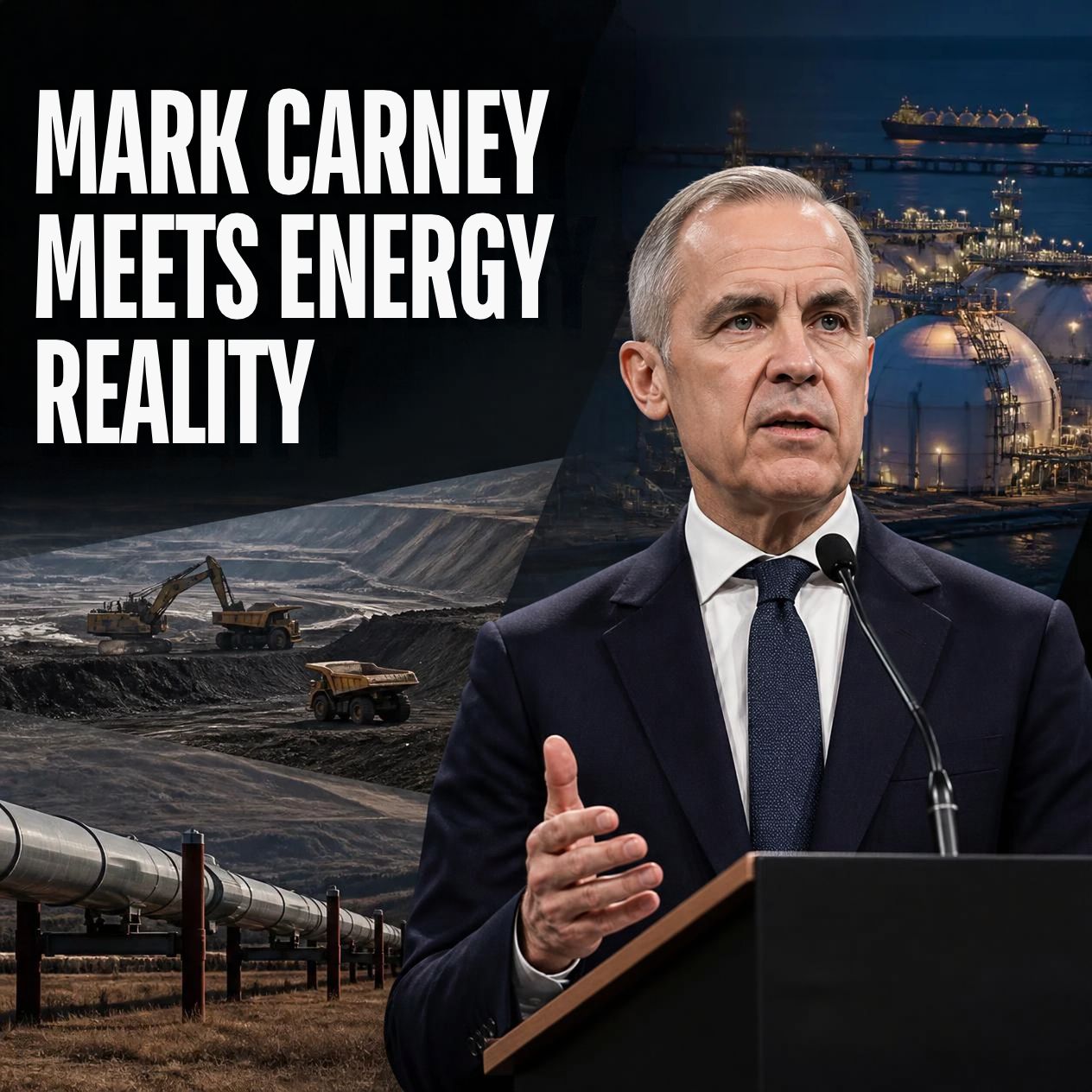
Five years ago, Mark Carney wanted finance to accelerate the energy transition. Today, as Canada’s Liberal prime minister, he wants to unleash the country’s “full potential as an energy superpower.” Oil pipelines, LNG terminals, faster permits and tax incentives for drilling are now part of the program.
Reality is a powerful persuader.
According to the WSJ, Canada’s the world’s 4th largest oil producer and 5th largest natural-gas producer. Oil and gas account for roughly 20% of its exports, yet Canada sends nearly all of its natural-gas exports and about 90% of its crude exports to the US. The problem was never a lack of resources. It was that Canada spent years making those resources unnecessarily difficult to develop and move.
Some of that inertia was economic. The US shale boom weakened the case for large new oil-sands projects by suppressing prices. But policy mattered too. Regulatory uncertainty and permitting delays made pipelines and export infrastructure harder to build, leaving Canada dependent on a single customer.
That approach reflected the mindset of Carney’s predecessor, Justin Trudeau, and much of the West—which increasingly treated hydrocarbons as industries of the past. Yet even the Trudeau gov’t eventually purchased the Trans Mountain pipeline and completed its expansion after private investors walked away. The contradiction was revealing.
Carney once represented a more sophisticated version of the same worldview. As chair of the Glasgow Financial Alliance for Net Zero, he sought to align global capital with net-zero commitments and the Paris climate goals. At COP26 in 2021, the alliance said financial institutions representing more than $130 trillion in assets had joined the effort.
Carney is now discovering that governing an energy-rich country differs from chairing a climate-finance coalition. His gov’t wants to reduce major-project reviews to one year while advancing a West Coast oil pipeline, expanding LNG exports and offering larger tax deductions for wells, pipelines and processing facilities.
All of it would have been condemned by many of his allies only a few years ago.
But good for Carney—and Canada. Changing course is better than driving into the ditch for consistency’s sake. Canada’s oil and gas will not remain undeveloped merely because its political class finds hydrocarbons unfashionable. If Canada refuses to produce them, other countries will produce theirs, collect the revenue and create the jobs.
Canada isn’t alone. Gov’ts around the world are discovering that energy security and economic growth remain difficult to separate from hydrocarbons, with the energy transition proving much slower, harder and more dependent on conventional energy than promised.
Carney may call this becoming an energy superpower. A plainer description is that Canada’s begun acting like the energy power it always was. The resources and economics didn’t change. Reality simply asserted itself.