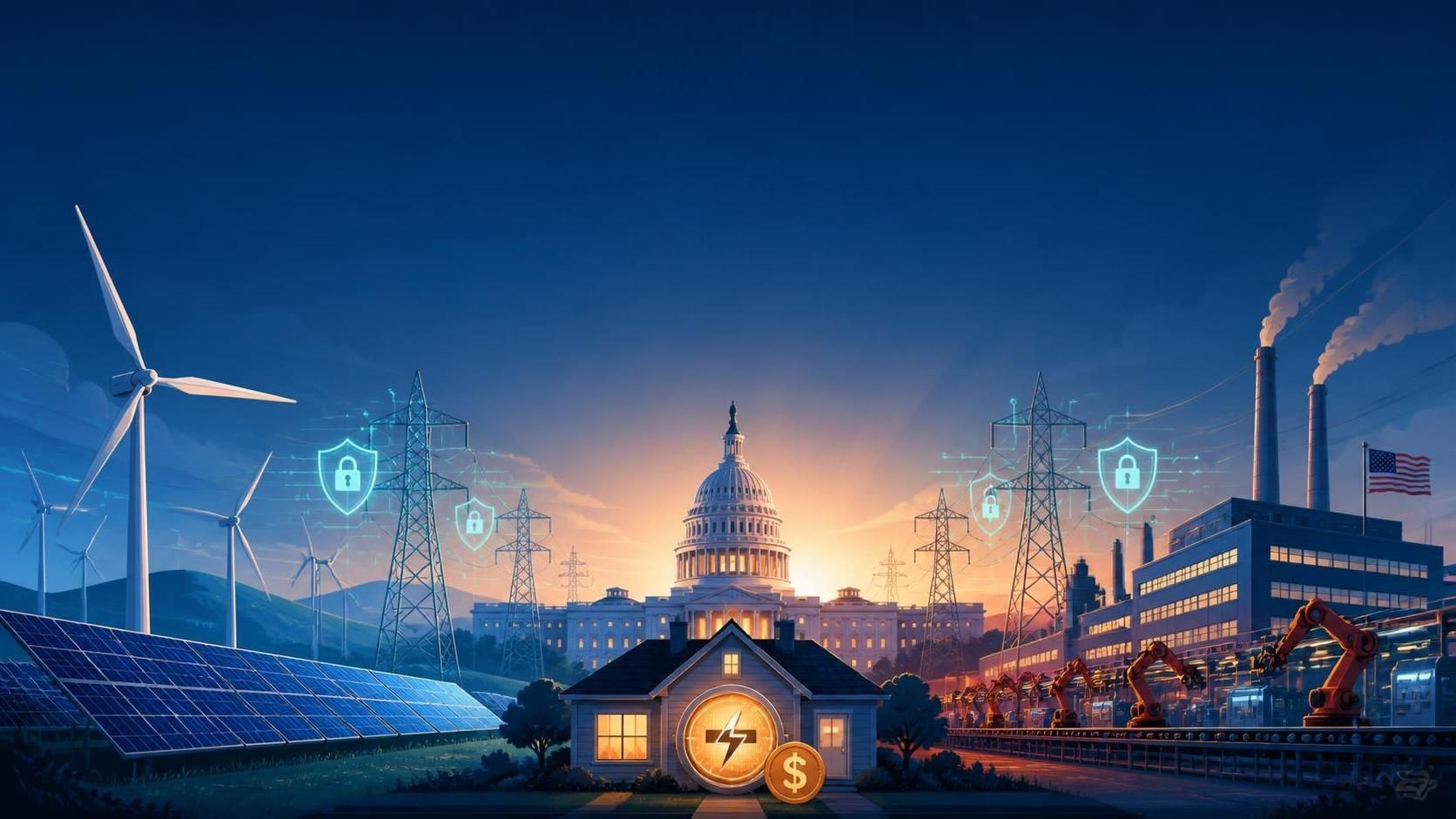
Blue states and Democratic-led policies continue to drive aggressive targets for wind, solar, and battery storage as part of broader clean-energy mandates. California aims for 100% carbon-free electricity by 2045, New York for a zero-emissions grid by 2040, and similar Renewable Portfolio Standards (RPS) or Clean Electricity Standards (CES) in other Democratic-leaning states push high shares of intermittent resources plus storage. These policies, layered on federal incentives from the Inflation Reduction Act (IRA) era and subsequent measures, seek major grid additions amid rising demand from data centers, electrification, and economic growth.
How Much More Will Be Added to the Grid?
Recent data show rapid growth. In Q2 2026, the U.S. added nearly 7.5 GW of utility-scale solar (up 21% year-over-year), a record 5.6 GW of battery storage, and 5.1 GW of wind, according to S&P Global analysis. Solar and storage accounted for a large share of new capacity in the first half of 2026. EIA data and industry reports indicate utility-scale solar capacity expanding significantly, with projections for tens of GW more in the near term; one analysis noted nearly 300 GW of solar and over 212 GW of storage targeted for 2026–2031.
BloombergNEF forecasts more than 1 TW of combined solar, wind, and storage additions from 2026 to 2036—more than double end-2025 levels—driven in part by data-center demand, even as some tax credits phase down. Storage is particularly strong: U.S. deployments hit records, with cumulative utility-scale capacity rising sharply (e.g., reports of ~165 GWh installed by early 2026 in some tallies) and further tens of GWh expected annually. Co-location of solar with storage is rising (to ~16% of solar projects recently, projected higher). Red states currently hold a larger overall planned capacity pipeline (including substantial gas), while blue states’ plans are more heavily weighted toward pure renewables. Actual additions face interconnection queues, transmission needs, and supply constraints.
Manufacturing: U.S. Progress vs. China Dominance
The U.S. has made measurable gains in domestic manufacturing, spurred by the IRA’s production tax credits and related policies. Rhodium Group’s Clean Investment Monitor (Q3 2026) tracks roughly doubled capacity for battery modules/cells and solar cells versus early 2025 levels, plus ~50% expansion in solar modules, wind blades, and nacelles. Operational U.S. solar manufacturing includes capacity for ~65 GWdc modules, ~20 GWdc cells, limited wafers (~3 GWdc), and polysilicon. SEIA and other reports note module capacity sufficient for much or all of near-term U.S. demand in some assessments (~60–70+ GW range cited), with battery pack/module capacity also ramping toward or meeting domestic storage needs in recent tallies (e.g., tens to hundreds of GWh operational or announced). Wind component capacity largely covers current deployment levels. Dozens of new or expanded facilities have come online, supporting jobs and reducing some import reliance (solar imports fell notably in 2025).
China remains dominant in the global supply chain. It accounts for roughly 80% of solar modules, 85–95%+ of wafers/cells/polysilicon in various segments, ~70%+ of lithium battery cells, major shares of cathode/anode materials, and substantial inverter and wind component production. Chinese firms hold large shares of global battery shipments for storage. Even as U.S. assembly and some midstream capacity grows, upstream materials, cells, and specialized components often trace back to Chinese production or Chinese-linked investment. Some U.S. factories involve Chinese technology, partnerships, or capital attracted by incentives. Tariffs, Foreign Entity of Concern rules, and domestic-content bonuses aim to shift this, but full independence is incomplete—especially for high-volume, low-cost upstream steps. The result is partial onshoring rather than decoupling: more final assembly in the U.S., persistent dependence on China for key inputs.
Cybersecurity Concerns: Inverters, Radios, and Remote Risks
Rapid deployment of inverter-based resources (solar and storage) introduces cybersecurity questions, particularly with Chinese-manufactured equipment. A May 2025 Reuters investigation reported that U.S. experts examining Chinese solar inverters and batteries found undocumented communication devices, including cellular radios, not listed in product documentation. These could potentially enable remote access bypassing standard firewalls. In November 2024, a Chinese manufacturer (Deye/Sol-Ark related) remotely disabled some U.S. inverters amid a commercial dispute, demonstrating operational control capability.
Reports from Strider Technologies and others note high reliance on PRC-linked suppliers among utilities, with companies like Huawei, Sungrow, and others holding significant market shares in utility/commercial segments (Chinese vendors ~half or more in recent years). Washington Post coverage and congressional letters have highlighted risks of remote manipulation that could contribute to grid instability or blackouts. Software vulnerabilities in various inverter brands have been documented and patched; broader concerns include China’s national security laws requiring cooperation with intelligence services and documented pre-positioning activity (e.g., Volt Typhoon) on U.S. critical infrastructure. No widespread proven “kill switch” has been publicly confirmed across the fleet, and many systems have layered protections. However, the combination of scale, remote connectivity, and foreign-origin hardware creates material openings that utilities, CISA, DOE, and lawmakers continue to assess. Domestic or allied inverter manufacturing and stricter supply-chain rules are part of mitigation efforts.
Manufacturing of Wind, Solar, and Storage Components: Progress and Persistent Gaps
U.S. manufacturing of renewable components has expanded substantially since the Inflation Reduction Act, but the gains are uneven and concentrated in downstream assembly rather than a fully independent supply chain. As of Q3 2026, Rhodium Group’s Clean Investment Monitor tracks 131 operational solar manufacturing projects (up from 110 earlier in 2025). These facilities offer roughly 10 GWdc of polysilicon capacity, 3 GWdc of wafers, 20 GWdc of cells, and 65 GWdc of modules (including thin-film). SEIA data from around the same period puts operational module capacity higher in some tallies (approaching or exceeding 70–75 GWdc in later 2026 updates), enough on paper to meet or exceed near-term U.S. demand in certain scenarios. Cell capacity has grown sharply from near-zero post-2019 levels, and the first new ingot/wafer lines in years came online in late 2025. Battery progress is stronger still: operational cell and module capacity has roughly doubled since early 2025 in Rhodium tracking, with some industry figures citing tens of GWh of cell capacity and over 100 GWh of module/pack capacity operational or ramping—sufficient in reports to cover a large share of domestic storage demand. Wind component capacity (blades, nacelles, towers) largely matches current annual deployment levels of several GW.
These numbers represent real onshoring. Solar module capacity rose several-fold from pre-IRA levels of around 7–8 GW, and dozens of new factories support tens of thousands of jobs. Battery assembly has scaled particularly quickly as automakers and others pivot capacity toward stationary storage. Imports of finished modules and some storage systems have declined as a result.
The gaps remain large, however. Upstream production lags: polysilicon capacity covers only a fraction of deployment needs (around 20% in some 2025 comparisons), and wafer capacity is even thinner (single-digit percentages relative to demand). Much of the module capacity still relies on imported cells, wafers, or materials. China retains overwhelming global shares—typically 80%+ of modules, 85–95%+ of wafers and cells, and the large majority of polysilicon—while also dominating battery cell production (~70%+ globally, with Chinese firms capturing the bulk of storage shipments). Critical minerals processing and anode/cathode materials are similarly concentrated. Even U.S.-assembled products frequently incorporate Chinese or Chinese-linked inputs. Some Chinese firms or technology partners have invested in U.S. facilities to access IRA credits, further blurring the line between “domestic” and foreign-controlled capacity. Wind is less extreme but still sees substantial Chinese influence in global nacelle and blade production.
The net effect is partial success: the U.S. can assemble more finished modules and storage systems at home, reducing some finished-goods import dependence, but it has not closed the upstream bottlenecks that keep it reliant on Chinese capacity for the highest-volume, lowest-cost steps. Full vertical integration remains limited, and announced capacity often exceeds what is operational or under firm construction. Tariffs, Foreign Entity of Concern restrictions, and domestic-content bonuses are pushing further shifts, yet scale and cost advantages still favor Chinese supply chains for many components.
Cybersecurity Risks: Inverters, Radios, and Remote Access Vectors
The rapid addition of inverter-based resources creates concentrated points of potential vulnerability, especially where equipment originates from Chinese manufacturers with ties to the Chinese state. Inverters convert DC power from solar panels or batteries to grid-compatible AC and are increasingly networked for monitoring, control, and firmware updates. They sit at the interface between generation/storage and the bulk power system.
A May 2025 Reuters investigation reported that U.S. experts examining Chinese-made solar inverters and batteries found undocumented communication devices, including cellular radios, that were not listed in product documentation. These could enable remote communication channels outside normal utility firewalls and controls. Separately, in November 2024, the Chinese firm Deye (associated with some Sol-Ark branded units) remotely disabled inverters in the U.S. and elsewhere during a commercial dispute with a distributor—demonstrating retained manufacturer-level operational control over installed hardware. Software vulnerabilities are better documented: analyses such as Forescout’s have identified dozens of issues across brands (including Chinese ones), many later patched.
Strider Technologies’ late-2025 report “In Broad Daylight” quantified exposure using utility data and import records. Nearly half of inverter and battery energy storage system imports into the U.S. from 2015–2024 came from high-risk PRC manufacturers. Of the utilities surveyed (representing about 12% of installed U.S. capacity), 86% relied on at least one such supplier. Specific high-risk names cited include Huawei (Entity List, banned from U.S. 5G networks for espionage concerns, though no blanket federal ban on its solar inverters), Sungrow, and CATL (labeled a Chinese military company by the U.S. Department of War in 2025). Strider identified at least 5.4 GW of solar capacity at sites in 22 states using equipment from companies it rated high-risk. Wood Mackenzie data indicate Chinese-headquartered makers held roughly half the U.S. commercial/utility inverter market in 2024–2025 (higher shares in some utility segments), with more than 90% of U.S. inverters over the prior decade imported. Globally, Huawei and Sungrow alone have accounted for roughly half of utility-scale shipments in recent years.
Chinese law requires companies to cooperate with intelligence services, creating a structural pathway for potential state access. Broader context includes documented Chinese pre-positioning activity (Volt Typhoon and related groups) on U.S. critical infrastructure networks. Congressional letters (including from dozens of lawmakers) and Washington Post reporting have highlighted the risk that compromised or remotely controllable inverters could contribute to grid instability or cascading outages. No public evidence has confirmed a widespread, intentional “kill switch” deployed across the U.S. fleet, and many systems incorporate layered protections, vendor monitoring restrictions, and air-gapping practices. Nonetheless, the combination of scale (tens of GW of Chinese-linked equipment already installed), remote connectivity features, undocumented components, demonstrated remote disable capability, and state-linked suppliers constitutes a material national-security concern that utilities, CISA, DOE, and lawmakers continue to evaluate. Mitigation steps under discussion or underway include stricter import rules, domestic or allied inverter production incentives, supply-chain transparency requirements, and enhanced testing of connected equipment.
These manufacturing and cybersecurity realities mean that accelerated renewable additions under blue-state and Democratic priorities will, in the near term, continue to rely heavily on Chinese upstream capacity and components that carry documented security risks, even as U.S. assembly capacity grows.
Political Landscape and Consumer Willingness
State policies remain the primary driver in blue states, with Democratic priorities emphasizing rapid renewable and storage buildout alongside federal tax incentives. Recent national politics have introduced more protectionist and all-of-the-above elements (tariffs, selective credit adjustments), but blue-state mandates continue. Electricity prices are higher on average in many blue states with aggressive RPS/CES (California rates roughly double the national average; New York elevated), though causation is debated. Factors include wildfire mitigation and distribution costs in California, rate design, transmission needs, and historical baselines—not solely the renewable share. Some analyses find utility-scale renewables correlated with lower or neutral prices, while rooftop solar and certain mandates can shift costs. Wind-heavy red states often have lower prices.
Consumers show broad support for more renewables in principle (polls often in the 70% range favoring expanded clean energy), but cost sensitivity is high. Large majorities report rising bills and prioritize affordability and reliability over pure emissions reductions. Willingness to pay premiums appears limited; many prefer efficiency, all-of-the-above mixes, or lower bills. Data-center and load growth is amplifying pressure everywhere. Whether voters in high-mandate states accept sustained higher rates for faster renewable penetration remains an open political question as deployment scales.
In short, Democratic-leaning policies are set to accelerate wind, solar, and storage additions measured in tens to hundreds of GW over coming years. U.S. manufacturing has expanded meaningfully for modules and storage systems, yet China retains decisive control of upstream capacity and large shares of critical components. Cyber risks in connected Chinese-origin equipment are documented enough to warrant ongoing scrutiny and diversification. Consumers broadly like the idea of renewables but show clear limits on paying significantly more.
Appendix: Sources and Links
- Rhodium Group, Clean Investment Monitor: The State of US Clean Energy Supply Chains in 2026: https://rhg.com/research/clean-investment-monitor-us-clean-energy-supply-chains-2026/
- Reuters on rogue communication devices in Chinese inverters: https://www.reuters.com/sustainability/climate-energy/ghost-machine-rogue-communication-devices-found-chinese-inverters-2025-05-14/
- Washington Post on inverter risks: https://www.washingtonpost.com/business/2025/12/10/us-energy-grid-china-threat-blackouts/
- Strider Technologies report on PRC inverter equipment: https://striderintel.com/resources/in-broad-daylight/
- SEIA Solar & Storage Supply Chain Dashboard and Market Insight reports: https://seia.org/research-resources/solar-storage-supply-chain-dashboard and https://seia.org/research-resources/us-solar-market-insight/
- S&P Global / Energies Media on Q2 2026 capacity records: https://energiesmedia.com/us-solar-wind-battery-records/
- BloombergNEF storage and clean power forecasts (via Utility Dive and related): https://www.utilitydive.com/news/bnef-ups-us-energy-storage-deployment-forecast-by-30/872870/
- EIA Electric Power data and projections (capacity, planned additions): https://www.eia.gov/electricity/ and related annual/monthly reports
- Institute for Energy Research / Always On Energy Research on blue-state rates: https://www.instituteforenergyresearch.org/the-grid/blue-states-high-rates/
- Pew Research on shifting energy views: https://www.pewresearch.org/science/2026/04/03/americans-shifting-views-on-energy-issues/
- Third Way and other polls on affordability and energy preferences
- Additional context from IEA, Benchmark Mineral Intelligence, Wood Mackenzie, and Canary Media on manufacturing shares and supply chains
Data are current as of late 2026 reporting; capacity and manufacturing figures evolve with project completions and policy changes.