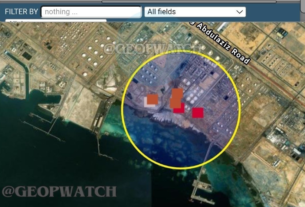
In a stark reminder of how geopolitical conflicts can ripple through the global energy landscape, Sudan\’s oil sector has been thrust into chaos following a series of attacks on key energy infrastructure. Recent drone strikes and assaults, amid the country\’s ongoing civil war, have forced shutdowns and declarations of force majeure, disrupting crude exports and raising questions about regional stability. This article delves into the extent of the damage, Sudan\’s oil export volumes, its relationship with OPEC, and the potential ramifications for global markets, drawing from recent reports and the shared Bloomberg insights via an X post by energy analyst Tracy Shuchart (@chigrl.
Sudan Oil Exports Disrupted as Attacks Hit Energy Facilities pic.twitter.com/eQybM5I80k
— Tracy Shuchart (𝒞𝒽𝒾 ) (@chigrl) November 17, 2025
Also Check out the Oil and Gas Markets Update with Josh Young and Tracy Shuchart
The Oil and Gas Global Markets Finacial Update with Josh Young, and Tracy Shuchart https://t.co/11GZG3kcV8
— STUART TURLEY – Energy Podcast Host (@STUARTTURLEY16) November 14, 2025
The Attacks and Resulting Damage
The disruptions stem from intensified fighting in Sudan, which has been ravaged by civil war for over two years. A pivotal incident occurred on November 13, 2025, when a drone attack targeted the Heglig oil field, a critical production site for Nile Blend crude.
Petrolines for Crude Oil Co. (PETCO), a state-owned pipeline operator, reported the strike, which prompted an immediate shutdown of operations to safeguard facilities.
This followed a separate notice on November 15 from Bashayer Pipeline Co., which transports oil, including Dar Blend, from South Sudan through Sudan, announcing an emergency power plant shutdown due to attacks in neighboring areas.
The damage assessment reveals significant operational halts rather than total destruction, but the impacts are severe. The Heglig field attack led to a force majeure declaration at 2B OPCO, an exploration and production company with a 50% stake in the site.
Earlier incidents, such as drone strikes in May 2025 on PETCO\’s Pump Station #5 in al-Hudi, caused grave damage and interrupted exports for much of 2024.
Overall, up to 40% of Sudan\’s energy generation capacity has been lost due to the conflict as of 2025, exacerbating blackouts and halting refining activities.
While exact monetary damage figures are not publicly detailed, the civil war has slashed Sudanese oil production to around 20,000-25,000 barrels per day (bpd) from pre-war levels of over 50,000 bpd, primarily from just two blocks.
These attacks are attributed to factions like the Rapid Support Forces (RSF), with control of oil infrastructure split between the Sudanese Armed Forces (SAF) and RSF, leading to frequent disruptions.
Traders report that shipments of Dar Blend, slated for loading from Bashayer port, are no longer available, leaving uncertainty over Nile Blend operations.
Sudan\’s Oil Exports: Scale and Significance
Sudan\’s oil sector is intertwined with South Sudan\’s, as the latter produces most of the crude but relies on Sudanese pipelines and ports for export. Combined, Sudan and South Sudan exported approximately 125,000 bpd of crude oil in 2023, with destinations including the United Arab Emirates (UAE) as the top buyer.
Sudan\’s standalone crude exports were reported at 136,000 bpd in December 2023, up from 116,000 bpd earlier that year.
However, disruptions have drastically reduced flows. In 2024, South Sudan\’s exports plummeted from 186,000 bpd in January to just 58,000 bpd by December due to pipeline damage and conflict.
For 2025, signs of recovery were noted with exports reaching 11 million barrels in June via Bashayer, but recent attacks threaten to reverse this.
In value terms, Sudan\’s top exports in 2023 included $1.13 billion in crude petroleum, alongside gold and agricultural products.
These volumes represent a small fraction of global oil supply—less than 0.2%—but are vital for the economies of both Sudans, where oil accounts for the majority of government revenue.OPEC Membership StatusSudan is not a full member of the Organization of the Petroleum Exporting Countries (OPEC).
The core OPEC consists of 12 countries, including Algeria, Iran, Iraq, and Saudi Arabia, with no inclusion of Sudan.
However, Sudan participates unofficially in the broader OPEC+ alliance, which includes non-OPEC producers cooperating on production cuts.
This group encompasses countries like Russia, Kazakhstan, and Sudan, aimed at stabilizing oil markets.
South Sudan is also part of this extended framework, reflecting their shared oil interests.
Global Market Implications
Given Sudan\’s modest output, the immediate impact on global oil markets is expected to be limited.
The disruptions affect a tiny sliver of worldwide supply, unlikely to cause significant price spikes unless the conflict escalates or draws in major players. However, regional effects are more pronounced: South Sudan\’s economy, heavily reliant on oil exports for foreign exchange, faces a potential rebound setback in 2025, with petrodollar shortages exacerbating fiscal woes.
Complicating matters, diplomatic tensions have led to actions like the UAE\’s ban on Sudanese crude shipments in 2025, forcing traders to seek alternative buyers and potentially disrupting flows to Asia, where China has historically been a key importer.
If prolonged, this could tighten supply in specific markets, such as sour crude grades like Dar and Nile Blends, and heighten geopolitical risks in the Red Sea region.
Broader concerns include environmental and humanitarian fallout, with oil operations linked to water contamination and health issues in local communities.
In the grand scheme, this serves as a cautionary tale for energy security. While global benchmarks like Brent crude may shrug off the news, it underscores vulnerabilities in conflict zones and the interconnectedness of African oil with international trade. For investors and policymakers, monitoring escalations in Sudan\’s war will be key to assessing any spillover into energy prices.
As highlighted in the X post by @chigrl , these events disrupt not just local operations but signal broader instability in a region critical for oil transit. Stay tuned to the Energy News Beat Podcast for more updates on how conflicts shape the energy world.
Got Questions on investing in oil and gas?
ENB Top News
ENB
Energy Dashboard
ENB Podcast
ENB Substack